Reviewed · MULTI-DAY BEIJING TOURS
11-Day Private China Tour: Beijing, Lhasa, Xi’an and Shanghai
Four cities, three flights, one big cultural sprint. This private 11-day China tour strings together UNESCO World Heritage highlights like the Forbidden City and Terracotta Warriors, plus real Tibetan stops in Lhasa. I like that it keeps the big logistics handled for you—airport arrivals, transfers, a driver, and tickets—so you spend more time looking up and less time figuring out. The one real consideration is Lhasa altitude: the itinerary builds in a rest period and offers advice, but you’ll still want to take it slow those first days.
What I also like is the human touch behind the scenes. In Beijing, guides named Candy and John get praised for smooth timing and practical help, and Celine also shows up in the same positive theme: organized, responsive, and good at keeping things moving. This is a private tour, so you’re not fighting crowds for your turn at a photo spot.
Finally, this is a lot of ground for 11 days. You’ll be flying between regions, walking at major sites, and switching mental gears fast. If you like variety and can handle a full schedule, it’s a great fit.
Key things you’ll notice on this tour
- UNESCO hits in two major cities: Forbidden City and Terracotta Warriors are built into the core route.
- Mutianyu Great Wall with a cable car: less hassle than some other Great Wall options.
- Tibet isn’t just a drive-by: Potala Palace, Jokhang Temple, and Sera Monastery are all included.
- A real street and local-life element in Lhasa: Barkhor Street and time around a nunnery.
- Xi’an goes beyond the Warriors: you also get Big Wild Goose Pagoda and the City Wall.
- Shanghai is classic plus quirky: the Bund and Yu Garden, then Tianzifang.
In This Review
- A Route That Stays on Track: Beijing to Lhasa to Xi’an to Shanghai
- Beijing Royal Days: Tiananmen, Forbidden City, and Summer Palace
- Mutianyu Great Wall Cable Car and Hutong Rickshaw Street Life
- Flying to Lhasa: Norbulingka, Tibet Museum, and Sera Monastery Timing
- Potala Palace, Jokhang Temple, and Barkhor Street After-Temple Rhythm
- Xi’an Terracotta Warriors Up Close, Plus a Hands-On Clay Moment
- Big Wild Goose Pagoda and Ever-Bright City for Tang-Era Flavor
- Xi’an City Wall Morning Exercises and Great Mosque Afternoon Contrast
- Shanghai Museum, Yu Garden, Huangpu Cruise, Bund Walk, Tianzifang
- What the Included Logistics Actually Do for You
- Price and Value: Is $4,089 Fair for This Much Ground?
- Who Should Book, and Who Might Rethink
- Should You Book This 11-Day Private China Tour?
- FAQ
- Is this a private tour?
- Where does the tour start and what time?
- Are flights included between Beijing, Lhasa, Xi’an, and Shanghai?
- What meals are included?
- Are entrance fees included?
- Do you include a Tibet Travel Permit?
- What makes the Sera Monastery visit specific?
- Which big sights are included in Beijing?
- Can I cancel for free?
A Route That Stays on Track: Beijing to Lhasa to Xi’an to Shanghai
This tour is built like a relay race: Beijing first, then a flight to Lhasa, then down to Xi’an, then over to Shanghai. That structure matters, because it avoids the slowest kind of travel in China—endless long-distance trains when you’re also trying to see top sights.
You’re also not traveling alone through the maze. You’ll have a professional guide and an experienced driver, plus air-conditioned transport. On top of that, entrance fees are included for the sights on the plan, and you get mobile tickets. Translation: fewer ticket-counter headaches, and more time at the stuff you came for.
The schedule is full, but it’s not random. Each city has a clear theme: imperial Beijing, sacred Lhasa, ancient Xi’an, and modern Shanghai with a historical backbone.
Two days or more, the city end to end
Beijing Royal Days: Tiananmen, Forbidden City, and Summer Palace
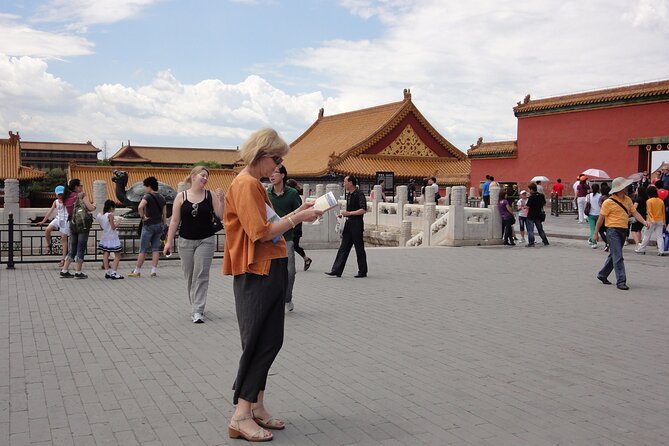
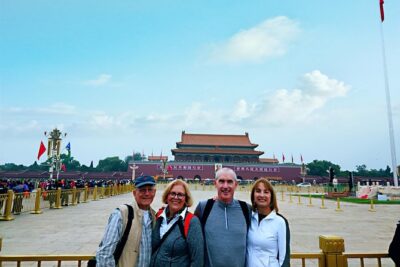
Start with Tiananmen Square. It’s quick in the plan—just enough time to take it in as the iconic stage for modern China. Even if you’ve seen pictures, being there in person helps you understand why this square is treated like a symbol, not just a place to stand.
From there you head straight into the Forbidden City (also called the Palace Museum). This is one of those sites where “impressive” doesn’t really cover it. You’ll be walking through halls and pavilions tied to how emperors lived and governed, with plenty of ancient art treasures along the way. The practical win here is guidance. Without help, you can end up drifting. With a guide, the museum-style complexity turns into a readable story.
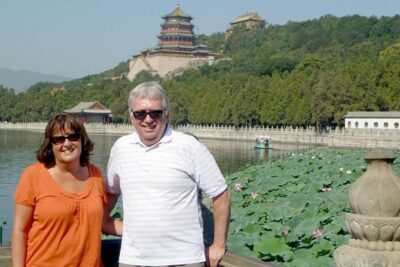
Then comes the Summer Palace. It shifts the mood from power to pleasure. Think royal garden design and calmer scenery around major architecture, where you can slow down after the intensity of the Forbidden City.
Where this works especially well: if you want Beijing to feel like a complete arc—from symbolic square to imperial machinery to royal retreat.
Potential drawback: the opening days are sightseeing-dense. If you’re the type who likes long lie-ins and unplanned hours, you may feel rushed before the tour even leaves Beijing.
Mutianyu Great Wall Cable Car and Hutong Rickshaw Street Life
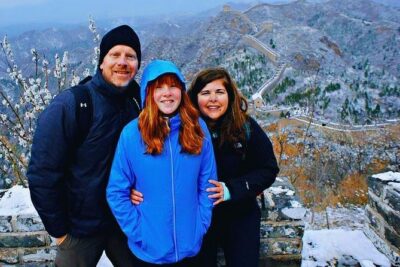
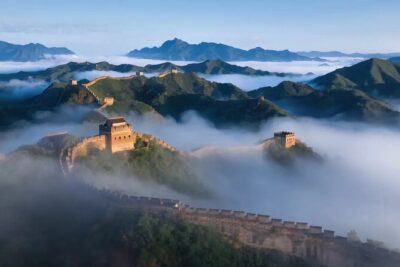
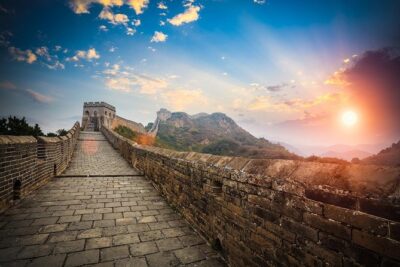
On day three, you get the Mutianyu section of the Great Wall. This matters. Mutianyu is set up with logistics that make it practical for a tour: the plan includes a round-trip cable car. That’s a big deal if you’d rather spend your energy walking on the wall instead of spending the day climbing to reach it.
Once you’re up there, the payoff is the view line—wall stretching in both directions, the sense of how far the structure was meant to reach. If you’ve ever stared at a Great Wall photo and wondered why it looks different in real life, this is one of the spots where the difference becomes obvious.
Back in town, you’ll also stop at the Bird’s Nest for photos outside. No deep spend there, but it’s useful if you want a recognizable moment without eating your whole day.
Then you roll into hutong life with a rickshaw tour through the original alleys, plus a chance to visit a local family. This is where Beijing becomes less museum and more neighborhood. You get to see day-to-day spaces that don’t feel like they were built for tourists.
My advice: take your time with the alley part. It’s easy to treat it like a scenic pause, but the best value is the chance to see how people live behind the postcard Beijing.
Flying to Lhasa: Norbulingka, Tibet Museum, and Sera Monastery Timing
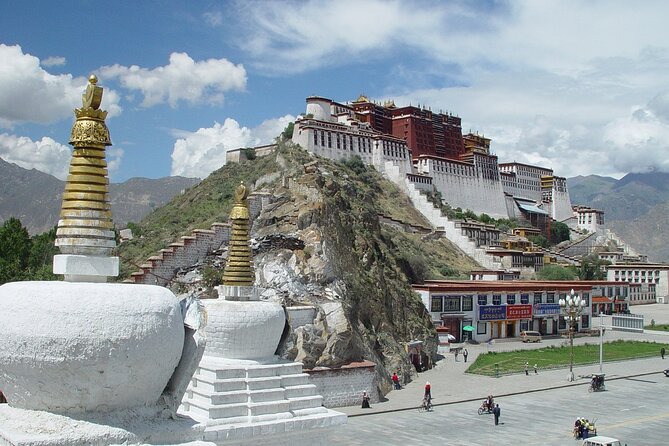
After Beijing, you fly to Lhasa. The tour handles arrival basics: a guide meets you at the airport and offers tips for adjusting to high altitude during the drive into town. Then you’re given time to rest so your body can catch up. That rest day function is important. In Tibet, trying to force energy early can backfire.
The next day opens gently with Norbulingka (Precious Stone Garden). This used to be a summer house for generations, and it still has that calmer rhythm—garden space, Buddha-related connections, and a less stressful pace than you’ll feel later at major temples.
After that you visit the Tibet Museum, which focuses on Tibetan culture and history through artifacts, Buddha figures, handwritten ancient books, Thangka paintings, and handicrafts. Even if you’re not a hardcore history nerd, museum context helps you read the rest of the trip. It makes the temples feel less like random stops and more like connected traditions.
Then comes Sera Monastery, and it’s one of the most interesting parts of the entire itinerary. The standout is the monks’ debating sessions—clapping and structured exchanges meant to sharpen Buddhist doctrine understanding. The plan specifies the debates run 15:00 to 17:00 every day except Sundays.
Pro tip: wear comfortable shoes and plan water breaks. The debate can hold your attention, but your feet might not.
Potala Palace, Jokhang Temple, and Barkhor Street After-Temple Rhythm
Potala Palace is next, and it’s a full-on visual statement. You’ll spend time inside exploring its architecture, which blends Tibetan temple and palace styles. The experience here is about scale and symbolism. It’s not just a building; it’s a centerpiece of Tibetan cultural memory.
After that, you’ll visit Jokhang Temple, described as a ultimate pilgrimage destination. This is where you get closer to Tibetan Buddhism as lived practice. You’ll also see loyal believers and feel the devotional energy that makes Jokhang different from many other religious sites.
Then you shift into the everyday sacred route via Barkhor Street. The tour gives time to stroll along the stone road, with traditional buildings and delicate handicrafts. This is also a “look and learn” street: you’ll see the way people move, shop, and linger—without it turning into a theme park.
The plan also includes time at a nunnery so you can observe lifestyle and get a sense of how nuns live within the broader religious community.
One real consideration: Lhasa days involve walking and strong focus. Build in small breaks. If you feel your breathing getting harder, stop for a minute and let your body reset.
Your group only, at your own pace
- Beijing: Forbidden City Tour(Group/Private)-Tickets Included★ 4.8 · 7,974 reviews
- Beijing: T-Square & Forbidden City Group or Private Tour★ 4.8 · 4,446 reviews
- Beijing:Mutianyu Great Wall Private Trip with English Driver★ 5.0 · 1,263 reviews
- Private Mutianyu Great Wall Trip with English-Speaking Driver★ 5.0 · 927 reviews
- Private Mutianyu Great Wall Trip With English-Speaking Driver★ 5.0 · 899 reviews
Xi’an Terracotta Warriors Up Close, Plus a Hands-On Clay Moment
Then you fly to Xi’an. The schedule gives you a full day centered on the big one: the Museum of Qin Terra-cotta Warriors and Horses. This is the kind of sight where close viewing does the work your brain can’t do from photos. You’ll see lifelike soldiers and horses arranged in battle formations, and the distinct expressions on faces are a major part of the impact.
You also spend time on bronze chariots and weapons. If you like details, this is where you’ll be scanning for them instead of just taking wide shots.
What makes this stop feel more than standard sightseeing is the extra time program includes:
- A family visit tied to the home of the first discoverer of the Terracotta Army
- A mini clay warrior workshop with help from a local artisan
That hands-on part is small but memorable. It turns the story into something you did, not just something you watched.
Big Wild Goose Pagoda and Ever-Bright City for Tang-Era Flavor
After the Warriors, you head to Big Wild Goose Pagoda (Dayanta). It’s connected to Tang Dynasty history and the story of Xuanzang collecting Buddhist sutras taken from India. Even if you don’t know the whole storyline, the pagoda is a strong visual anchor for Chinese Buddhist travel memory.
Then there’s a stop at Grand Tang Dynasty Ever-Bright City, with free time to wander. The plan mentions it’s a pedestrian street where locals and tourists encounter cultural scenes, including people dressed in traditional Chinese clothing.
How to get value here: treat this as atmosphere time. Don’t over-schedule your photos. Walk slowly, notice costume details, and keep your energy for Shanghai later.
Xi’an City Wall Morning Exercises and Great Mosque Afternoon Contrast
A morning at the Xi’an City Wall lets you see daily life in motion. The plan notes locals do morning exercises there. That’s a good reminder that you’re not just visiting monuments—you’re walking in spaces that still function.
Then you ascend the wall and can walk sections of it. The experience is tactile: you’re exploring history from the bricks and structure itself. Since it’s one of the best-preserved existing city walls in China, it also feels more stable and coherent than many partial remains you might see elsewhere.
In the afternoon, you shift to Islamic Xi’an at the Great Mosque. After that, you get time in the Muslim Quarter to explore snacks at the nearby bazaar area. The focus here is practical: you get a taste of street culture without being forced into a formal meal plan.
Note: this part is on your feet. Wear shoes you can walk in comfortably.
Shanghai Museum, Yu Garden, Huangpu Cruise, Bund Walk, Tianzifang
Shanghai day starts with the Shanghai Museum. You’ll see rare historical collections there, and the plan gives it a focused slot. This is the kind of museum visit that works well early in the day when your brain is fresh and your timing isn’t pressured by evening crowds.
Next is Yu Garden (Yuyuan), a classic place to appreciate Chinese garden design. The tour pairs it with a farewell a la carte lunch at a noted local restaurant, valued in the plan and included in the price. That’s one of those “thank you for making it this far” meals—structured, but still local.
After lunch, you take a cruise on the Huangpu River. The cruise route is set to pass the Oriental Pearl TV Tower. From the water, Shanghai’s two-sided character becomes obvious: one side with the famous old-line architecture, the other side with modern skyline energy.
Then you head to the Bund (Wai Tan). You’ll walk along the river to appreciate the European-style buildings on the west side and the skyscrapers across the river in Pudong.
Finally, you finish with Tianzifang, described as an old street where you can relax and find fun. It’s the kind of place where you’ll likely wander into small side streets and storefronts.
My advice: do the Bund walk with time to slow down. Evening light makes the skyline feel less like a postcard and more like real city texture.
What the Included Logistics Actually Do for You
A tour like this can either feel like guided box-checking or like a stress-free way to see serious sights. Here, the included items help you avoid friction.
You get:
- Ten nights of accommodation in twin-sharing rooms
- Air-conditioned vehicle with an experienced driver
- Entrance fees to the planned attractions
- Mobile ticket approach for easier access
- Two bottled waters per person per day
- Breakfast included across the trip (10) and lunch on four days
This matters because the biggest time-wasters in big-city travel are usually tickets, lines, and transport coordination. When those are handled, you can focus on site quality.
Also, the tour includes pickup offered on arrival and airport handling in the way of guides meeting you at arrival halls and airports. That’s not glamorous, but it’s very real value when you’re changing cities and managing time zones, language, and jet lag.
Price and Value: Is $4,089 Fair for This Much Ground?
At $4,089 per person, this is not a budget trip. But you’re also buying a bundle of expensive realities: four major regions, three internal flights, a private setup for your group, daily guiding, and admission fees.
The strongest value pieces for the price are:
- Flights between cities handled in the package
- Entrance fees included (these major sites add up fast)
- Tibet Travel Permit included, which is crucial for the Lhasa component
- Ten nights lodging and most meals worked into the plan
What’s not included is also important. China visa fees and international airfare are not part of the price. Personal expenses aren’t included either. So your real total depends on how you handle international flights and your spending style on top of the included meals.
If you’re comparing this to piecing together your own flights, hotels, and guided tickets across multiple cities, the price starts looking more like a “save time and reduce risk” cost than a “just pay for a guide” cost.
Who Should Book, and Who Might Rethink
This tour is a good fit if:
- You want a single guided plan that connects Beijing, Lhasa, Xi’an, and Shanghai without you managing transfers.
- You like a mix of landmark sights and culture stops (temples, museums, hutongs, bazaars).
- You’re okay with flying and having a busy daily schedule.
You might rethink if:
- You hate structured time and prefer free-form travel.
- You have concerns about altitude and want a slower, more flexible Lhasa acclimatization plan. The tour includes advice and a rest period, but it can’t remove the reality of altitude.
The plan asks for moderate physical fitness. That’s code for walking days, temple steps, museum floors, and wall viewing.
Should You Book This 11-Day Private China Tour?
If your dream trip is Beijing’s imperial core, Tibet’s sacred cities, Xi’an’s ancient centerpiece, and Shanghai’s modern drama in one smooth circuit, I think this is an efficient way to do it. The biggest reason to book is that so much is handled for you: flights, guides, transport, and entrance fees, plus the Tibet permit is included.
Before you commit, do two reality checks. First, confirm your comfort with altitude and early pacing in Lhasa. Second, make sure you’re fine with a high-activity itinerary over 11 days.
If that sounds like you, you’re likely to love the payoff: world-class sights stitched together with enough local texture to feel like more than a checklist.
FAQ
Is this a private tour?
Yes. It’s listed as a private tour/activity, meaning only your group participates.
Where does the tour start and what time?
The start is at Capital Airport Shunyi, Beijing 101300 China, with a start time of 9:00 am.
Are flights included between Beijing, Lhasa, Xi’an, and Shanghai?
Yes. The tour includes one-way economy-class airfare from Beijing/Lhasa/Xi’an/Shanghai, and the itinerary uses three flights.
What meals are included?
The tour includes breakfast for 10 days and lunch for 4 days.
Are entrance fees included?
Yes. Entrance fees to tourist sites are included as part of the package.
Do you include a Tibet Travel Permit?
Yes. The tour includes the Tibet Travel Permit.
What makes the Sera Monastery visit specific?
The tour includes Sera Monastery with the monks’ debating sessions running 15:00–17:00 every day except Sundays.
Which big sights are included in Beijing?
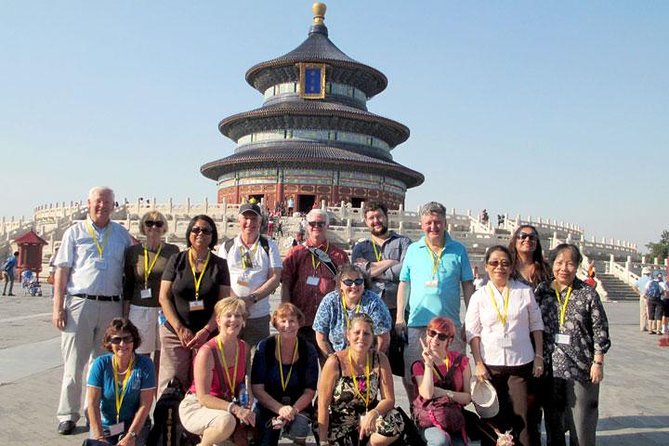
Key included Beijing sights are Tiananmen Square, the Forbidden City (Palace Museum), Summer Palace, Temple of Heaven, and the Mutianyu Great Wall.
Can I cancel for free?
Free cancellation is available up to 24 hours in advance for a full refund.
More Beijing Outings
- From Beijing: Mutianyu Great Wall Tours with Options
★ 4.9 · 9,216 reviews - Beijing: Forbidden City Tour(Group/Private)-Tickets Included
★ 4.8 · 7,974 reviews - Beijing: T-Square & Forbidden City Group or Private Tour
★ 4.8 · 4,446 reviews - All-Inclusive Tour: Tiananmen Square, Forbidden City, Great Wall
★ 5.0 · 2,873 reviews - MuBus: Mutianyu Great Wall ENG/ESP/RUS Guided Bus Tour
★ 5.0 · 2,361 reviews - 4-Hour Small Group Tour to Forbidden City with Entry Tickets
★ 5.0 · 1,863 reviews
More Tour Reviews in Beijing
- From Beijing: Mutianyu Great Wall Tours with Options
★ 4.9 · 9,216 reviews - Beijing: Forbidden City Tour(Group/Private)-Tickets Included
★ 4.8 · 7,974 reviews - Beijing: T-Square & Forbidden City Group or Private Tour
★ 4.8 · 4,446 reviews - All-Inclusive Tour: Tiananmen Square, Forbidden City, Great Wall
★ 5.0 · 2,873 reviews - MuBus: Mutianyu Great Wall ENG/ESP/RUS Guided Bus Tour
★ 5.0 · 2,361 reviews - 4-Hour Small Group Tour to Forbidden City with Entry Tickets
★ 5.0 · 1,863 reviews
Beijing Over Several Days
- Beijing 2-Day Tours: Great Wall, Forbidden City & Top Highlights
★ 5.0 · 688 reviews - Beijing: Top 6 Highlights All Inclusive 2-Day Private Tour
★ 5.0 · 472 reviews - Beijing Private Tour: 2 Days Forbidden City and Mutianyu Great Wall VIP Tour
★ 5.0 · 418 reviews - Beijing: All Inclusive 3-Day Top Highlights Private Tour
★ 5.0 · 259 reviews - Mini Group: 2-Day Beijing Highlights and Great Wall Tour
★ 5.0 · 242 reviews - 2-Day Beijing Highlights Small-Group Guided Tour
★ 4.5 · 120 reviews
Just In: More Beijing Tours to Browse

Multi-Day Beijing Tours, compared.
 ★ 5.0Beijing 2-Day Tours: Great Wall, Forbidden City & Top HighlightsFrom $99688 reviews
 ★ 5.0Top 6 Highlights All Inclusive 2-Day Private TourFrom $330472 reviews
 ★ 5.0Beijing Private Tour: 2 Days Forbidden City and Mutianyu Great Wall VIP TourFrom $369418 reviews
 ★ 5.0All Inclusive 3-Day Top Highlights Private TourFrom $560259 reviews
 ★ 5.0Mini Group: 2-Day Beijing Highlights and Great Wall TourFrom $330242 reviews
 ★ 4.52-Day Beijing Highlights Small-Group Guided TourFrom $179120 reviews
 ★ 5.02-Day Private Classic Beijing City Sightseeing Tour PackageFrom $368102 reviews
 ★ 5.011-Day Small-Group China Tour: Beijing, Xi’an, Guilin, Yangshuo and ShanghaiFrom $2,08989 reviews
Browse the lists this tour appears in