
Reviewed · XI'AN TERRACOTTA WARRIORS TRIPS
8 Days Private Tour of Beijing, Xian, and Shanghai
Three cities, zero stress, lots of history.
This 8-day private tour strings together Beijing, Xi’an, and Shanghai with private transfers, an English-speaking guide, and fast connections like the bullet train.
My favorite part is the clean “this then that” sightseeing rhythm. You’ll hit the big classics in Beijing—Tiananmen Square and the Forbidden City—and then swap pace with a Hutong alley stop for everyday-life Beijing.
One consideration: a couple days include major travel moves (bullet train and an in-city-to-airport flow). It’s still well organized, but you should be ready for a full schedule and for a few things that are optional or paid separately.
In This Review
- Key Things That Make This Tour Worth Your Time
- Beijing Airport to Tiananmen Square: Getting Oriented Fast
- Forbidden City to Hutongs: A Private Pace You Control
- Temple of Heaven and Mutianyu Great Wall: The Two Styles of Awe
- Summer Palace and the Beijing → Xi’an Shift
- Terracotta Warriors Day: The Moment That Changes the Trip
- Shaanxi History Museum and Big Wild Goose Pagoda: Xi’an With Less Rush
- Shanghai Urban Planning Hall, Yuyuan Garden, Xintiandi, and the Bund
- Day 8 Airport Transfer: The Quiet Ending That Matters
- Value, Pricing, and Who This Tour Fits Best
- Should You Book This 8-Day Private Tour?
- FAQ
- Is this tour private or shared?
- What transport is included between the cities?
- Are hotel stays included?
- Are meals fully included?
- Do I need to buy attraction tickets?
- Is there pickup from the airport and transfers within each city?
- What if I want less walking on the Great Wall?
- What kind of guide service should I expect?
- Is there a vegetarian meal option?
- Can I cancel and get a full refund?
Key Things That Make This Tour Worth Your Time
- Private, English-speaking guidance on the land days, so you’re not stuck decoding signs all day.
- Bullet train Beijing → Xi’an (2nd class) plus a flight Xi’an → Shanghai, designed to save hours.
- 4-star hotels for 7 nights with daily breakfast, plus most lunches included.
- Great Wall at Mutianyu with a built-in out if you want less walking via optional cable car.
- Major sights handled in the right order, from Forbidden City to terracotta pits to the Bund.
- Support at airports and stations, including pickup arranged around your flight schedule.
Bullet train south to the buried army
Beijing Airport to Tiananmen Square: Getting Oriented Fast
The trip starts the moment you land. At Beijing Capital International Airport, your driver meets you at the exit, matched to your flight schedule, and takes you to your Beijing hotel for check-in. Then you get a genuine rest day buffer—time to reset, eat, and handle any jet lag before the sightseeing machine kicks in.
On the next morning, the tour goes straight for the symbolism. You’ll start at Tiananmen Square—fast, focused, and close to the center of Beijing’s historical story. With a scheduled visit window, you’re not wandering until your feet give up. From there, the day ramps up with the Forbidden City (The Palace Museum), where the scale is the point. This is one of the largest and most intact palace complexes, tied to the Ming and Qing dynasties and the home of emperors across 24 reigns.
The smart move here is how the tour balances “big monuments” and “human texture.” After the palace, you shift to the Hutong side of Beijing with a local folk residence and an optional rickshaw ride through an alley network. If your goal is to get past the postcard version of Beijing, this is where you start seeing daily life and neighborhood rhythm.
A practical note: you’ll be walking. The good news is that the day is planned in blocks—so you’re not doing endless back-and-forth to find each next stop.
Forbidden City to Hutongs: A Private Pace You Control
In Beijing, the biggest risk is trying to do everything on your own. That usually turns into photo stops that feel rushed, plus time lost figuring out where you should be next. Here, you’re shielded from that chaos with private transfers and an assigned English-speaking guide during the land portions.
The Forbidden City visit is set for about 2 hours. That’s enough time to get the layout in your head, spot the major buildings, and appreciate why it’s so heavily preserved. You’ll also hear the context tied to its role as the imperial palace and how it connects to centuries of rule—without turning your day into a lecture marathon.
Then comes Hutong. You’ll visit Hutong Alley as a local folk residence area, with the chance to take a rickshaw for a quick window into everyday Beijing streets. The tour frames Hutongs as a different face of the city than what you see in major avenues. That contrast is what makes this stop feel worth it, even if you’re only sampling one slice of neighborhood life.
What I’d watch for: Hutong rickshaws are short and can be bumpy depending on conditions. If you’re sensitive to motion, you might still enjoy the alley walk and simply skip the ride when you see how it feels.
Temple of Heaven and Mutianyu Great Wall: The Two Styles of Awe
Day 3 is a great example of why this tour works as a package. It pairs an often-overlooked monument with a Great Wall section that’s known for scenery.
You start at the Temple of Heaven, a sacrificial complex where emperors of the Ming and Qing dynasties prayed for peace and harvest. It’s not just a single building; it’s a site with a sense of purpose and space. With about 1 hour, you’ll have time to understand what it was used for and still keep energy for the afternoon.
Then you head to Mutianyu Great Wall, widely seen as one of the most scenic sections. The walk runs roughly 5,400 meters in this area, and the tour notes that around 90% is covered by vegetation—so the season you visit can change the look of the wall. If hiking is too much, the tour includes an optional cable car, which is a big deal for anyone who wants the view without paying for it with sore legs for the next day.
On the way back, there’s a quick outer look at modern Olympic-era architecture: the Bird’s Nest and Water Cube. The time is limited (about 1 hour 30 minutes total for this part), so don’t expect a deep dive. Think of it as a photo-and-contrast stop: ancient stone wall, then a look at contemporary Beijing’s landmarks.
Best fit here: if you like your Great Wall day planned with options, and you don’t want to gamble on transport and timing.
Summer Palace and the Beijing → Xi’an Shift
The tour doesn’t try to keep you in Beijing longer than it needs to. Day 4 gives you the Summer Palace (Yiheyuan), scheduled for about 2 hours. This is a major imperial garden area of roughly 290 hectares, built during the Qianlong era by imitating the layout of West Lake in Hangzhou. The value of this stop is the “place-feeling” of the gardens—still connected to court life, but experienced more through strolls and scenery than throne rooms.
After lunch, you switch gears for the intercity move. You transfer to Beijing West Railway Station for the high-speed train to Xi’an. That’s the kind of logistics that can eat a day if you’re doing it solo. Here, it’s handled with timing built into the flow, and you’re met on arrival by a local driver for the hotel transfer.
This is where private touring pays off in real life. You’re not coordinating station transfers, managing luggage across platforms, and trying to read systems in a second language while you’re tired. The trade-off is that you can’t fully avoid travel day fatigue. The upside is you’re using the day efficiently instead of stretching the trip length.
Your group only, at your own pace
- Beijing: Forbidden City Tour(Group/Private)-Tickets Included★ 4.8 · 7,974 reviews
- Beijing: T-Square & Forbidden City Group or Private Tour★ 4.8 · 4,446 reviews
- Beijing:Mutianyu Great Wall Private Trip with English Driver★ 5.0 · 1,263 reviews
- Private Mutianyu Great Wall Trip with English-Speaking Driver★ 5.0 · 927 reviews
- Private Mutianyu Great Wall Trip With English-Speaking Driver★ 5.0 · 899 reviews
Terracotta Warriors Day: The Moment That Changes the Trip
Xi’an is where the tour earns its name as a “big three” package, and the center of gravity is the Terracotta Warriors and Horses Museum.
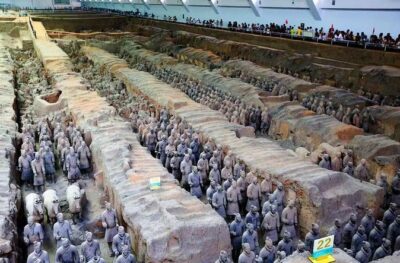
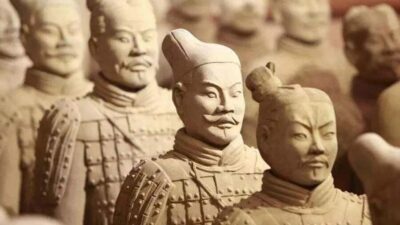
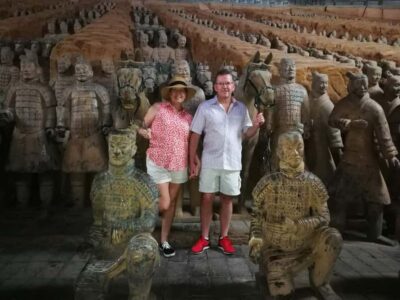
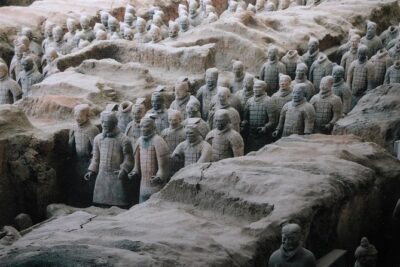
You’ll visit with a guide and spend about 2 hours in the museum complex, including Pit 1, Pit 2, Pit 3, plus an exhibition area related to chariots and horses. The tour highlights why it’s famous: the “eighth wonder” reputation comes from the sheer scale and the surprisingly high level of sculpture work. You’ll also get the origin story—how it was discovered in 1974 while local farmers drilled a well.
This is one of those sights where a guide helps you avoid the common mistake: staring at one pit for too long and missing how the pits relate. The scheduled structure makes it more likely you come away with a fuller mental map of what you’re looking at.
After that, the day moves you onto Xi’an’s living city edge. You’ll visit the Xi’an Ancient City Wall for about 1 hour, with a bike ride as an optional add-on (rental cost on your own side). If you don’t want the bike, even walking sections can help you feel how the wall shaped the city’s defense and layout.
Then it’s dinner-time energy at the Muslim Quarter. The tour also does an outer look at the Bell Tower & Drum Tower Square, before sliding into the food street atmosphere. This is less about architecture facts and more about sensory variety—snacks, street food, and that classic Xi’an night buzz.
Tip: bring your appetite. Lunch is partially handled by the tour, but the day is designed so you can sample what you want in the Muslim Quarter.
Shaanxi History Museum and Big Wild Goose Pagoda: Xi’an With Less Rush
Day 6 gives you a second Xi’an layer that’s more “culture and context” than headline landmarks.
You start at the Shaanxi History Museum, positioned as one of the biggest and most famous museums in China. It focuses on cultural heritage unearthed in Shaanxi Province, and the tour notes the collection strength because Xi’an was capital for more than 13 dynasties. With about 1 hour 30 minutes, it’s long enough to feel like you’re learning something real, not just skimming big cases.
Then you go to Big Wild Goose Pagoda (Dayanta), with about 1 hour on site. The pagoda is linked to the preservation of sutras and figures brought back by Xuanzang from India during the Tang Dynasty. You’ll also have garden walking time around the pagoda, which helps break up the day after museum concentration.
After lunch, you take the afternoon flight to Shanghai, and a local driver meets you for the transfer to your Shanghai hotel. This is the second time the tour uses speed strategically. It keeps you from spending a whole day crossing China by train, while still giving you enough time in Shanghai’s key areas.
Fitness check: this is an overall walking itinerary. The tour specifically suggests moderate physical fitness. If you’re bringing mobility limitations, focus on the days with more walking like the Great Wall and the city wall.
Shanghai Urban Planning Hall, Yuyuan Garden, Xintiandi, and the Bund
Shanghai day (Day 7) is packed, but it has a clever structure: you start with a city-view lens, then go to history, then to old Shanghai living spaces, then to the riverfront skyline.
First up is the Shanghai Urban Planning Exhibition Hall, about 1 hour 30 minutes. The theme is city, human, environment, and development. Even if museums aren’t your favorite, this one helps you interpret what you’re seeing later that day. You’ll get a sense of how Shanghai grew and changed, which makes the architecture and neighborhoods feel less random.
Next is the Yuyuan Garden (Yuyuan), finished in 1577. You’ll spend time in the garden and then wander the Yuyuan Market, described as lively with traditional crafts like chopsticks, fans, and pottery and local snacks. You’re even given a nudge to haggle for better prices. For a lot of people, this becomes the most fun hour of the trip—not because it’s the most important, but because you can snack while you move.
After that, you head to Xintiandi, known for leisure and amusement in Shikumen-style houses. You’ll get time to stroll through shops and bars that were transformed from those traditional lane houses. It’s a more modern re-use of heritage, so expect an atmosphere that feels designed for visitors rather than purely local life.
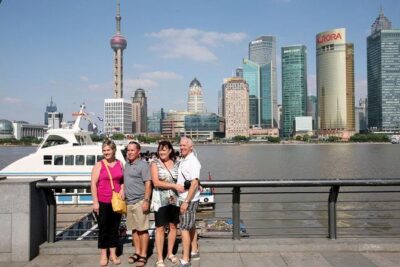
Then you close with the big signature scene: the Bund along the Huangpu River. You’ll have about 1 hour there, with exterior views of buildings in different European-influenced styles. This is the kind of stop that works well with photos because the skyline is what you came for.
Day 8 Airport Transfer: The Quiet Ending That Matters
On Day 8, the tour keeps it simple: at the confirmed time, a driver meets you in your hotel lobby and escorts you to the airport.
That sounds routine, but it’s underrated. Shanghai departures can be chaotic if you’re figuring out transport yourself, especially if your schedule is tight. Here, you’re given a clean handoff, so you’re not scrambling at the last minute.
Value, Pricing, and Who This Tour Fits Best
At $1,462.71 per person for an 8-day private itinerary, you’re paying for three big things: time saved, guided interpretation, and the logistics wrapper.
You get 7 nights in 4-star hotels with daily breakfast, plus most lunches. You also get entrance fees for the listed sights, bottled water, private transfers in air-conditioned vehicles, and private guided land tours. If you were to price those pieces separately—hotels, guides, tickets, and transport—the cost often grows quickly.
This tour especially makes sense if:
- You want to see the major highlights of Beijing, Xi’an, and Shanghai without stitching together trains and guides yourself.
- You care about having an English-speaking guide to add meaning at sites like the Forbidden City, Terracotta Warriors, and the Urban Planning Hall.
- Your group is small enough to benefit from privacy, but you still want the itinerary planned day-to-day.
In the recent comments tied to this operator, named contacts like Grace Chen, Sophia Liu, Maria, and Amy Fang show up as the people helping keep plans precise and communication moving. That kind of coordination matters, especially when your trip includes both a train and a flight.
Should You Book This 8-Day Private Tour?
Book it if you want a tightly organized route through China’s headline cities, with major sights covered, 4-star lodging, and the stress of transport handled for you.
Skip it or reconsider if you hate structured days and prefer fully free roaming, because the itinerary runs by scheduled blocks. Also, if you’re hoping for lots of optional add-ons inside attractions, remember those extras are not included, and a few days include activities where you’ll likely pay for optional choices.
If you want an efficient, high-meaning highlights tour that uses speed where it should and slows down where it matters, this one fits well.
FAQ
Is this tour private or shared?
It’s a private tour/activity, meaning only your group participates.
What transport is included between the cities?
You travel by 2nd class bullet train from Beijing to Xi’an, then by an economic flight from Xi’an to Shanghai.
Are hotel stays included?
Yes. The tour includes 7 nights of accommodation in 4-star hotels, with daily breakfast.
Are meals fully included?
Breakfast is included every day, and most lunches are included. Personal expenses are not included.
Do I need to buy attraction tickets?
You get entrance fees as listed in the itinerary included. The tour also provides bottled water.
Is there pickup from the airport and transfers within each city?
Yes. A licensed driver provides private transfers, including pickup from the airport and hotel transfers during the land days.
What if I want less walking on the Great Wall?
At Mutianyu Great Wall, a cable car option is available (optional).
What kind of guide service should I expect?
You’ll have an English-speaking tour guide during the land tours.
Is there a vegetarian meal option?
A vegetarian option is available—advise the provider at the time of booking.
Can I cancel and get a full refund?
You can cancel up to 6 days in advance of the experience for a full refund, based on local time cut-offs.
More Beijing Outings
- From Beijing: Mutianyu Great Wall Tours with Options
★ 4.9 · 9,216 reviews - Beijing: Forbidden City Tour(Group/Private)-Tickets Included
★ 4.8 · 7,974 reviews - Beijing: T-Square & Forbidden City Group or Private Tour
★ 4.8 · 4,446 reviews - All-Inclusive Tour: Tiananmen Square, Forbidden City, Great Wall
★ 5.0 · 2,873 reviews - MuBus: Mutianyu Great Wall ENG/ESP/RUS Guided Bus Tour
★ 5.0 · 2,361 reviews - 4-Hour Small Group Tour to Forbidden City with Entry Tickets
★ 5.0 · 1,863 reviews
More Tour Reviews in Beijing
- From Beijing: Mutianyu Great Wall Tours with Options
★ 4.9 · 9,216 reviews - Beijing: Forbidden City Tour(Group/Private)-Tickets Included
★ 4.8 · 7,974 reviews - Beijing: T-Square & Forbidden City Group or Private Tour
★ 4.8 · 4,446 reviews - All-Inclusive Tour: Tiananmen Square, Forbidden City, Great Wall
★ 5.0 · 2,873 reviews - MuBus: Mutianyu Great Wall ENG/ESP/RUS Guided Bus Tour
★ 5.0 · 2,361 reviews - 4-Hour Small Group Tour to Forbidden City with Entry Tickets
★ 5.0 · 1,863 reviews
South to the Terracotta Warriors
- Beijing to Xi’an See Terracotta Warriors with Bullet Train Round Trip Transfer
★ 5.0 · 238 reviews - Beijing: Xi’an Terracotta Tour by Train-All Tickets Included
★ 5.0 · 27 reviews - 11-Day China Tour of Small Group to Beijing, Xian, Chengdu, Shanghai
★ 5.0 · 26 reviews - 10-Day China Tour to Beijing, Xian, Chengdu and Shanghai
★ 5.0 · 17 reviews - Beijing to Xi’an Terracotta Tour by Roundtrip Bullet Train
★ 4.8 · 13 reviews - 5 Days Beijing and Xian Tour by bullet train
★ 5.0 · 9 reviews
Just In: More Beijing Tours to Browse



Xi'an Terracotta Warriors Trips, compared.
 ★ 5.0Beijing to Xi’an See Terracotta Warriors with Bullet Train Round Trip TransferFrom $564238 reviews
 ★ 5.0Xi’an Terracotta Tour by Train-All Tickets IncludedFrom $43827 reviews
 ★ 5.011-Day China Tour of Small Group to Beijing, Xian, Chengdu, ShanghaiFrom $2,34926 reviews
 ★ 5.010-Day China Tour to Beijing, Xian, Chengdu and ShanghaiFrom $2,97917 reviews
 ★ 4.8Beijing to Xi’an Terracotta Tour by Roundtrip Bullet TrainFrom $18013 reviews
 ★ 5.05 Days Beijing and Xian Tour by bullet trainFrom $1,0189 reviews
 ★ 5.0to Xi’an Terracotta Day Tour by Roundtrip Bullet TrainFrom $2129 reviews
 ★ 5.0Private Day Trip to Terracotta Army from Beijing by Bullet TrainFrom $2997 reviews
Browse the lists this tour appears in