
Reviewed · FORBIDDEN CITY & TIANANMEN SQUARE TOURS
Beijing: Highlights of Forbidden City+Options Tour
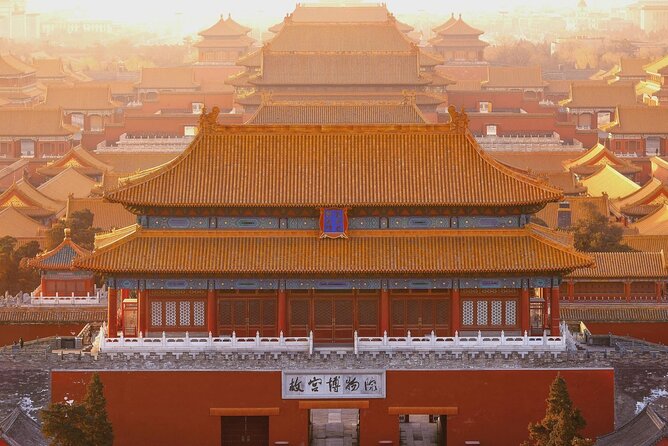
Meridian Gate sets the tone fast, and I love how this tour removes the ticket headache with a mobile ticket and a professional English guide. It also zeroes in on the palace’s big ideas, from the Three Harmony halls to the rooms that explain court life. My only caution: the 4-hour pace is efficient, not slow, so you’ll need to be okay with moving on quickly.
This is a small group experience, capped at 12 people, and that makes it easier to ask questions as you walk. Guides I’ve seen highlighted include Linda, Amber, Melodie, Angel, and Harper, and they all lean into clear storytelling that connects the buildings to how the court actually worked.
In This Review
- Key points to know before you go
- Price and logistics: what $30 really covers
- From meeting point to Meridian Gate: start strong, avoid early chaos
- Meridian Gate to the Three Harmony halls: reading the palace like a map
- Palace of Heavenly Purity and the inner court: where the story gets personal
- Imperial Garden and the walk to Gate of Divine Prowess
- Tiananmen Square included: use your 30 minutes wisely
- What makes the guide style work (and why it matters)
- The small-group pacing: how to decide if this fits your style
- Should you book this Forbidden City + Tiananmen highlights tour?
- FAQ
- How long is the Forbidden City and Tiananmen highlights tour?
- What’s included in the price?
- Do I need to buy tickets for the Forbidden City?
- Is Tiananmen Square part of the tour?
- How many people are in the group?
- Are the Jewelry and Clock museums included?
- Is hotel pickup or drop-off included?
- Can I get a refund if I cancel?
Key points to know before you go
- Guaranteed entry and a mobile ticket, so you spend less time worrying about Beijing rules and more time walking inside
- A tight highlights route, focused on the key halls and palace residences instead of an all-day marathon
- Three Harmony halls + power symbolism, with time built in to understand how the court presented authority
- Qing-era living spaces get explained, including the empress areas and harem system
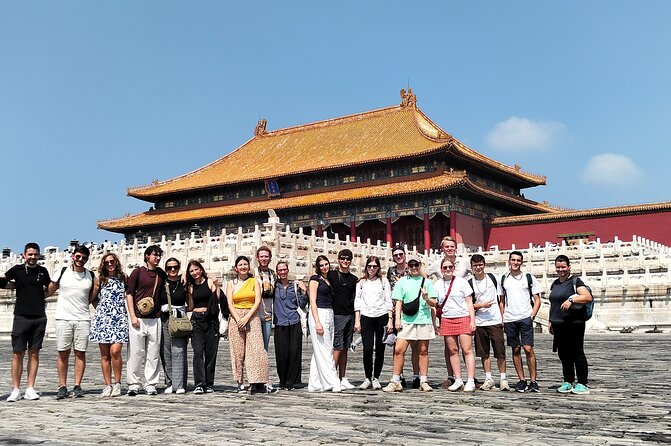
- Small group size (max 12), which helps the guide keep a steady rhythm without rushing you too hard
- Tiananmen Square is included for free, with a 30-minute window to reset before your next stop
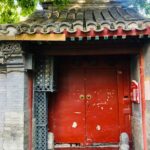
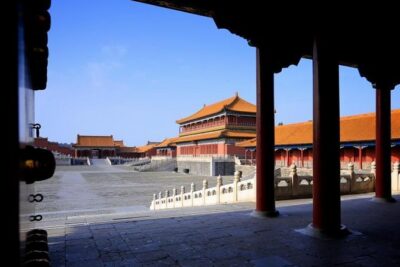
Back through the red gates, more Forbidden City walks
Price and logistics: what $30 really covers
At $30 per person, the headline value is simple: you’re paying for access plus guidance, not just a stroll. The tour includes the entrance ticket cost with guaranteed entries, and that matters in Beijing where ticketing can feel like a puzzle.
For me, the best part is the mental load. This tour is built for people who want the major sights without doing the ticket math on their own. You meet at a fixed meeting point, and the provider says they’ll pick up all travelers there, which helps if you’re not sure how to line up efficiently in a place like the Forbidden City.
There’s also a bit of smart realism in the inclusions. The tour does not bundle everything the Palace Museum offers. You’re not getting the Jewelry and Clock museums tickets, so if you want those, plan on paying extra separately. Also, tips are not included, so keep a little cash in mind for good service.
Finally, remember the time math. The total duration is about 4 hours including travel time, so you’re choosing highlights, not “see every corner.” If you like to linger for long photos or read every sign, you’ll probably want extra free time after the tour.
From meeting point to Meridian Gate: start strong, avoid early chaos
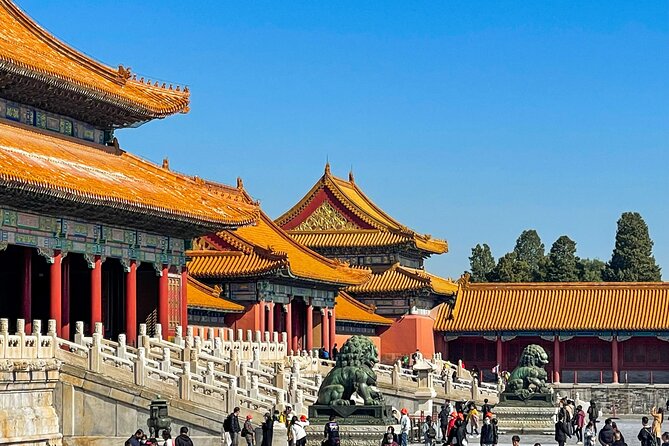
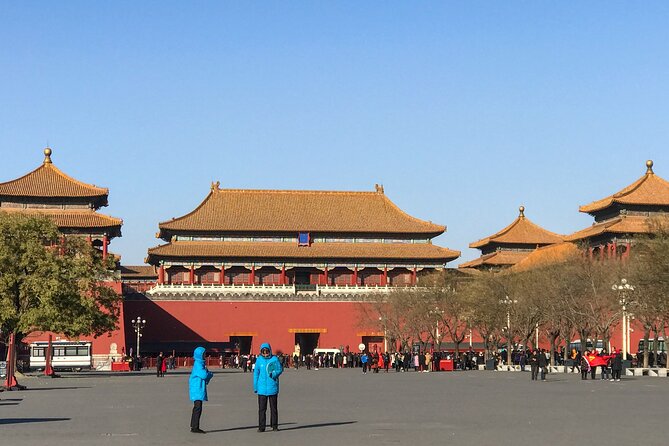
Your experience begins at the Meridian Gate, the symbolic main entrance area of the Forbidden City. This is a great place to start because it gives you orientation fast. Once you understand where you are in the palace layout, everything farther inside makes more sense.
The tour gives you about one hour here, which is valuable. Early in the visit, you’re still learning how the space is organized: where the ceremonial centers are, where the inner palace begins to shift toward court and family life, and how the movement through gates and halls tells a story.
Practical tip: arrive ready to walk. Even though the route is curated, this is still a complex site with plenty of time on your feet. The small group size (up to 12) helps the flow. You’re not fighting a huge crowd to keep up with the guide.
Another nice touch is the way the guide frames what you’re looking at. The Meridian Gate isn’t just a dramatic photo spot. It’s where the tour naturally transitions from “palace buildings” into “palace purpose.” That focus makes the rest of the route easier to follow.
Meridian Gate to the Three Harmony halls: reading the palace like a map
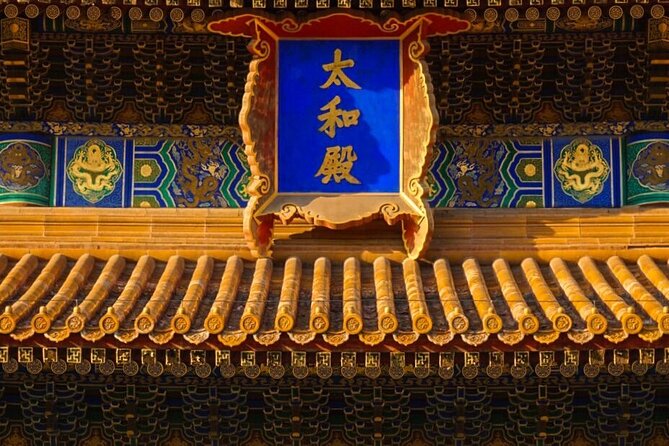
After the opening walk, the tour moves you into the ceremonial core: the Hall of Great Harmony, the Hall of Middle Harmony, and the Hall of Preserving Harmony. These three halls are tied together by function and symbolism, so it’s smart to visit them in sequence rather than skipping around.
You’ll spend:
- about 15 minutes at the Hall of Great Harmony
- 10 minutes at the Hall of Middle Harmony
- 10 minutes at the Hall of Preserving Harmony
The Hall of Great Harmony is where the guide explains the “three harmony halls” idea, including how they reflected the emperor’s duties and holy role in the feudal dynasty. The tour also points out how ancient architecture had a ranking system. That’s a big help if your brain wants categories: this isn’t just pretty wood and stone. It was organized to signal importance.
Then the Hall of Middle Harmony gets explained as rehearsal space. That detail is quietly useful. When you hear that an emperor practiced here, the hall stops feeling like a distant throne platform and starts feeling like part of an operating system.
Finally, the Hall of Preserving Harmony is linked to imperial exams. Even if exams aren’t your main interest, this gives you a broader view of how power worked. Court rule wasn’t only ceremonies. It also ran through the selection of officials.
If you’re someone who likes to understand what you’re seeing, this cluster is a win. You walk away with a clearer mental map of why these halls mattered, not just where they are.
Palace of Heavenly Purity and the inner court: where the story gets personal
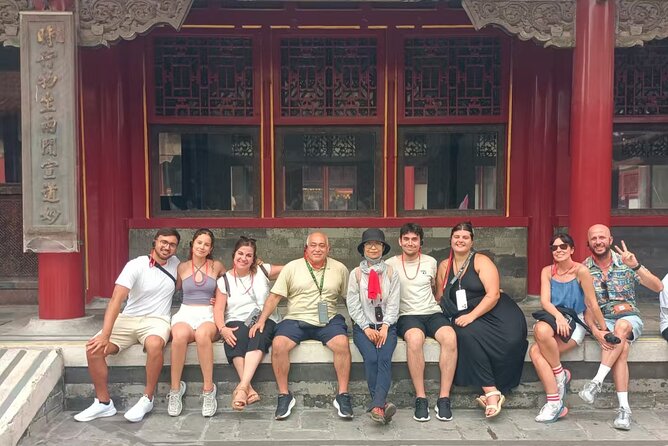
This is the part of the tour that feels less like a ceremonial museum and more like a guided peek into how life ran inside the imperial compound. You move to the Palace of Heavenly Purity, plus related spaces such as the Hall of Union and the Palace of Earthly Tranquility.
Time here is generous compared to the earlier harmony halls:
- 30 minutes at the Palace of Heavenly Purity
- 10 minutes at the Hall of Union
- 15 minutes at the Palace of Earthly Tranquility
At the Palace of Heavenly Purity, the guide covers the Imperial harem system of the Qing dynasty. You’re also encouraged to notice details that are easy to miss because they hide in corners. That’s a tour strength. The Forbidden City can feel overwhelming, and a good guide helps you avoid “I saw a lot, but I remember little.”
Then you head to the Hall of Union, described as where the emperor and empress meet each other. This is a change in tone. Instead of emphasizing the public performance of rule, it focuses on court relationships and daily rhythm.
The Palace of Earthly Tranquility is where the tour turns even more human. It’s where the empress lived, and the guide also shares the connection to a honeymoon room for the emperor and empress during the late Qing dynasty. Whether you find that detail amusing or fascinating, it’s exactly the kind of specificity that makes history feel concrete.
If you’re traveling with a question-heavy group, this is where the Q&A often clicks. The tour gives you enough structure to ask why something was built or used the way it was, without turning the visit into a lecture.
The wider sweep of Beijing in one go
- Beijing Full Day Tours: Tiananmen Sq, Forbidden City, Great Wall★ 5.0 · 1,634 reviews
- Beijing: Tianmen Square, Forbidden City & Royal Museum Tours★ 4.6 · 1,288 reviews
- Beijing Forbidden City Ticket Booking (Optional: guide service)★ 5.0 · 1,263 reviews
- Beijing: Forbidden City and Tian’anmen Square Waking Tour★ 4.9 · 1,002 reviews
- Forbidden City&T-Square Small GroupTours w/ ticket(Eng/Esp Guide)★ 5.0 · 995 reviews
Imperial Garden and the walk to Gate of Divine Prowess
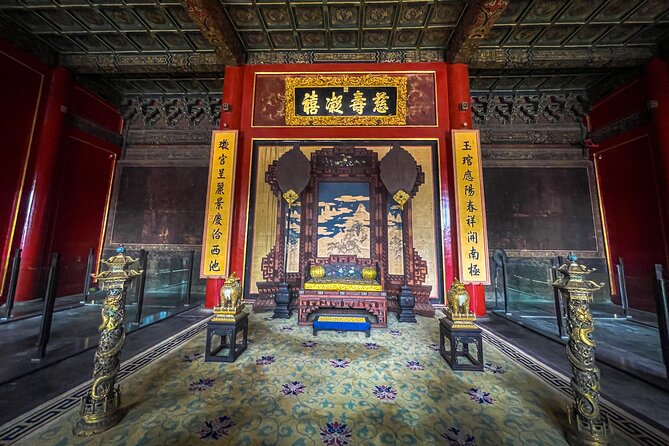
After the inner palace spaces, you shift to the Imperial Garden of the Palace Museum. You get about 20 minutes here. The tour frames it as a mix of ancient garden art. It’s a breather zone, and it’s also a good reset if the palace halls made your feet and brain tired.
Gardens inside major palace complexes are often worth less time than the main buildings, simply because people assume they’re secondary. But when a guide explains garden design as part of imperial life, it becomes another way to read status and taste. The time here is short enough that you won’t lose the day, yet long enough to actually notice paths, layout, and the calm shift in atmosphere.
From there, you head toward the Gate of Divine Prowess, which functions as the exit point. You get about 5 minutes there, and the guide uses that moment to advise you on how to reach your next stop. That short handoff is underrated. It turns the tour from a “drop and disappear” experience into something that keeps you moving.
Tiananmen Square included: use your 30 minutes wisely
The best part of the Tiananmen Square add-on is that it’s free, and it’s built right into the tour so you don’t have to plan yet another ticket or timed entry. You get 30 minutes there.
Tiananmen Square is described as the iconic center of Beijing, tied to Ming dynasty history and the modern era of major changes and reformations. That broad context can be hard to absorb on your feet, so the practical move is to choose what you want to focus on during that half hour.
My advice: pick one simple goal.
- Get oriented with where you are and how the area opens up.
- Take photos from a spot you can return to later.
- Or use the time to rest your legs before you head to your next attraction.
Because the Forbidden City visit already takes you through structured history, the Square stop works best as a quick, meaningful bridge to modern Beijing. You won’t suddenly become an expert in one stop, but you’ll leave with the feeling of place.
What makes the guide style work (and why it matters)
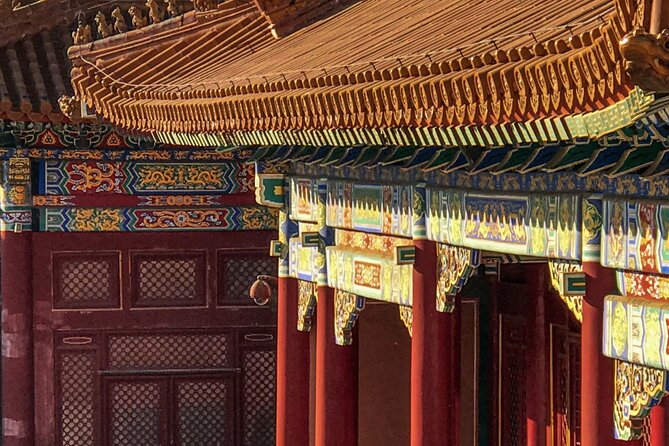
This tour doesn’t just show you buildings. It teaches you how to look at them. That is what makes a short tour feel satisfying instead of rushed.
In the feedback shared by different guides, a repeating theme is clarity and pacing, including guides like Linda and Angel who were praised for kind, professional, and accommodating energy. Amber is highlighted for engaging storytelling, including for families with kids. Harper is noted for strong English and answering questions patiently. Melodie is also described as making the experience easy to follow with good English.
Even if your guide isn’t one of those names, the pattern matters: the tour seems designed to keep you oriented, explain what each space is for, and offer small details you’d otherwise miss. In places like the Forbidden City, “what you’re looking at” and “why it matters” are the difference between a photo-heavy day and a memorable one.
If you want the tour to work best for you, come with at least one goal. Maybe you want to understand imperial hierarchy. Maybe you want court life rather than only ceremonial stuff. The route covers both, but you’ll get more out of it if you know what you want most.
The small-group pacing: how to decide if this fits your style
This tour caps at 12 travelers, which usually makes the experience smoother. You can keep up without feeling like you’re sprinting. It also means you have a better chance of hearing explanations clearly and asking questions.
Still, the format is a highlights route. You’ll spend different amounts of time across the palace spaces, and some areas simply won’t have the long linger time you might want. That’s not a “bad” thing. It’s the deal you make when you compress a huge site into a 4-hour window.
So I’d recommend this tour if:
- you want the major Forbidden City concepts without ticket stress
- you prefer a guided path through a complex site
- you’d rather understand meaning than try to do everything solo
- you’re aiming to add Tiananmen Square the same day
I’d suggest adding your own extra time outside the tour if:
- you’re a slow reader and like to study museum-style signage
- you want to revisit favorite halls for photos in quieter hours
- you plan to extend into extra museum areas like the Jewelry and Clock museums (not included)
Should you book this Forbidden City + Tiananmen highlights tour?
If you want a practical way into the Forbidden City without getting stuck on ticket complexity, this is a strong pick. The value is in the combination: guaranteed entry, a guided highlights route that explains what you see, and a Tiananmen Square stop that’s included for free.
Book it if you like structure and you want your day to feel focused. Don’t book it if you want an unhurried, deep-reading museum day or if you’re planning on adding the Jewelry and Clock museums as part of the same visit.
My final suggestion: if you do book, think of the tour as your “orientation plus meaning” layer. Then, once you’re inside your own head and you know what to look for, you can decide what deserves extra time on your own.
FAQ
How long is the Forbidden City and Tiananmen highlights tour?
It’s about 4 hours, and that total includes travel time.
What’s included in the price?
Entrance tickets are included with guaranteed entry, along with a professional English-speaking guiding service and pick up at a fixed meeting point.
Do I need to buy tickets for the Forbidden City?
You don’t have to manage that part yourself. The tour includes admission with guaranteed entries and uses a mobile ticket.
Is Tiananmen Square part of the tour?
Yes. You get about 30 minutes at Tiananmen Square, and that portion is free.
How many people are in the group?
The tour has a maximum group size of 12 travelers.
Are the Jewelry and Clock museums included?
No. Tickets for the Jewelry and Clock museums are not included.
Is hotel pickup or drop-off included?
No. Hotel pick up and drop off services are not included, but you are picked up from a fixed meeting point.
Can I get a refund if I cancel?
Yes. You can cancel for a full refund up to 24 hours before the experience’s start time.
More Beijing Outings
- From Beijing: Mutianyu Great Wall Tours with Options
★ 4.9 · 9,216 reviews - Beijing: Forbidden City Tour(Group/Private)-Tickets Included
★ 4.8 · 7,974 reviews - Beijing: T-Square & Forbidden City Group or Private Tour
★ 4.8 · 4,446 reviews - All-Inclusive Tour: Tiananmen Square, Forbidden City, Great Wall
★ 5.0 · 2,873 reviews - MuBus: Mutianyu Great Wall ENG/ESP/RUS Guided Bus Tour
★ 5.0 · 2,361 reviews - 4-Hour Small Group Tour to Forbidden City with Entry Tickets
★ 5.0 · 1,863 reviews
More Tour Reviews in Beijing
- From Beijing: Mutianyu Great Wall Tours with Options
★ 4.9 · 9,216 reviews - Beijing: Forbidden City Tour(Group/Private)-Tickets Included
★ 4.8 · 7,974 reviews - Beijing: T-Square & Forbidden City Group or Private Tour
★ 4.8 · 4,446 reviews - All-Inclusive Tour: Tiananmen Square, Forbidden City, Great Wall
★ 5.0 · 2,873 reviews - MuBus: Mutianyu Great Wall ENG/ESP/RUS Guided Bus Tour
★ 5.0 · 2,361 reviews - 4-Hour Small Group Tour to Forbidden City with Entry Tickets
★ 5.0 · 1,863 reviews
More Time Inside the Forbidden City
- Beijing: Forbidden City Tour(Group/Private)-Tickets Included
★ 4.8 · 7,974 reviews - Beijing: T-Square & Forbidden City Group or Private Tour
★ 4.8 · 4,446 reviews - All-Inclusive Tour: Tiananmen Square, Forbidden City, Great Wall
★ 5.0 · 2,873 reviews - 4-Hour Small Group Tour to Forbidden City with Entry Tickets
★ 5.0 · 1,863 reviews - Beijing: Tiananmen Square Registration Service(Ticket)
★ 4.5 · 1,704 reviews - Beijing Full Day Tours: Tiananmen Sq, Forbidden City, Great Wall
★ 5.0 · 1,634 reviews
Just In: More Beijing Tours to Browse



Forbidden City & Tiananmen Square Tours, compared.
 ★ 4.8Forbidden City Tour(Group/Private)-Tickets IncludedFrom $47,974 reviews
 ★ 4.8T-Square & Forbidden City Group or Private TourFrom $174,446 reviews
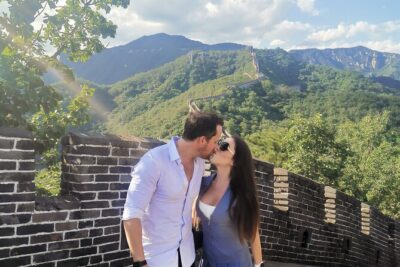 ★ 5.0All-Inclusive Tour: Tiananmen Square, Forbidden City, Great WallFrom $1282,873 reviews
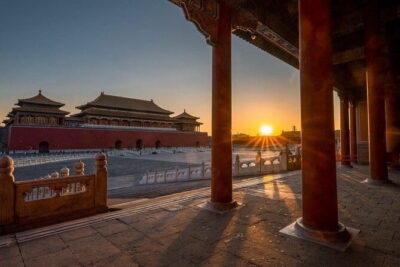 ★ 5.04-Hour Small Group Tour to Forbidden City with Entry TicketsFrom $151,863 reviews
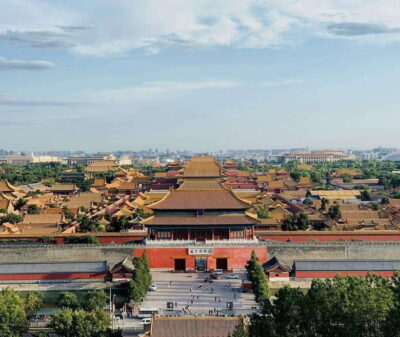 ★ 4.5Tiananmen Square Registration Service(Ticket)From $31,704 reviews
 ★ 5.0Beijing Full Day Tours: Tiananmen Sq, Forbidden City, Great WallFrom $991,634 reviews
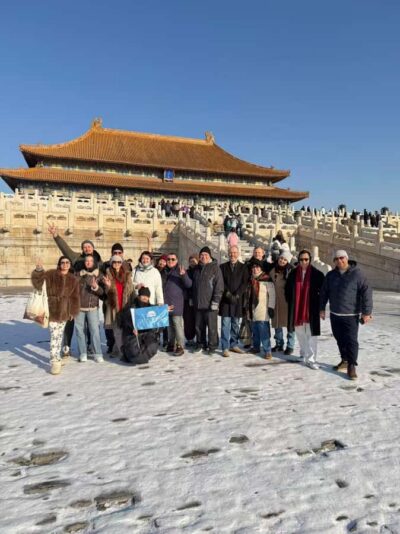 ★ 4.6Tianmen Square, Forbidden City & Royal Museum ToursFrom $41,288 reviews
 ★ 5.0Beijing Forbidden City Ticket Booking (Optional: guide service)From $91,263 reviews
Browse the lists this tour appears in