
Reviewed · TRAIN EXPERIENCES
Datong Yungang Grottoes and Hanging Monastery 1-day from Beijing by Train
Two hours by train, ancient art on tap. This Beijing-to-Datong day trip turns an extra day in the capital into a real culture hit: you’ll see the Yungang Grottoes and the cliffside Hanging Monastery without getting stuck in an overlong travel day. I especially liked the smooth, quiet train ride and the way your guide, Star, keeps everything moving with fluent English and smart time management. The main thing to consider is the early start and the fact that March–October crowds can be intense, so you’ll want to plan around peak-season lines.
What makes this work for you is the private format plus practical extras: pickup is offered, admissions are included, and you get a mobile ticket. I also love that lunch is Shanxi-style, something you won’t get in Beijing, so the day feels like it belongs in Datong instead of just being a sightseeing checklist.
If you’re the type who likes history that you can actually see—stone carvings with age behind them, and a temple built into a cliff—this is a strong fit. With about 12 hours total from Beijing, it’s a full day, but it doesn’t feel chaotic because Star runs the pacing.
In This Review
- Key things you should know before you go
- Why a Beijing to Datong day trip works on the bullet train
- Star’s English guide style: what it changes for your visit
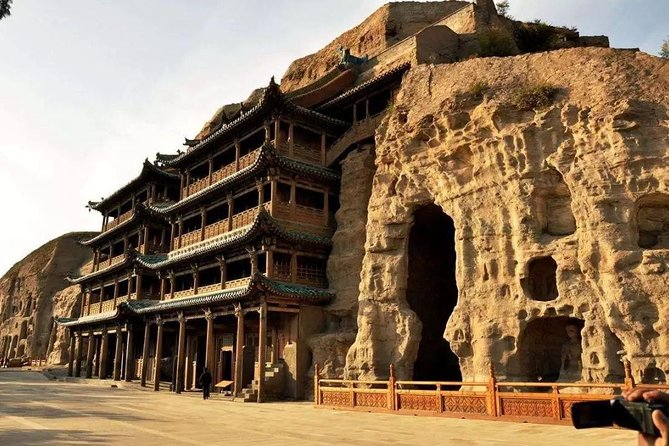
- Yungang Grottoes: 252 caves and 51,000-plus figures in Northern Wei stone
- Hengshan Hanging Temple: how a cliff holds Buddhism, Taoism, and Confucianism
- Lunch with Shanxi flavor: why it feels like part of the trip
- Private tour comfort: pickup, mobile tickets, and pacing that doesn’t waste time
- Price and value: what $399 likely covers (and what it’s really buying)
- Best timing for Yungang and Hanging Monastery in March–October crowds
- Who this Datong day trip suits best
- Should you book this Beijing to Datong combo?
- FAQ
- FAQ
- How long is the day trip from Beijing to Datong?
- How long is the train ride each way?
- What stops are included?
- Are admission tickets included?
- Is pickup included?
- Is this tour private?
Key things you should know before you go
- Bullet train makes a day trip realistic: about 2 hours each way, so you’re not spending most of the day on the road.
- Star’s English and timing matter: you’ll get clear explanations and tight scheduling so you don’t waste time.
- Admission tickets are included for both Yungang Grottoes and the Hanging Temple.
- The Hanging Monastery can hit long waits in peak season (March–October): if on-site waiting exceeds 1.5 hours, view it from below instead.
- Lunch is Shanxi-style, giving you a local flavor change from Beijing.
- Private tour comfort: it’s your group only, with a dedicated team and pickup offered.
Weigh these up before you book this Beijing tour:


Why a Beijing to Datong day trip works on the bullet train
Beijing is a great place to visit, but it’s not always great for squeezing in far-flung sights without losing a day to transit. This is where the new Beijing–Datong bullet train changes the math. You’re looking at roughly 2 hours each way, which means you can actually spend meaningful time at two major Shanxi landmarks instead of just getting a quick look and rushing back.
That time saving also affects how the day feels. If you’ve done long-distance tours that start late and end late, you know the mood tends to flatten. Here, the structure is built around getting you out early, seeing what matters most, and returning without turning your trip into a grind.
The flip side is the same reality you’ll feel in your body: you should expect an early start. The tour’s operating window runs from early morning into late evening, and with a 12-hour day total, you’ll want to be ready for a full schedule. If you’re the kind of traveler who needs a slow morning, this may feel like a lot—though Star’s time management helps smooth it out.
Star’s English guide style: what it changes for your visit
A good site guide can turn a confusing place into a place that clicks. Here, that’s a big part of the value. Your guide, Star, is described as fluent in English, strong on Shanxi history and culture, and experienced with time management. That combination matters for two reasons.
First, these sites are old. The Yungang Grottoes come from the Northern Wei period (460–525 AD), and the Hanging Monastery is about 1,500 years old. Without context, you can still enjoy them visually, but you might miss the “why” behind the design. With Star, you’re less likely to wander through without meaning.
Second, these places don’t reward slow drift in the way some museums do. You have set time at each stop, and in peak season the Hanging Temple area can get crowded fast. Star’s scheduling is what helps you hit both sites in one day and still feel like you got something real out of each.
It also helps that the overall tour is private. You’re not just sharing an audio system with strangers; you have a dedicated team to work for your group’s pace. That makes a difference when you want to ask quick questions or need a moment to orient yourself before moving on.
Yungang Grottoes: 252 caves and 51,000-plus figures in Northern Wei stone
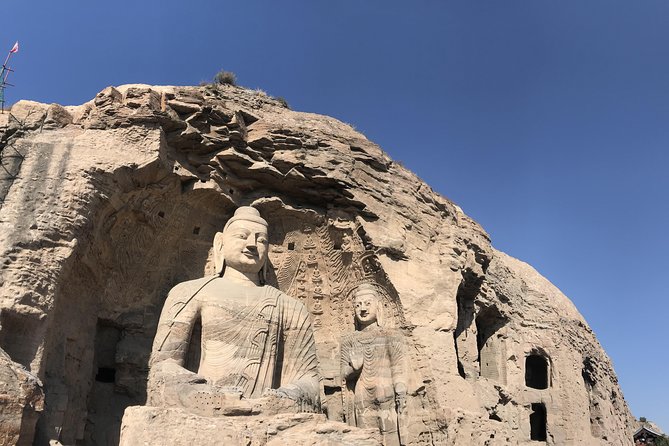
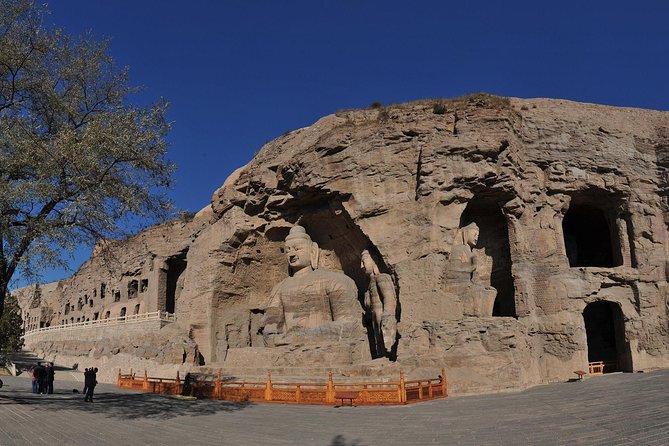
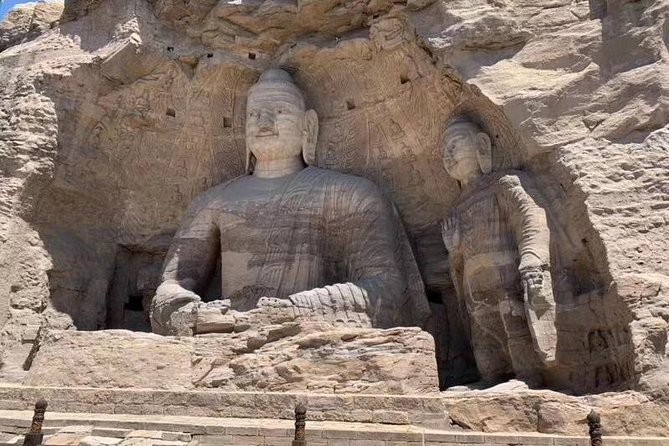
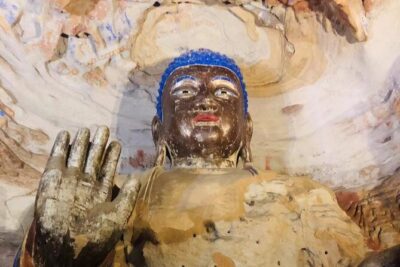
The Yungang Grottoes are one of the three most famous ancient sculptural sites in China, and they’re easy to understand once you focus on scale. The full site includes 252 grottoes, with more than 51,000 Buddha statues and statuettes carved in stone. That kind of number can feel abstract until you’re standing inside the complex and realize you’re looking at a whole gallery built over centuries.
They were created between 460 and 525 AD during the Northern Wei Dynasty. That date range matters because you’re not just seeing art; you’re seeing an early phase of Chinese Buddhist cave carving. The site is also a UNESCO World Heritage Site, recognized for the fusion of Buddhist religious symbolic art from South and Central Asia with Chinese cultural traditions, beginning in the 5th century under imperial auspices.
What you’ll likely love most is how the carvings communicate through repetition and variation. Even if you can’t read every detail, your eye starts to notice how forms and figures change from cave to cave. With the limited time (about 2 hours at the site), you’ll want to prioritize what you enjoy most: close-up sculpture, overall architectural planning of the caves, or learning the story behind why the grotto tradition took this specific form in Northern Wei China.
A realistic consideration: two hours is not enough to see every nook of a site this large at full attention. You’ll get a strong overview, but it’s still a lot of stone to process in one visit. I’d treat the time as a guided selection—you’re coming for the big impact, not for a deep, slow marathon.
Hengshan Hanging Temple: how a cliff holds Buddhism, Taoism, and Confucianism
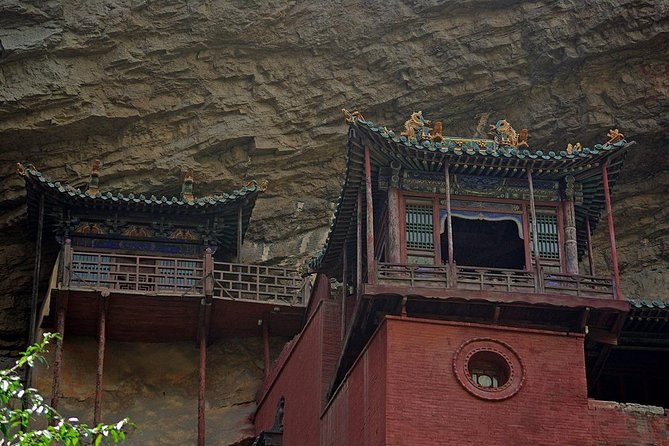
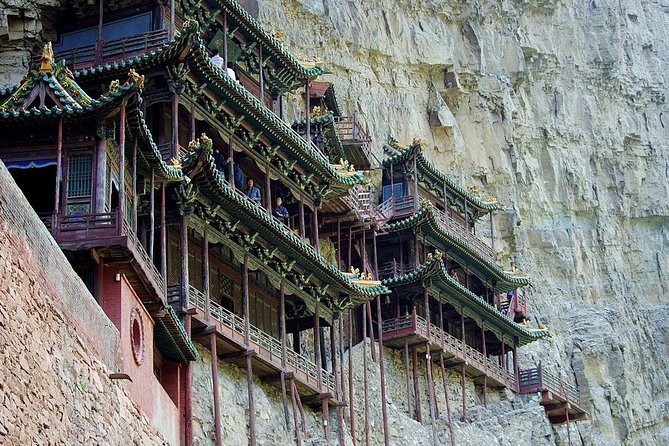
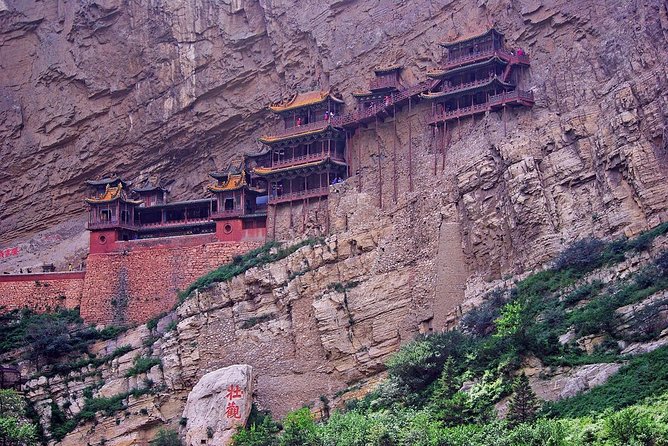
Next comes the Hengshan Hanging Temple, also known as Xuankong si. This is the kind of place that makes you pause and look up, because the temple is built into a sheer precipice. It’s around 1,500 years old, and it’s famous for combining Buddhism, Taoism, and Confucianism within one complex.
The building technique is part of the magic: the temple is supported by hidden wooden beams embedded in the rock. You can think of it as architecture that had to solve a problem without modern tools—how do you make something stable on a vertical cliff? It’s also naturally protected from weather by the surrounding cliff, which helps explain why the temple has survived while still looking dramatic.
You’ll get about 1 hour at this stop. That can be just right if you use the time well: quick orientation, then focus on what makes it unique—the structure, the way faith traditions are combined, and the cliff setting. If you go in expecting time to leisurely wander everywhere, you’ll feel rushed.
Peak season is the other key factor. March–October tends to bring high visitor numbers, and advance reservations are required and competitive. There’s also a practical rule of thumb: if the waiting time on site exceeds 1.5 hours, you’re advised to view the temple from below rather than entering. That’s genuinely useful advice, because it protects your schedule. Instead of watching a line eat your day, you still get the core experience: seeing the temple sitting where it shouldn’t logically be possible.
- From Beijing: Mutianyu Great Wall Tours with Options★ 4.9 · 9,216 reviews
- Beijing: Forbidden City Tour(Group/Private)-Tickets Included★ 4.8 · 7,974 reviews
- Beijing: T-Square & Forbidden City Group or Private Tour★ 4.8 · 4,446 reviews
- All-Inclusive Tour: Tiananmen Square, Forbidden City, Great Wall★ 5.0 · 2,873 reviews
- MuBus: Mutianyu Great Wall ENG/ESP/RUS Guided Bus Tour★ 5.0 · 2,361 reviews
Lunch with Shanxi flavor: why it feels like part of the trip
One of the best surprises in a day trip is when the food actually follows the geography. This tour includes lunch that’s Shanxi-style, and that’s specifically positioned as something you won’t find in Beijing. Even if your day is packed with major landmarks, this is the moment where you get a taste of the region beyond its famous sites.
Food also works as a pacing tool. After you’ve spent time absorbing stone carvings and cliff architecture, you’ll likely feel the mental load. A proper lunch break helps reset your energy so the second site doesn’t turn into a blur.
Because no specific dishes are listed in the details you provided, I won’t pretend you’ll eat X or Y. What you can rely on is the idea: local Shanxi food, included, timed to keep your sightseeing flow.
Private tour comfort: pickup, mobile tickets, and pacing that doesn’t waste time
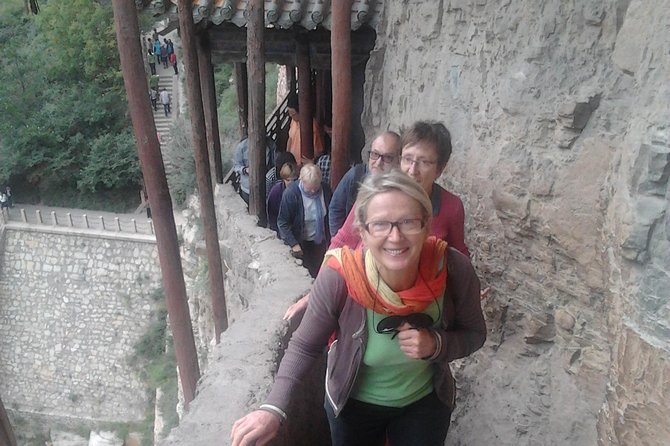
This is a private tour, meaning only your group participates. That matters more than people think. When you’re visiting high-traffic cultural sites, random delays multiply: waiting for the last person, re-grouping after bathroom breaks, or losing track of where you are. A private format lets the team plan around your group’s rhythm.
You also get pickup offered and a mobile ticket, which cuts down on the small friction points that can steal time on a day trip. Mobile tickets can be a big help when you’re moving quickly between train stations and attractions.
Group discounts are mentioned as well, which hints that the operator may support different group sizes. Still, private is the defining feature: your experience is designed around your schedule, not around shoehorning you into whatever time slot is easiest for everyone.
Price and value: what $399 likely covers (and what it’s really buying)
At $399 per person, this isn’t a budget outing. But it’s also not just “a train ticket plus vibes.” You’re paying for a full, structured day that includes:
- Round-trip bullet train time (about 2 hours each way)
- Admission tickets at both Yungang Grottoes and the Hanging Temple
- An English-speaking guide, Star
- Pickup offered
- Private group service
- A planned day length of about 12 hours
When you weigh it this way, the price starts to make sense for travelers who want two major UNESCO-level experiences with minimal stress. If you were to try doing this on your own, the biggest costs would likely show up as time, coordination, and the chance you’d waste hours handling tickets, translations, and the most efficient order.
This tour also appeals if you value guidance. The grottoes and the hanging temple aren’t just scenic stops; they’re places where context improves everything. If you like learning while you travel, the guided portion is the part you’ll remember.
If you’re traveling extremely light on logistics and you enjoy planning, you might find cheaper ways to reach Datong. But you’d be trading off the organized schedule and the local-history explanations.
Best timing for Yungang and Hanging Monastery in March–October crowds
If your dates fall in March–October, treat this as a peak-season trip. The Hanging Monastery can get crowded, and advance reservations are required and highly competitive. Even with reservations, you can still run into crowd patterns that stretch waiting time.
That’s why the advice about waiting time exceeding 1.5 hours is so valuable. It gives you an “escape hatch” so your experience doesn’t stall. You still get the key visual payoff by viewing the temple from below.
For the Yungang Grottoes, crowds matter too, but the bottleneck is different. There’s more to see in a wider site, and your guide’s explanations will help you stay engaged even if the flow is busy.
If you’re flexible on dates, you’ll likely enjoy a calmer rhythm outside peak season. If you aren’t flexible, you can still have a great day—you just need to trust the plan and be willing to adjust your approach at the Hanging Monastery if lines run long.
Who this Datong day trip suits best
This one fits best if you have the following travel style:
- You have an extra day in Beijing and want a meaningful regional swap to Shanxi
- You enjoy history and culture you can stand next to, not just read about
- You like having an English guide to explain what you’re seeing
- You want a private day trip with minimal coordination stress
- You appreciate local food, especially a included meal outside Beijing
It may feel like a lot if you prefer slow mornings, or if you’re sensitive to early starts. Also, if you hate peak-season crowd uncertainty, plan to use the viewing-from-below option at the Hanging Temple if waiting becomes too long.
Should you book this Beijing to Datong combo?
I’d book it if you want two top-tier Datong experiences in one day and you value guidance. The combination of efficient bullet train timing, included admissions, and Star’s English explanations is exactly what turns a hard logistics day into a satisfying one.
Skip it if you’re chasing a laid-back pace or if you’re budgeting to the point where private, guided, ticketed service feels unnecessary. In that case, you’d likely do better with a self-guided Datong plan.
If you’re on the fence, think about what you want to come home with: photos are nice, but the real payoff here is understanding what you’re looking at—why Yungang was carved the way it was, and how a temple can sit on a cliff using beams hidden in the rock.
FAQ
FAQ
How long is the day trip from Beijing to Datong?
The total duration is about 12 hours.
How long is the train ride each way?
The bullet train ride takes about 2 hours each way.
What stops are included?
You’ll visit the Yungang Grottoes and the Hengshan Hanging Temple (Xuankong si).
Are admission tickets included?
Yes. Admission tickets are included for both Yungang Grottoes and the Hanging Temple.
Is pickup included?
Pickup is offered.
Is this tour private?
Yes. It’s a private tour/activity, so only your group participates.
Out and Back in a Day
- Mutianyu Great Wall and Summer Palace One Day Bus Tour
★ 5.0 · 466 reviews - Mutianyu Great Wall and Summer Palace Private Day Trip with Lunch
★ 5.0 · 209 reviews - Private Custom Tour or Private Tour: Beijing in One Day
★ 4.5 · 119 reviews - Private Beijing Day Trip: Mutianyu Great Wall and Ming Tombs
★ 5.0 · 114 reviews - Full Day Trip Mutianyu Great Wall, Forbidden City, Tiananmen Sq.
★ 5.0 · 110 reviews - Water-Great Wall Odyssey: Hike & Cruise One Day Tour
★ 5.0 · 94 reviews
More Tour Reviews in Beijing
- From Beijing: Mutianyu Great Wall Tours with Options
★ 4.9 · 9,216 reviews - Beijing: Forbidden City Tour(Group/Private)-Tickets Included
★ 4.8 · 7,974 reviews - Beijing: T-Square & Forbidden City Group or Private Tour
★ 4.8 · 4,446 reviews - All-Inclusive Tour: Tiananmen Square, Forbidden City, Great Wall
★ 5.0 · 2,873 reviews - MuBus: Mutianyu Great Wall ENG/ESP/RUS Guided Bus Tour
★ 5.0 · 2,361 reviews - 4-Hour Small Group Tour to Forbidden City with Entry Tickets
★ 5.0 · 1,863 reviews
Just In: More Beijing Tours to Browse



Train Experiences, compared.
 ★ 5.0Beijing to Xi’an See Terracotta Warriors with Bullet Train Round Trip TransferFrom $564238 reviews
 ★ 5.0Beijing to Datong See YunGang Cave, Hanging Temple (Bullet Train)From $41639 reviews
 ★ 5.0Xi’an Terracotta Tour by Train-All Tickets IncludedFrom $43827 reviews
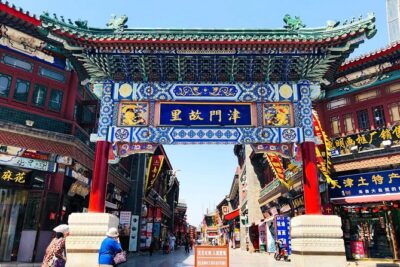 ★ 5.0Private Day Trip to Tianjin from Beijing by Bullet TrainFrom $22922 reviews
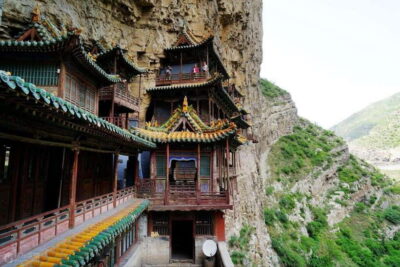 ★ 5.0Bullet Train Tour to Hanging Temple&Yungang GrottoesFrom $34816 reviews
 ★ 5.0Private Day Trip: Discover Tianjin by Bullet Train from BeijingFrom $22414 reviews
 ★ 4.8Beijing to Xi’an Terracotta Tour by Roundtrip Bullet TrainFrom $18013 reviews
 ★ 5.0Beijing to Shanghai Bullet Train Ticket with South Railway Station TransferFrom $16611 reviews
Browse the lists this tour appears in