Reviewed · FORBIDDEN CITY & TIANANMEN SQUARE TOURS
In-depth Forbidden City tour with Royal Icehouse Lunch
Power starts at sunrise.
This private Forbidden City tour gives you more than the usual highlights, with focused access that includes the Imperial Library and the Treasure Rooms (Antiquarium) plus a guide who explains what you’re actually looking at. I especially like the included Royal Icehouse lunch and the way the route hits big-name spaces without rushing past meaning.
The one catch is simple: you’re looking at a 6-hour walk through big palace grounds, so plan for crowds at peaks and bring water, especially in warm weather.
In This Review
- Key things I’d plan around
- A 7:30 am Forbidden City start that helps you see more
- Private guide + hotel pickup: why this tour feels easier than it looks
- South Gate and the Meridian Line: the palace as a ruler’s map
- Hall of major ceremonies: the largest wooden structure vibe
- Banquets and imperial exams: where ideas were tested
- Inner Court and the emperor’s daily-life spaces
- Treasure Rooms (Antiquarium) and the Imperial theatre angle
- Nine Dragon Screens: symbolism you can actually spot
- Imperial garden with four-season pavilions and rockeries
- Royal Icehouse lunch: the coolest part of the day
- Price and what $150 actually buys you
- Timing, walking reality, and who this suits best
- Should you book this Forbidden City tour?
- FAQ
- What time does the tour start?
- How long is the Forbidden City tour?
- Is hotel pickup and drop-off included?
- Does the tour include entrance fees and tickets?
- Is lunch included, and where is it served?
- Is this tour private?
- What fitness level do I need?
- Is free cancellation available?
Key things I’d plan around
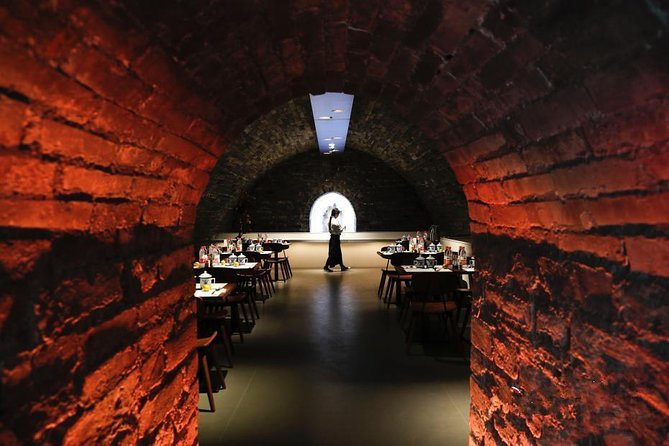
- Royal Icehouse lunch inside an old imperial icehouse setting (not just a random nearby restaurant)
- Access that goes beyond the obvious courtyard photos—including the Imperial Library and Treasure Rooms
- Free hotel pickup and drop-off so you spend less time juggling transit
- A private guide who can slow down or speed up based on your group
- Iconic Forbidden City details like the Nine Dragon Screens and the inner-court garden layout
Back through the red gates, more Forbidden City walks
A 7:30 am Forbidden City start that helps you see more
Meeting at 7:30 am matters in Beijing’s Forbidden City. You’ll be walking before the day’s biggest surges, which makes the palace feel less like a theme-park queue and more like the historical stage it was built to be. You’ll also have a better rhythm: start early, see the most important areas while your legs still feel fresh, then finish with enough energy to enjoy the smaller symbolic details.
If you’re choosing between early and late entry strategies, this one is leaning early. That’s good for photographs, but also good for sanity.
Private guide + hotel pickup: why this tour feels easier than it looks
You’re not just buying admission here—you’re buying a smoother day. With free hotel pickup and drop-off, you can keep your morning simple: get in the van, get out at the gate, and let the guide handle the flow inside the Palace Museum.
The private format is also practical. The Forbidden City is huge, and it’s easy to miss context when you’re wandering. On this tour, your guide points out what each space was for—ceremony, administration, exams, banquets, daily life—so the palace stops being a maze of similar roofs.
In past groups, guides like Selina (who handled hotel pickup smoothly) and Helen Zhang (who kept history clear without turning it into a lecture) were highlighted for making the day feel organized and human—not just fast and factual. And if you travel with someone who moves slower, Lily’s patient pacing comes up as a real win.
South Gate and the Meridian Line: the palace as a ruler’s map
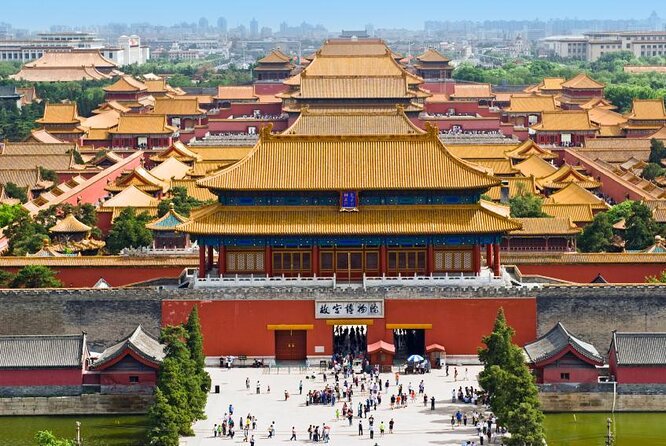
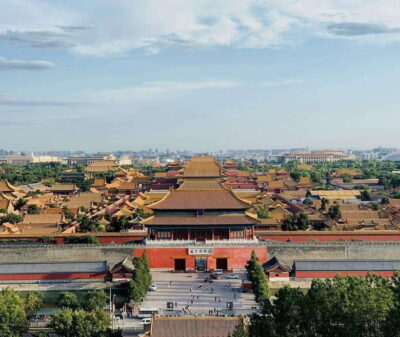
One of the first big “click” moments is the South Gate, the main entrance where the emperor used to believe the Meridian Line passed through it. That’s not trivia for trivia’s sake. It’s the kind of detail that explains the Forbidden City’s sense of alignment—the idea that the layout isn’t accidental. It’s built to express order.
From there, you’ll move from gate-level symbolism into the heart of the palace system: where authority was displayed, confirmed, and performed.
What you’ll like: you’ll understand why buildings are placed where they are, not just where to take pictures.
What you’ll need: comfortable shoes and the mental readiness to walk more than you think.
Hall of major ceremonies: the largest wooden structure vibe
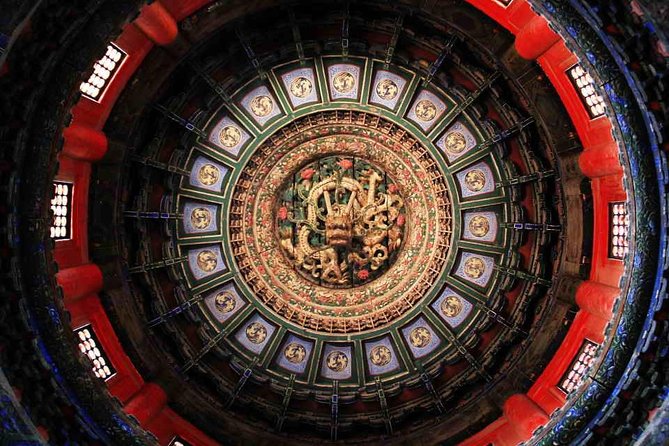
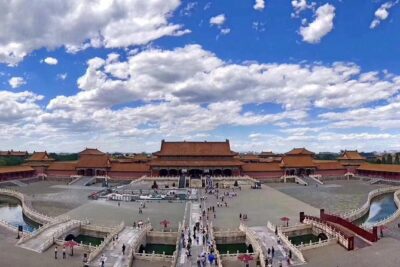
Next up is the main ceremonial building, described as the largest wooden structure in the world, where the emperor worked and held important ceremonies. Even if you’ve seen images before, this space hits differently in person because you feel the scale of the throne-hall design—how it’s meant to project control.
Here’s the practical value: a guide helps you read the space by function. You’ll connect the architecture to the events that used to happen here, which makes the whole “imperial power” concept stop feeling abstract.
A drawback worth considering: this is a busy kind of stop. Big rooms draw big crowds, so if you’re sensitive to noise or crowds, use the guide’s pacing to rest your brain between photo bursts.
The wider sweep of Beijing in one go
- Beijing Full Day Tours: Tiananmen Sq, Forbidden City, Great Wall★ 5.0 · 1,634 reviews
- Beijing: Tianmen Square, Forbidden City & Royal Museum Tours★ 4.6 · 1,288 reviews
- Beijing Forbidden City Ticket Booking (Optional: guide service)★ 5.0 · 1,263 reviews
- Beijing: Forbidden City and Tian’anmen Square Waking Tour★ 4.9 · 1,002 reviews
- Forbidden City&T-Square Small GroupTours w/ ticket(Eng/Esp Guide)★ 5.0 · 995 reviews
Banquets and imperial exams: where ideas were tested
After the main ceremony space, the tour moves to a hall used for banquets and later for imperial examinations, where candidates were tested on understanding of classical and Confucian literature.
This is one of those details that makes the Forbidden City feel less like a museum and more like a machine. The palace wasn’t only where rulers lived—it was where the country’s leadership pipeline was shaped. Understanding that the exam system was tied to the emperor’s supervision makes the symbolism feel grounded.
If you like history that connects culture to daily outcomes, this stop is a strong one. It also gives you a helpful mental anchor: the Forbidden City was not just spectacle. It was administration with drama.
Inner Court and the emperor’s daily-life spaces
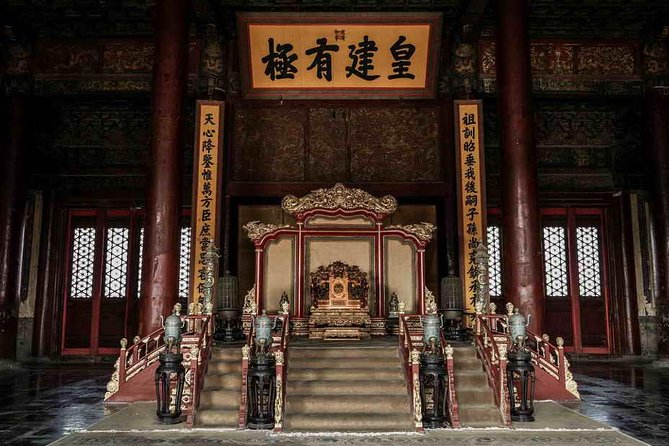
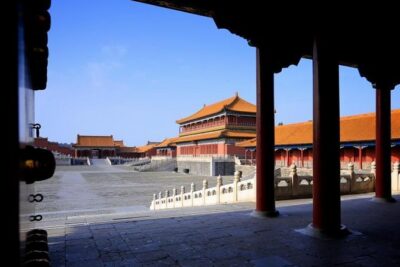
As the route shifts, you’ll be led into areas tied to daily governance and residence—described as the emperor’s place for handling daily affairs, plus living quarters for the emperor, empress, and imperial concubines.
Then you’ll see the largest building in the Inner Court, the residence of the emperor. From a traveler’s point of view, the shift here is important. The outer ceremonial mood gives you grandeur. The inner spaces give you routine and hierarchy—how the court functioned from day to day, not just during special events.
Why a guide matters here: these areas are easy to treat like “more rooms to look at.” With the right explanations, you can track who had access, what the spaces meant, and how the palace staged power in private as well as public.
Treasure Rooms (Antiquarium) and the Imperial theatre angle
One of the standout inclusions is Treasure Hall, also known as the Treasure Rooms / Antiquarium. You’ll hear that it’s actually made of several buildings built for the abdicated Emperor Qianlong, now functioning as exhibition rooms with themed halls and the largest imperial theatre in the Forbidden City.
This stop changes the pace in a smart way. Ceremonial courtyards can feel repetitive after a while. Treasure Hall is different because it blends palace setting with what amounts to curated exhibition interpretation. Even when you’re not reading every label, the framing helps you see the collection as part of imperial life rather than random objects behind glass.
If you care about how Chinese museums organize interpretation, this is a useful marker: you’ll notice how “palace space” and “museum space” overlap here.
Nine Dragon Screens: symbolism you can actually spot
Near the entrance of Treasure Hall is a Nine Dragon Screen—one of the three such screens in China. You’ll learn that the other two are in Beihai Park and Datong, and that the nine dragons have different colors.
This is a great stop for two reasons. First, it’s visually satisfying even at a quick glance. Second, it gives you a pattern to look for elsewhere in the palace: decorative elements weren’t just decoration. They were part of status and cosmology—designed to be read.
My practical tip: take a moment here to slow down and scan the whole screen. The meaning isn’t in one dragon. It’s in the whole system.
Imperial garden with four-season pavilions and rockeries
Next, you’ll step into a garden area described as rectangular, containing more than 20 types of buildings—pavilions, terraces, towers, and rockeries—along with four pavilions symbolizing the four seasons.
This is where the Forbidden City stops being only about politics and starts showing a different kind of thinking: how rulers organized nature into an ordered picture. The four-season symbolism gives you an easy way to understand what you’re seeing without needing a scholar’s background.
What you’ll likely enjoy: the garden layout breaks up the day and gives your eyes something softer than ceremony halls.
What to watch: it’s still part of the palace complex, so you’ll keep walking. Don’t assume the garden means “short and easy.”
Royal Icehouse lunch: the coolest part of the day
Lunch at the former Icehouse—sometimes described as the Royal Icehouse—is the feature that makes this tour feel special. This is not just a meal stop. It’s a historic setting tied to how the court stored food and managed temperature.
You’ll also appreciate the timing and pacing. In one firsthand-style comment from a guide’s group, lunch served as a temporary escape from heat. Even if the weather is perfect, having a built-in break inside a meaningful location makes the day feel less like a nonstop stamp of “seen that, next that.”
The only limitation: the tour info doesn’t specify menu details. So treat lunch as a fixed included meal, and plan around it rather than expecting options.
Price and what $150 actually buys you
At $150 per person, this tour isn’t the cheapest way to enter the Palace Museum. But it’s also not just a ticket.
Here’s what’s included in what you’re paying for:
- Private guide
- All entrance fees
- Lunch at the former Icehouse / Royal Icehouse
- Free hotel pickup and drop-off
- Mobile ticket and a private group setup
Value-wise, the math is strongest if you’d otherwise pay for a guide + entrance + a paid lunch + transport. Even if you’re the confident type who could wander on your own, the context you gain—especially from the exam hall, inner-court living spaces, and the Treasure Hall framing—can be the difference between seeing buildings and understanding a system.
One more planning note: this experience averages being booked about 49 days in advance. If your dates are fixed, don’t wait for the last minute.
Timing, walking reality, and who this suits best
This tour runs about 6 hours. That’s long enough that your “tour mode” matters. If you’re visiting Beijing for the first time, I’d treat this as your main Forbidden City strategy day, not a side quest.
Best fit:
- You want more than the headlines and like explanations tied to what you see
- You prefer a structured route in a huge place
- You’re traveling with older family members or mixed ages and want pacing that can accommodate them (guides like Lily have been praised for patient timing)
Less ideal if:
- You’re hoping for a quick, light stroll
- You have mobility limits that make long walking uncomfortable (the tour asks for moderate physical fitness)
My practical advice: wear shoes you can handle all day, and carry a little water and sun protection. The palace is impressive, but your body is the limiting factor.
Should you book this Forbidden City tour?
If your goal is to leave the Palace Museum feeling like you actually understood what you saw—ceremony spaces, inner-court life, imperial examinations, Treasure Hall context, and symbolic screens—then this is a strong booking. The included Royal Icehouse lunch and free pickup/drop-off make it feel easier than piecing together your own day.
I’d book it if you want your Forbidden City time to feel organized, not just busy. And I’d skip it only if you’re looking for a short visit or you truly don’t want to commit to a full half-day walk.
In short: for many people, the best value here is the guide-driven route plus the historic lunch stop.
FAQ
What time does the tour start?
The start time is 7:30 am.
How long is the Forbidden City tour?
It runs for about 6 hours.
Is hotel pickup and drop-off included?
Yes. Free hotel pickup and drop-off are included.
Does the tour include entrance fees and tickets?
Yes. It includes all entrance fees, and you’ll have a mobile ticket.
Is lunch included, and where is it served?
Yes. Lunch is included at the former Icehouse / Royal Icehouse location.
Is this tour private?
Yes. It’s a private tour/activity, meaning only your group participates.
What fitness level do I need?
The tour is listed for travelers with moderate physical fitness.
Is free cancellation available?
Yes. You can cancel for a full refund if you cancel at least 24 hours before the experience start time.
More Beijing Outings
- From Beijing: Mutianyu Great Wall Tours with Options
★ 4.9 · 9,216 reviews - Beijing: Forbidden City Tour(Group/Private)-Tickets Included
★ 4.8 · 7,974 reviews - Beijing: T-Square & Forbidden City Group or Private Tour
★ 4.8 · 4,446 reviews - All-Inclusive Tour: Tiananmen Square, Forbidden City, Great Wall
★ 5.0 · 2,873 reviews - MuBus: Mutianyu Great Wall ENG/ESP/RUS Guided Bus Tour
★ 5.0 · 2,361 reviews - 4-Hour Small Group Tour to Forbidden City with Entry Tickets
★ 5.0 · 1,863 reviews
More Tour Reviews in Beijing
- From Beijing: Mutianyu Great Wall Tours with Options
★ 4.9 · 9,216 reviews - Beijing: Forbidden City Tour(Group/Private)-Tickets Included
★ 4.8 · 7,974 reviews - Beijing: T-Square & Forbidden City Group or Private Tour
★ 4.8 · 4,446 reviews - All-Inclusive Tour: Tiananmen Square, Forbidden City, Great Wall
★ 5.0 · 2,873 reviews - MuBus: Mutianyu Great Wall ENG/ESP/RUS Guided Bus Tour
★ 5.0 · 2,361 reviews - 4-Hour Small Group Tour to Forbidden City with Entry Tickets
★ 5.0 · 1,863 reviews
More Time Inside the Forbidden City
- Beijing: Forbidden City Tour(Group/Private)-Tickets Included
★ 4.8 · 7,974 reviews - Beijing: T-Square & Forbidden City Group or Private Tour
★ 4.8 · 4,446 reviews - All-Inclusive Tour: Tiananmen Square, Forbidden City, Great Wall
★ 5.0 · 2,873 reviews - 4-Hour Small Group Tour to Forbidden City with Entry Tickets
★ 5.0 · 1,863 reviews - Beijing: Tiananmen Square Registration Service(Ticket)
★ 4.5 · 1,704 reviews - Beijing Full Day Tours: Tiananmen Sq, Forbidden City, Great Wall
★ 5.0 · 1,634 reviews
Just In: More Beijing Tours to Browse



Forbidden City & Tiananmen Square Tours, compared.
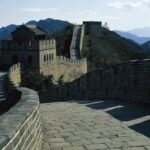
 ★ 4.8Forbidden City Tour(Group/Private)-Tickets IncludedFrom $47,974 reviews
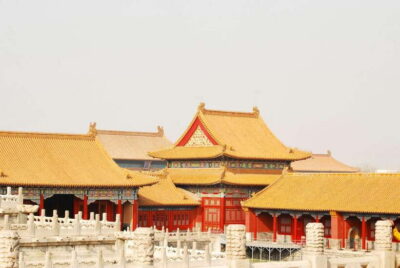 ★ 4.8T-Square & Forbidden City Group or Private TourFrom $174,446 reviews
 ★ 5.0All-Inclusive Tour: Tiananmen Square, Forbidden City, Great WallFrom $1282,873 reviews
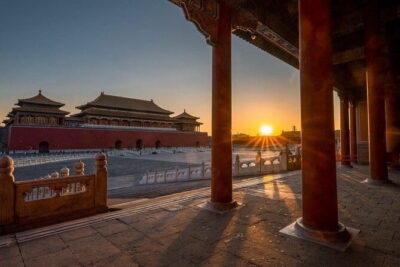 ★ 5.04-Hour Small Group Tour to Forbidden City with Entry TicketsFrom $151,863 reviews
 ★ 4.5Tiananmen Square Registration Service(Ticket)From $31,704 reviews
 ★ 5.0Beijing Full Day Tours: Tiananmen Sq, Forbidden City, Great WallFrom $991,634 reviews
 ★ 4.6Tianmen Square, Forbidden City & Royal Museum ToursFrom $41,288 reviews
 ★ 5.0Beijing Forbidden City Ticket Booking (Optional: guide service)From $91,263 reviews
Browse the lists this tour appears in