Reviewed · PRIVATE
Private China Tour to Beijing, Xi’an, Zhangjiajie and Shanghai
A four-city China circuit can feel like a marathon, but this one stays well organized. You’ll hit iconic highlights like the Forbidden City, the Terracotta Warriors, the Great Wall, and Shanghai’s Bund while still getting hands-on moments like a rickshaw through Beijing’s Hutongs. I also like the steady flow of guided time, so you’re not stuck figuring things out after every transfer.
The biggest plus for you: you get a private guide and experienced driver for the day’s touring, plus a mix of major monuments and very local neighborhoods, including Xi’an’s Muslim Quarter snack time. One thing to consider is the pace: you’ll move cities multiple times and rely on early sightseeing days, so it helps to travel with a realistic mindset and comfy shoes.
In This Review
- Key Highlights You’ll Feel Right Away
- Why This Private Multi-City Loop Works
- Beijing Day 1 and Day 2: From Airport to Royal Landmarks
- Badaling Great Wall and Ming Tombs: The Strongest Beijing Combo
- Summer Palace to Xi’an: A City Change That Doesn’t Feel Like Chaos
- Xi’an: Terracotta Warriors and a Real Neighborhood Break
- Zhangjiajie: Elevator to “Avatar” Views and the Glass-Bridge Dream
- Shanghai: Planning Museum, Yu Garden, Bund Cruise, Then Streets at Night
- Price and Value: Is $2,999 Actually Fair?
- Who This Tour Fits Best
- Should You Book This Private China Tour?
- FAQ
- FAQ
- How long is the tour?
- Which cities are included?
- What time and where does the tour start?
- Is accommodation included?
- Are domestic flights included?
- Are admission tickets included?
- Do you get airport or hotel pickup?
- Are meals included?
- Can you arrange vegetarian meals?
- Is the tour suitable for older travelers?
Key Highlights You’ll Feel Right Away
- Private guide + experienced driver keep each day moving without constant plan-B thinking
- Major attractions with admissions covered on many stops, from Forbidden City to Terracotta Warriors
- Beijing Hutong rickshaw ride for a close-up view of older neighborhoods around Shichahai
- Badaling Great Wall plus Ming Tombs in one efficient, historically focused sweep
- Zhangjiajie National Forest Park by elevator + signature pillars built for big scenery
- Shanghai cruise on the Huangpu River paired with Yu Garden and Tianzifang
Your group only, at your own pace
Why This Private Multi-City Loop Works
You’re covering four major bases—Beijing, Xi’an, Zhangjiajie, and Shanghai—in about 11 days. That’s ambitious, yet the plan is built like a kit: guided blocks, scheduled travel between cities, and then specific areas that match each place’s best “what to see” punch.
I like how the tour uses private logistics to reduce stress. Instead of you hunting tickets, routing yourself across huge cities, and translating sign-by-sign, your guide and driver handle the big moves, and you focus on the sights.
The other big value is time efficiency. You get morning-to-afternoon planning with included admissions for many top stops, then leftover time to wander on your own—like the Bund and Tianzifang—so the trip doesn’t feel like a nonstop museum line.
Beijing Day 1 and Day 2: From Airport to Royal Landmarks
On Day 1, your guide meets you right after you clear customs at Beijing Capital Airport (Shunyi) and helps with the transfer to your hotel. There’s a built-in “get settled” feeling here, which matters on any multi-city trip when jet lag is still doing its thing.
Then Day 2 opens with Tiananmen Square. It’s a big, open city stage, and even if you’ve seen photos, it hits differently when you’re standing there. You’ll also have the guide to explain what you’re looking at, rather than guessing.
Next comes the Forbidden City (Palace Museum). This is where having a guide really pays off. The Palace Museum is huge, and a good guide helps you aim at the most important halls and pavilions so you’re not just walking in circles for hours. You’ll have about 3 hours here, which is a workable chunk.
After that, you pivot to something more human. You head to Shichahai for Hutongs, then take a rickshaw ride along the traditional alleyways for around 40 minutes. This is the kind of stop that gives you texture: older neighborhood streets, daily-life scale, and less “monument viewing” than the big-ticket sites.
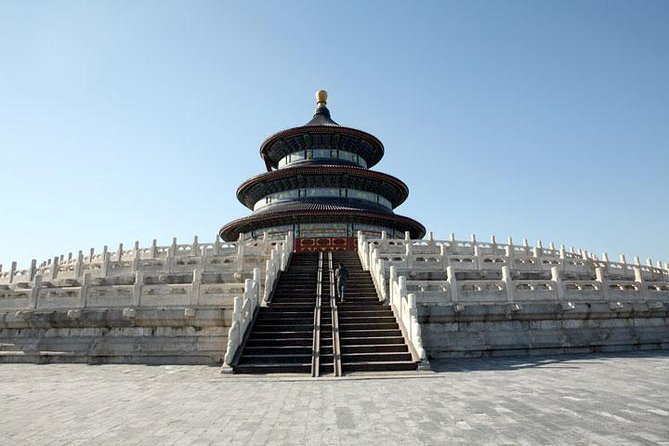
Day 2 wraps with the Temple of Heaven, where emperors once worshiped the God of Heaven during the Ming and Qing dynasties. Even if you’re not a history scholar, the setting and layout make it easier to understand why this place mattered.
Drawback to note: Day 2 is packed. If you’re the type who needs lots of decompression time, you’ll want to treat the evening as a recovery slot and not add extra sightseeing.
Badaling Great Wall and Ming Tombs: The Strongest Beijing Combo
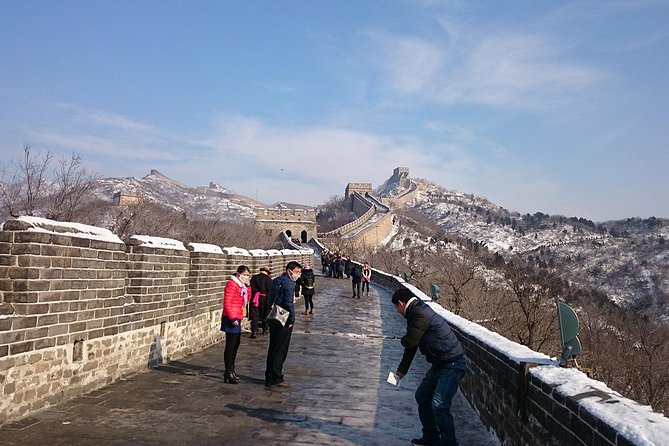
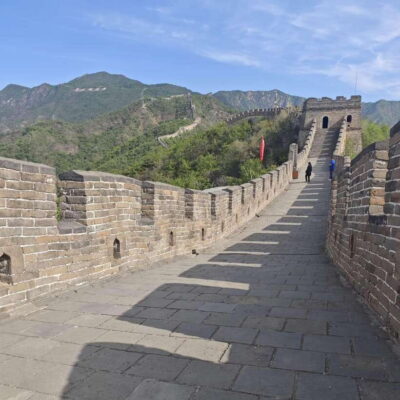
Day 3 is a two-part Beijing heavyweight day. First up is the Great Wall at Badaling. Badaling is not the wildest version of the wall, but it’s a practical choice because you can actually see it properly with enough time to appreciate the wall’s scale stretching into the distance.
Then you go to the Ming Tombs, including the Sacred Way and Dingling Tomb. This is a clever pairing: the Great Wall shows defense at the edge, while the tomb area puts you into a world of imperial ritual closer to the earth. The inclusion of these specific highlights makes this less of a “tour of random gates” and more of a focused experience.
A quick stop on the way back is the Bird’s Nest (National Stadium) for photos. It’s a short moment—about 20 minutes—and the admission isn’t included, but it’s a nice visual contrast with the ancient parts of the day.
My practical tip for you: wear shoes you can trust. The Great Wall and the tomb grounds both involve walking over uneven outdoor paths, even on a guided schedule.
Summer Palace to Xi’an: A City Change That Doesn’t Feel Like Chaos
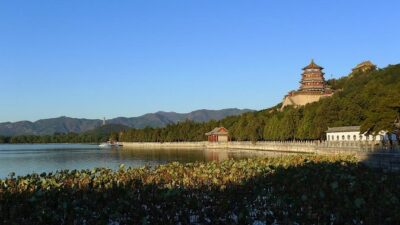
Day 4 begins with the Summer Palace (Yiheyuan), which is the kind of stop that slows you down in a good way. It’s an imperial garden with big views and grand structures, and you get about 2 hours, which is enough to enjoy the main areas without feeling trapped for the whole day.
Then you shift cities via high-speed train to Xi’an. The flow matters here. Your Xi’an guide and driver pick you up at the railway station and take you to your hotel for check-in, which prevents the common “train arrives, now what?” problem.
This part is where private touring quietly earns its fee. Intercity travel is always a little unpredictable, but the plan builds in responsible handoffs.
- From Beijing: Mutianyu Great Wall Tours with Options★ 4.9 · 9,216 reviews
- Beijing: Forbidden City Tour(Group/Private)-Tickets Included★ 4.8 · 7,974 reviews
- Beijing: T-Square & Forbidden City Group or Private Tour★ 4.8 · 4,446 reviews
- All-Inclusive Tour: Tiananmen Square, Forbidden City, Great Wall★ 5.0 · 2,873 reviews
- MuBus: Mutianyu Great Wall ENG/ESP/RUS Guided Bus Tour★ 5.0 · 2,361 reviews
Xi’an: Terracotta Warriors and a Real Neighborhood Break
Day 5 centers on the Terracotta Army Museum. You’ll see the excavated pits with the warrior figures and ancient weapons, which is the kind of spectacle that keeps its power even after you’ve seen pictures for years. You also get about 4 hours here, which helps because this isn’t a quick-hit attraction unless you want to rush.
After that, you go to the Small Wild Goose Pagoda and the adjacent Xi’an Museum. The pagoda still stands despite earthquakes, and the combination of religious architecture plus museum context gives you a fuller “how the city developed” sense.
Day 6 continues with old-city and everyday Xi’an. You start at the City Wall Park, then visit the Xi’an City Wall itself. Even if you don’t walk the entire wall route, it’s a strong way to understand how the city was shaped and defended.
Then you move into Xi’an’s cultural mix with the Great Mosque of Xi’an. The Islamic architecture stands out against the surrounding streetscape, and the guide helps you make sense of what you’re seeing.
Next comes the Muslim Quarter, where you can stroll freely to sample local food. The tour also includes a snack tour at a popular restaurant with varieties of snacks, which is a smart way to try more than one thing without you guessing what’s worth your time and money.
In the afternoon, you visit Hanyangling (Han Yangling Mausoleum / Yangling Mausoleum of Han Dynasty), where excavation areas and the Han Dynasty context make it feel different from the Ming Tomb emphasis in Beijing.
Zhangjiajie: Elevator to “Avatar” Views and the Glass-Bridge Dream
By Day 6, you fly to Zhangjiajie, and the plan gets you to the hotel directly after arrival. That matters because it preserves energy. This part of the trip is all about hitting the big nature highlights efficiently.
Day 7 is a full day in Zhangjiajie National Forest Park. You’ll take the Bailong Elevator to reach Yuanjiajie Scenic Area, then focus on the famous Southern Sky Column viewpoints—the kind of scenery that made the name “Avatar floating mountains” stick.
You’ll also be walking in open-air park terrain for hours, so bring that same “don’t regret your footwear” mindset. The timing is long (around 8 hours), but it’s structured as one major park day rather than scattering you across half-day crumbs.
Day 8 continues with the Zhangjiajie Grand Canyon, described as a composite experience of mountains, caves, and water. Then you do the Golden Whip Brook section along the best part of the stream. You’ll enter from the park’s East Gate, take a scenic car to Shuirao Simen, and hike around 7.5 kilometers. It’s a good “break from big cliffs” day because the stream route tends to feel more walking-and-looking than just stare-at-the-towers all day.
Day 9 moves up to Tianmen Mountain National Forest Park. It’s the highest mountain in the area, named for Tianmen Cave, and you can climb the famous 999 stairs if you’re up for it. The tour overview also flags the No.1 glass bridge, so you’re not just going for views—you’re going for one of the area’s signature nerves-plus-wonder moments. (If your comfort level is lower, you can still use this day for viewpoints and the cave area.)
Shanghai: Planning Museum, Yu Garden, Bund Cruise, Then Streets at Night
After Zhangjiajie, you fly to Shanghai on Day 9 evening. Your Shanghai guide and driver handle the transfer to your hotel, keeping the transition clean.
Day 10 is a mix of history, gardens, river views, and neighborhood texture.
You start at the Shanghai Urban Planning Exhibition Hall, where you learn how Shanghai grew from a small fishing village into a modern metropolis. This is a great “set the stage” stop because Shanghai’s scale can feel confusing. With the model-and-photos context, the later skyline sights make more sense.
Then you visit Yu Garden (Yuyuan), plus time around Yuyuan Bazaar outside the garden. It’s an old-style garden experience with a 400+ year story behind it, and it’s also a place to slow down and look closely.
After lunch, the highlight is the Huangpu River Cruise, especially because you’ll see buildings of both Chinese and Western architectural styles along the river, including views tied to the Bund (Wai Tan) area. The cruise is one of those “why Shanghai looks like it looks” lessons.
The Bund itself gets free time afterward, so you can linger where you want. Then you finish with Tianzifang, a cultural street area in old lanes with its own creative energy.
Practical note: Shanghai in one day can mean lots of walking. Pace yourself, and don’t try to “hit everything” in Tianzifang on day one—leave room for one or two streets you enjoy.
Day 11 is departure day. You check out, then your driver and guide take you to catch your homeward flight.
Price and Value: Is $2,999 Actually Fair?
At $2,999 per person, you’re paying for a lot more than sightseeing tickets. Your package includes:
- Hotel accommodation (twin-sharing)
- One-way economy airfare from Xi’an to Zhangjiajie and from Zhangjiajie to Shanghai (plus Shanghai departure handled on the last day)
- Professional guide and experienced driver
- Air-conditioned vehicle
- Two bottled waters per person per day
- Breakfast (10) and lunch (6)
- Admission tickets for many major stops (with a few items clearly marked as free or not included)
So the value logic is this: if you try to plan this on your own, you’d spend serious time coordinating guides, tickets, intercity transport, and meal planning across four cities. The tour is built to replace that work with a guided schedule where admissions are largely handled.
Is it “perfect value” for everyone? Not quite. If you prefer slow travel, lots of free exploration time, or you hate being on a timetable, the multi-city pace can feel like paying for structure you don’t want. And because this isn’t suitable for people over 80, the whole plan assumes a certain stamina level.
Who This Tour Fits Best
This private tour makes sense for you if:
- You want top sights in Beijing, Xi’an, Zhangjiajie, and Shanghai without DIY headaches
- You like having a guide explain what you’re seeing (and then getting a bit of free roaming time)
- You’re comfortable with a busy itinerary and intercity travel by train and flight
It’s less ideal if:
- You want deep unhurried exploration of only one city
- You’re very mobility limited or prefer minimal walking on outdoor sites (some days are long)
Also, if you’re traveling as a couple or small group, the minimum of 2 people per booking can make this a more natural fit.
Should You Book This Private China Tour?
I’d book it if you want the classic China highlights plus a few “small but memorable” neighborhood experiences, all wrapped into one organized 11-day plan. The combination of private guides, included admissions for key attractions, and well-timed transfers reduces the usual friction of multi-city travel.
The main reason to hesitate is pacing. This is an active, multi-transport itinerary, and you’ll be moving through big sights and changing cities several times. If that sounds exciting to you, you’ll likely love how the trip flows. If you want a slower rhythm, consider shrinking the scope to fewer cities.
FAQ
FAQ
How long is the tour?
It runs about 11 days.
Which cities are included?
The tour covers Beijing, Xi’an, Zhangjiajie, and Shanghai.
What time and where does the tour start?
It starts at Capital Airport Shunyi, Beijing 101300 China at 9:00 am.
Is accommodation included?
Yes. It includes hotel accommodation based on twin-sharing rooms.
Are domestic flights included?
One-way economy-class airfare is included from Xi’an/Zhangjiajie/Shanghai.
Are admission tickets included?
Many admission tickets are included for major sights listed in the itinerary. Some stops are marked as free, and some items (like the Bird’s Nest photo stop) are not included.
Do you get airport or hotel pickup?
Pickup is offered, and your guide meets you at the Beijing airport after you clear customs. You’re also picked up from hotels for guided sightseeing on tour days.
Are meals included?
Breakfast is included for 10 days, and lunch is included for 6 days. Dinner is not listed as included.
Can you arrange vegetarian meals?
Yes. A vegetarian option is available—just advise at booking.
Is the tour suitable for older travelers?
It is not suitable for people over 80 years old.
Your Party, Your Pace
- Beijing: Forbidden City Tour(Group/Private)-Tickets Included
★ 4.8 · 7,974 reviews - Beijing: T-Square & Forbidden City Group or Private Tour
★ 4.8 · 4,446 reviews - Beijing:Mutianyu Great Wall Private Trip with English Driver
★ 5.0 · 1,263 reviews - Private Mutianyu Great Wall Trip with English-Speaking Driver
★ 5.0 · 927 reviews - Private Mutianyu Great Wall Trip With English-Speaking Driver
★ 5.0 · 899 reviews - Mutianyu Great Wall&Summer Palace Excursion:Group/Private Options
★ 5.0 · 816 reviews
More Beijing Outings
- From Beijing: Mutianyu Great Wall Tours with Options
★ 4.9 · 9,216 reviews - Beijing: Forbidden City Tour(Group/Private)-Tickets Included
★ 4.8 · 7,974 reviews - Beijing: T-Square & Forbidden City Group or Private Tour
★ 4.8 · 4,446 reviews - All-Inclusive Tour: Tiananmen Square, Forbidden City, Great Wall
★ 5.0 · 2,873 reviews - MuBus: Mutianyu Great Wall ENG/ESP/RUS Guided Bus Tour
★ 5.0 · 2,361 reviews - 4-Hour Small Group Tour to Forbidden City with Entry Tickets
★ 5.0 · 1,863 reviews
More Tour Reviews in Beijing
- From Beijing: Mutianyu Great Wall Tours with Options
★ 4.9 · 9,216 reviews - Beijing: Forbidden City Tour(Group/Private)-Tickets Included
★ 4.8 · 7,974 reviews - Beijing: T-Square & Forbidden City Group or Private Tour
★ 4.8 · 4,446 reviews - All-Inclusive Tour: Tiananmen Square, Forbidden City, Great Wall
★ 5.0 · 2,873 reviews - MuBus: Mutianyu Great Wall ENG/ESP/RUS Guided Bus Tour
★ 5.0 · 2,361 reviews - 4-Hour Small Group Tour to Forbidden City with Entry Tickets
★ 5.0 · 1,863 reviews
Just In: More Beijing Tours to Browse


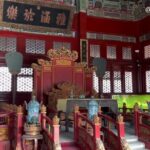

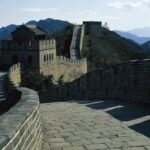
Private, compared.
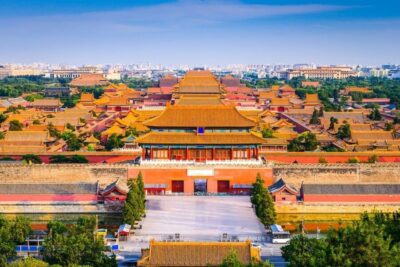 ★ 4.8Forbidden City Tour(Group/Private)-Tickets IncludedFrom $47,974 reviews
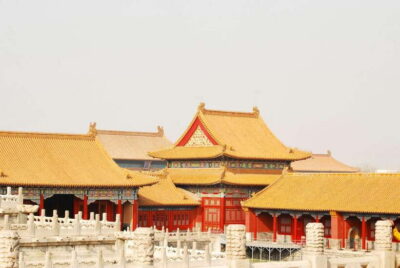 ★ 4.8T-Square & Forbidden City Group or Private TourFrom $174,446 reviews
 ★ 5.0Mutianyu Great Wall Private Trip with English DriverFrom $841,263 reviews
 ★ 5.0Private Mutianyu Great Wall Trip with English-Speaking DriverFrom $78927 reviews
★ 5.0Private Mutianyu Great Wall Trip With English-Speaking DriverFrom $92899 reviews
★ 5.0Private Mutianyu Great Wall Trip with English-Speaking DriverFrom $78927 reviews
★ 5.0Private Mutianyu Great Wall Trip With English-Speaking DriverFrom $92899 reviews
 ★ 5.0Mutianyu Great Wall&Summer Palace Excursion:Group/Private OptionsFrom $124816 reviews
 ★ 5.0Private Beijing Walking Tour of the Forbidden City with 7 OptionsFrom $75675 reviews
 ★ 5.0Mutianyu Great Wall All-inclusive Private Tour with OptionsFrom $130588 reviews