
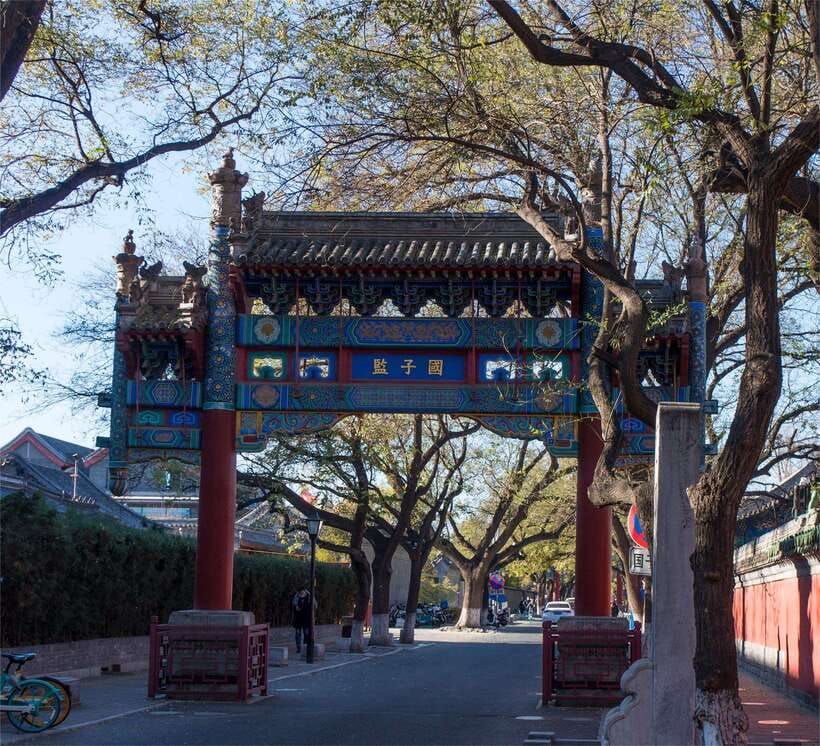
Reviewed · LAMA & CONFUCIUS TEMPLES
Beijing: Confucius Temple and the Impercial College E-ticket
Wandering through Confucius Temple feels like time travel. You get two major sites in one day: Yuan Dynasty architecture at Confucius Temple and the Imperial College campus of Guozijian, plus a look at how China’s imperial exams shaped careers. I especially love the stone tablet exhibition details and the way the grounds are laid out so the whole system makes sense fast.
My other favorite part is practical: you can enter smoothly with just your QR code and your passport (no drawn-out ticket shuffle). One thing to keep in mind is that the experience is very site-and-exhibit focused. If you’re expecting lots of hands-on activities or modern explanations everywhere, you might want to plan on buying an audio guide at the entrance to fill in the gaps.
In This Review
- Key highlights you’ll care about
- Confucius Temple and the Imperial College: why this is worth your day
- Entering smoothly with your QR code and passport
- Confucius Temple: the 700+ year ritual campus
- The exhibitions at the temple (what to prioritize)
- Stone tablets: the real imperial-exam power move
- How the site layout teaches the story: temple on the left, college on the right
- Guozijian (Imperial College): the state’s top school machine
- The main route: gates, halls, and meaning
- The ceremonial side structures you shouldn’t skip
- Exhibitions vs. architecture: how to balance your attention
- Audio guide option: get the extra layer at the entrance
- Price and value: is $7 fair for a full day?
- Timing your visit for the calmest experience
- Who this is best for (and who might feel under-satisfied)
- Quick practical tips before you go
- Should you book the Confucius Temple and Imperial College e-ticket?
- FAQ
- How much is the e-ticket?
- How long is the experience?
- What do I need to enter?
- Do I need to buy tickets at the entrance?
- What are the main things to see at Confucius Temple?
- What is Guozijian (Imperial College)?
- Is it wheelchair accessible?
Key highlights you’ll care about
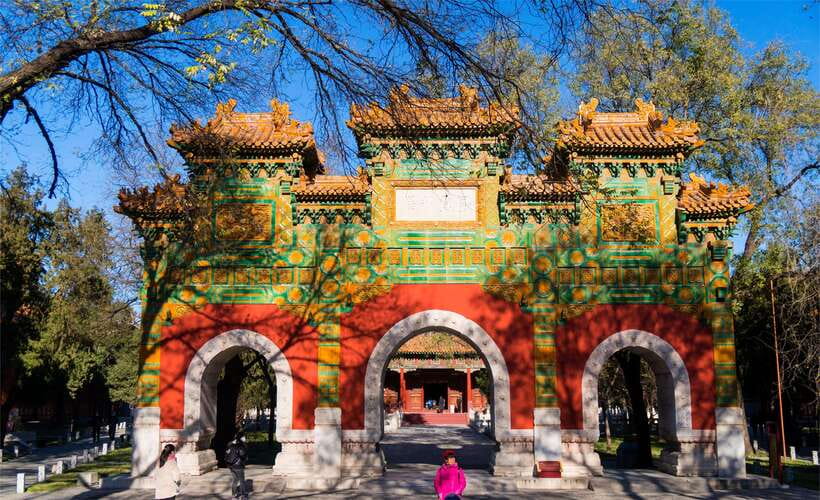
- Yuan-era layout: Temple on the left, College on the right, so the whole Confucius-to-government schooling story clicks.
- Stone tablets scale: 198 stone tables in four groups, carved with 51,624 Jinshi names, birthplaces, and ranks.
- Curated exhibitions: At Confucius Temple you’ll find three exhibitions, including the restored Dacheng Hall and the history of the Beijing Confucius Temple.
- Guozijian as education power: The top state education institution from the Yuan, Ming, and Qing dynasties, with gates, halls, and ceremonial structures along the central axis.
- Simple entry: Scan the QR code and bring your original passport or ID to get in without fuss.
Incense and old cypresses, more temple mornings
Confucius Temple and the Imperial College: why this is worth your day
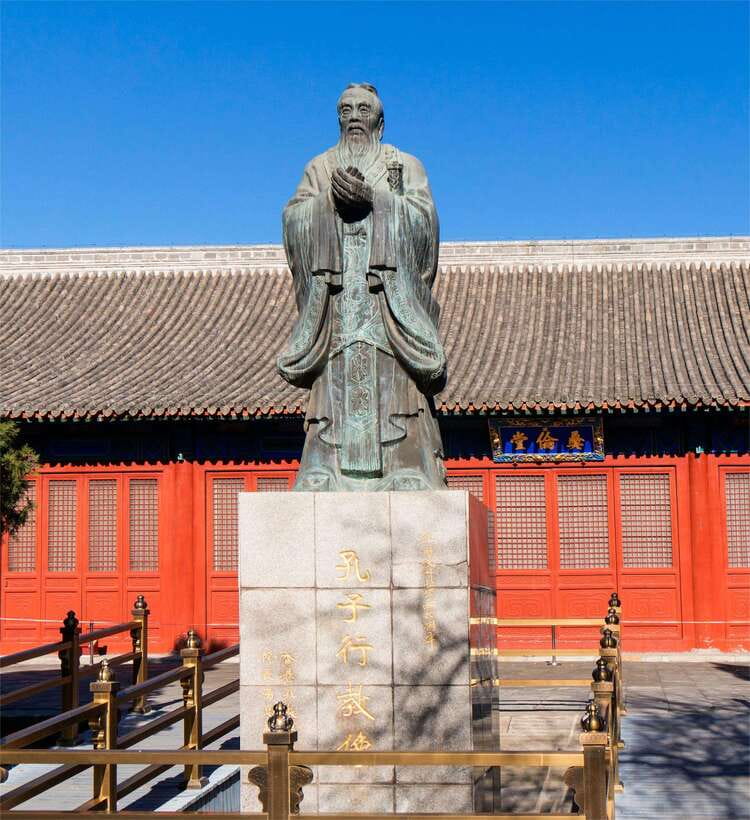
Beijing has plenty of big-ticket sights, but this one rewards the people who like structure, symbolism, and “how did this system work?” thinking. Confucius Temple and Guozijian aren’t just pretty old buildings. They’re a working map of values: education, ritual respect, and the official pathways to advancement.
The sites also have a clean logic you can feel as you walk. There’s a clear north–south central axis, with gates and halls aligned so the visitor’s movement mirrors ceremonial order. That makes the experience easier to follow than you might expect, even if you’re not a scholar.
For context, Confucius Temple was built in the Yuan Dynasty Dade era (1306). It later served as the place where memorial ceremonies were held for Confucius across the Yuan, Ming, and Qing dynasties. You’re not just touring a static monument—you’re stepping into a long-running tradition that stayed important for centuries.
Entering smoothly with your QR code and passport
This is one of those tours where logistics don’t eat your time. You use your QR code plus your original passport (or the required ID) to enter, and the process is designed to get you through quickly. The ticket is valid for one day, and you can check available starting times.
So what does that mean for your plan? It means you can show up with less stress and spend more energy actually reading what’s around you. It also helps if you’re juggling other Beijing sights that day—this one fits cleanly into a busy schedule.
Bring your passport or ID card and expect to show your original passport with your electronic ticket. If you forget the original document, you’ll lose time sorting it out on-site, and nobody wants that.
Confucius Temple: the 700+ year ritual campus
Confucius Temple covers over 22,000 square meters, with a construction area of about 7,400 square meters and three courtyards. That three-courtyard structure matters. It slows your pace in a good way and gives your brain a chance to reset between the main ceremonial areas.
As you move along the central south-to-north axis, you’ll pass a set sequence of key points: Teacher Gate, Dacheng Gate, Dacheng Hall, and then Chong Sheng Temple. Each name signals a role. This isn’t random walking through rooms—it’s a choreographed path for honoring Confucius.
The exhibitions at the temple (what to prioritize)
Confucius Temple has three exhibitions currently, and I’d treat them like your “decoder ring” for what you’re seeing.
- Exhibition of the Restored Dacheng Hall
This helps you picture what the restored main hall is meant to represent. Even if you don’t catch every detail, it gives you a clearer idea of the ceremonial center of gravity.
- Exhibition of the Great Confucius
Think of this as the background track. It helps connect the man, his legacy, and why the temple mattered across dynasties.
- Exhibition of the History of Beijing Confucius Temple
This one is especially useful because it grounds you in place: why Beijing’s temple was built, and how it functioned over time.
If you only have a limited window, start with the exhibition area first. Then walk the grounds with the context fresh in your head.
Weigh these up before you book this Beijing tour:
- Beijing: Forbidden City Tour(Group/Private)-Tickets Included★ 4.8 · 7,974 reviews
- 4-Hour Small Group Tour to Forbidden City with Entry Tickets★ 5.0 · 1,863 reviews
- Beijing: Tiananmen Square Registration Service(Ticket)★ 4.5 · 1,704 reviews
- Beijing: The Temple of Heaven or Summer Palace Entry Ticket★ 4.6 · 1,286 reviews
- Beijing Forbidden City Ticket Booking (Optional: guide service)★ 5.0 · 1,263 reviews
Stone tablets: the real imperial-exam power move
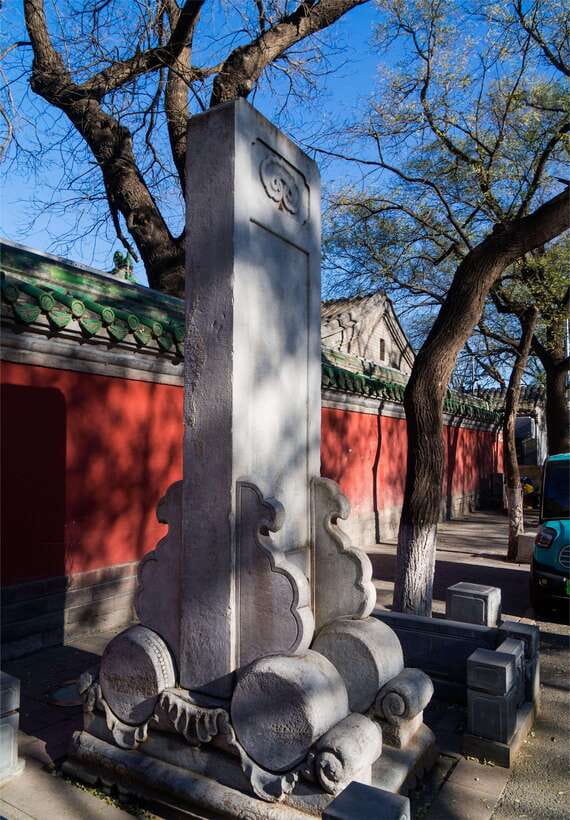
Here’s where this site goes from historical to specific. Confucius Temple includes 198 stone tablets, arranged in four groups on both sides of the front courtyard. That symmetry is not just decorative—it helps keep the visitor’s attention anchored on the records themselves.
The tablets are tied to the imperial examination system. In total, 51,624 Jinshi records were carved, including names, birthplaces, and ranks. For you, that means you’re looking at a real measure of status—written into stone—rather than vague storytelling about merit.
One practical way to experience this without getting overwhelmed: don’t try to read every character. Instead, scan for patterns—how names are organized, how information is carved, and how the records are grouped. You’ll feel the scale more quickly that way.
How the site layout teaches the story: temple on the left, college on the right
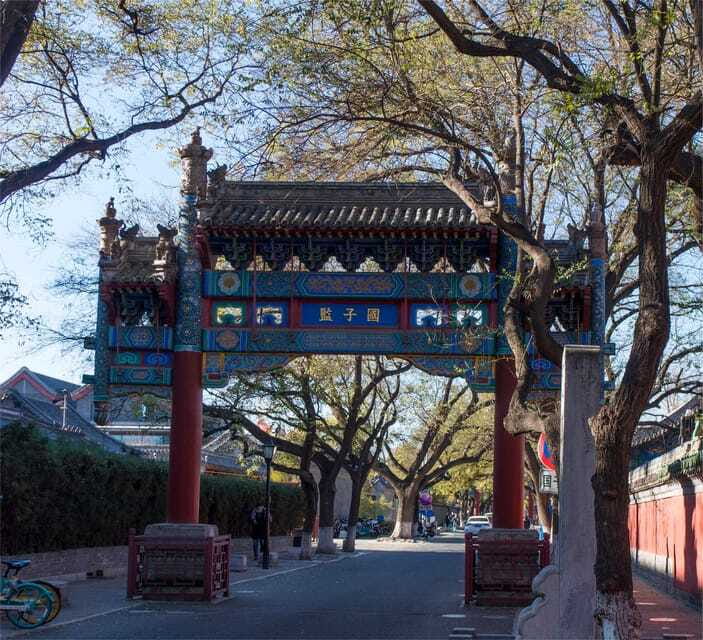
A big reason this experience feels coherent is the rule that shapes the grounds: temple on the left and college on the right. That simple plan turns a visitor into a reader. You’re not only seeing two separate attractions; you’re seeing how ritual respect (Confucius) and education administration (Guozijian) connect.
Once you notice the left-right organization, the rest of your walking makes sense. You’ll start recognizing what belongs to ceremonial honor and what belongs to state education and official training.
This kind of planning matters when you’re traveling solo or on a tight schedule. It reduces decision fatigue. You’re less likely to end up wandering in circles because the site is guiding your brain.
Guozijian (Imperial College): the state’s top school machine
Guozijian in Beijing was the highest educational institution and a state education administration organ during the Yuan, Ming, and Qing dynasties. Built in 1308 during the Yuan Dynasty Zhida reign, it spans about 28,000 square meters with three courtyards.
Again, the layout is the key. The buildings sit along the central axes, giving you that same ceremonial-feeling order as Confucius Temple, just applied to education and governance. If Confucius Temple is about ritual respect, Guozijian is about what the state did with that respect: turning it into an official training pathway.
The main route: gates, halls, and meaning
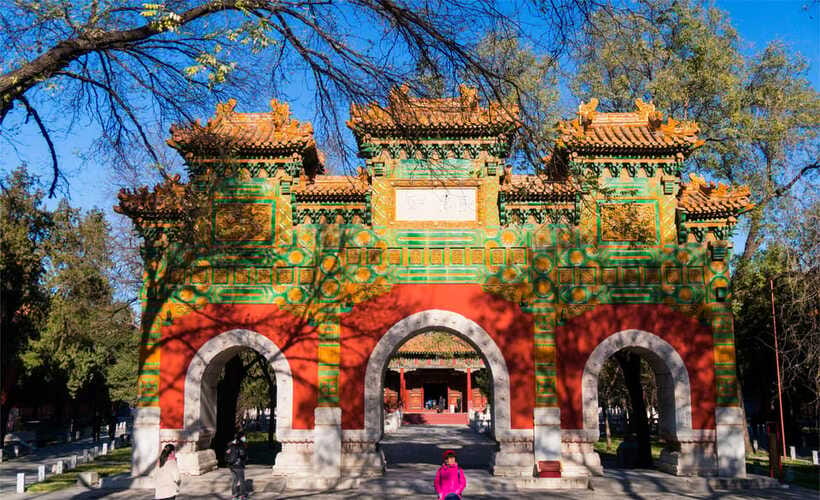
As you approach, you’ll move through a sequence of named structures along the axis. Key stops include Jixian Gate, Taixue (Imperial College) Gate, a Glazed memorial arch, Biyong Hall, Yilun Hall, and Jingyi Hall.
Two things help you appreciate these names even if you don’t memorize translations:
- They’re aligned along one axis, so you’re experiencing order with your feet, not just your eyes.
- The sequence feels ceremonial, which is a reminder that education in these dynasties wasn’t casual. It was tied to official legitimacy.
The ceremonial side structures you shouldn’t skip
Alongside the axis, there are two halls and six main rooms, plus features such as the Imperial tablet Pavilion and the Bell and Drum Pavilion. Even if you can’t interpret every function on the spot, these elements signal the campus wasn’t just classrooms. It included official ceremony and public signaling—basically, education with institutional theater.
Exhibitions vs. architecture: how to balance your attention
This experience gives you two types of engagement: museum-style exhibitions at Confucius Temple and architecture-based interpretation at Guozijian. If you try to do everything equally, you may feel rushed.
Here’s a practical approach I like for days like this:
- Spend your first energy at the exhibitions at Confucius Temple to build context.
- Then shift to architecture mode at Guozijian. Look for alignment, gate-to-hall sequences, and the way courtyards control your pace.
This keeps you from treating buildings like blank scenery. Instead, you treat them like pages in a book.
Audio guide option: get the extra layer at the entrance
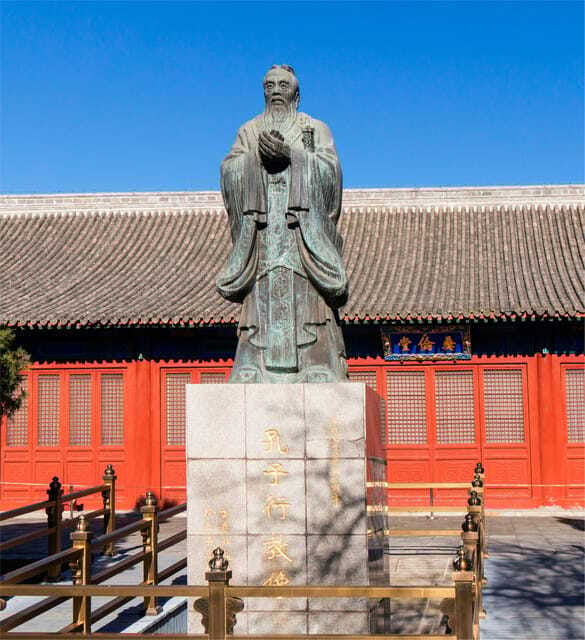
One handy tip: there’s a possibility to purchase an audio guide at the entrance of the temple. That can be a smart choice if you want more explanation without having to rely on your own translations.
If you do get audio, use it selectively. Start it when you’re approaching major named points (gates and main halls), then let yourself walk in silence for a bit. Otherwise, you’ll end up listening and rushing at the same time.
Audio guides work best when they support what your eyes are already noticing: the alignment, the ceremonies implied by the layout, and the purpose behind the stone records.
Price and value: is $7 fair for a full day?
At $7 per person, this feels like good value—especially for a day that includes a major temple complex plus Guozijian’s state education campus. The “value” isn’t just low cost; it’s the fact that you’re getting both context (through exhibitions) and tangible primary materials (the stone tablet records).
The biggest value driver is time efficiency. With a QR code entry process and a clear set of highlights, you’re not paying to wander randomly. You’re paying for a structured, historic two-part experience.
If you’re on a tight budget but still want something more meaningful than a quick sightseeing stop, this fits well.
Timing your visit for the calmest experience
The experience is listed as valid for one day, and starting times depend on availability. Since the sites are large and detail-heavy, I’d plan for a steady pace rather than trying to sprint through.
You’ll likely enjoy the day more if you:
- Start earlier to have fewer crowds around the key areas.
- Give yourself time to pause near the stone tablets and actually look at the layout.
- Keep your museum focus to the Confucius Temple exhibitions so you don’t lose your flow.
Who this is best for (and who might feel under-satisfied)
This works especially well if you like:
- Traditional architecture with clear axes and ceremonial planning
- The imperial examination system as a real engine behind social mobility
- Historical sites that feel organized instead of chaotic
You might be less satisfied if you’re mainly hunting for modern shopping districts, big views, or highly interactive exhibits. This is more “walk and interpret” than “push buttons and hands-on learning.”
If you’re traveling with older family members, the grounds and route planning can be a plus. And it’s wheelchair accessible, so the experience is built to be reachable for more people than you’d expect from a historical complex.
Quick practical tips before you go
- Bring your passport or the required ID and be ready to scan your QR code for entry.
- Plan to spend real time with the stone tablet area. That’s where the imperial exam theme becomes concrete.
- If your language skills are limited, consider the audio guide option at the entrance to the temple.
- Wear shoes that handle a lot of walking across courtyards and axes.
Should you book the Confucius Temple and Imperial College e-ticket?
Yes, if you want a low-cost day in Beijing that feels focused and historically grounded. For $7, you’re getting two heavyweight sites, a museum-style layer at Confucius Temple, and the famous scale of imperial exam records carved into stone.
I’d skip it only if you’re chasing thrill rides, modern distractions, or purely scenic photo stops. This place is for people who enjoy systems—how education, ritual, and government authority all sat in the same physical space.
FAQ
How much is the e-ticket?
The price is listed as $7 per person.
How long is the experience?
It’s valid for 1 day.
What do I need to enter?
You need to enter with your original passport (or required ID) and your electronic ticket/QR code.
Do I need to buy tickets at the entrance?
The entry process is designed to let you use the QR code, and it’s listed as skipping the ticket line.
What are the main things to see at Confucius Temple?
You can see the Yuan-era temple grounds and three exhibitions, plus the stone tablet records related to the imperial examination.
What is Guozijian (Imperial College)?
Guozijian was the highest educational institution and state education administration organ during the Yuan, Ming, and Qing dynasties.
Is it wheelchair accessible?
Yes, it’s listed as wheelchair accessible.
Tickets and Fast-Track Entry
- Beijing: Forbidden City Tour(Group/Private)-Tickets Included
★ 4.8 · 7,974 reviews - 4-Hour Small Group Tour to Forbidden City with Entry Tickets
★ 5.0 · 1,863 reviews - Beijing: Tiananmen Square Registration Service(Ticket)
★ 4.5 · 1,704 reviews - Beijing: The Temple of Heaven or Summer Palace Entry Ticket
★ 4.6 · 1,286 reviews - Beijing Forbidden City Ticket Booking (Optional: guide service)
★ 5.0 · 1,263 reviews - Beijing: Mutianyu Gt Wall Trip, Depart 8-10am Bus w/ Tickets
★ 4.9 · 1,256 reviews
More Tour Reviews in Beijing
- From Beijing: Mutianyu Great Wall Tours with Options
★ 4.9 · 9,216 reviews - Beijing: Forbidden City Tour(Group/Private)-Tickets Included
★ 4.8 · 7,974 reviews - Beijing: T-Square & Forbidden City Group or Private Tour
★ 4.8 · 4,446 reviews - All-Inclusive Tour: Tiananmen Square, Forbidden City, Great Wall
★ 5.0 · 2,873 reviews - MuBus: Mutianyu Great Wall ENG/ESP/RUS Guided Bus Tour
★ 5.0 · 2,361 reviews - 4-Hour Small Group Tour to Forbidden City with Entry Tickets
★ 5.0 · 1,863 reviews
Beijing's Temple Quarter
- Temple Heaven, Lama Temple, Summer Palace & Peking Duck Bus Tour
★ 5.0 · 377 reviews - Temple Heaven, Summer Palace, Lama Temple, Hutong Bus Tour
★ 4.7 · 319 reviews - Temple of Heaven, Summer Palace, Lama Temple, Hutong Tours
★ 5.0 · 311 reviews - Beijing: Lama Temple (Yonghe Temple) Admission Ticket
★ 4.8 · 297 reviews - Beijing Historical Tour II including Summer Palace, Lama Temple & Panda Garden
★ 4.0 · 187 reviews - Beijing: Yonghe Lama Temple Entry Ticket
★ 4.5 · 147 reviews
Just In: More Beijing Tours to Browse



Lama & Confucius Temples, compared.
 ★ 5.0Temple Heaven, Lama Temple, Summer Palace & Peking Duck Bus TourFrom $56377 reviews
 ★ 4.7Temple Heaven, Summer Palace, Lama Temple, Hutong Bus TourFrom $58319 reviews
 ★ 5.0Temple of Heaven, Summer Palace, Lama Temple, Hutong ToursFrom $99311 reviews
 ★ 4.8Lama Temple (Yonghe Temple) Admission TicketFrom $10297 reviews
 ★ 4.0Beijing Historical Tour II including Summer Palace, Lama Temple & Panda GardenFrom $93187 reviews
 ★ 4.5Yonghe Lama Temple Entry TicketFrom $9147 reviews
 ★ 3.7Beijing Lama temple ticket; #1 efficacious; limited DiscountFrom $10116 reviews
 ★ 5.0Panda House, Temple of Heaven, Lama Temple, Summer Palace & LunchFrom $14877 reviews
Browse the lists this tour appears in