
Reviewed · GUIDED
Xi’an: Terra-Cotta Warriors Entry with Optional Guide
Few sites hit like Xi’an’s Terracotta Warriors.
This experience is built around one of China’s most famous archaeological finds, with pre-booked museum entry so you can get straight to the point without wasting your time in the shuffle. I like that you can shape the day: go self-guided if you prefer to wander, or add a guide when you want context fast. One thing to keep in mind is that your total time can vary (pickups, option choice, and how long you linger in the halls).
What I really appreciate is the museum itself: the layout centers on the three pits and the long, battle-formation view that makes the warriors feel organized and alive, not like random statues. You’ll also get help understanding what you’re looking at—especially around the best-known Pit No. 1 and the dramatic scale of Qin Dynasty forces.
The main drawback is also simple: this is a museum where crowds and timing matter. If you’re going on a busier schedule, plan for a bit of shoulder-to-shoulder movement, and don’t assume you’ll slow everything down to a crawl.
In This Review
- Key highlights at a glance
- Why the Terracotta Warriors still feel unreal
- Getting to the museum from Xi’an without turning it into a day-long mission
- Terracotta Army Museum: what you should focus on once inside
- Start with Pit No. 1 for the “wow” scale
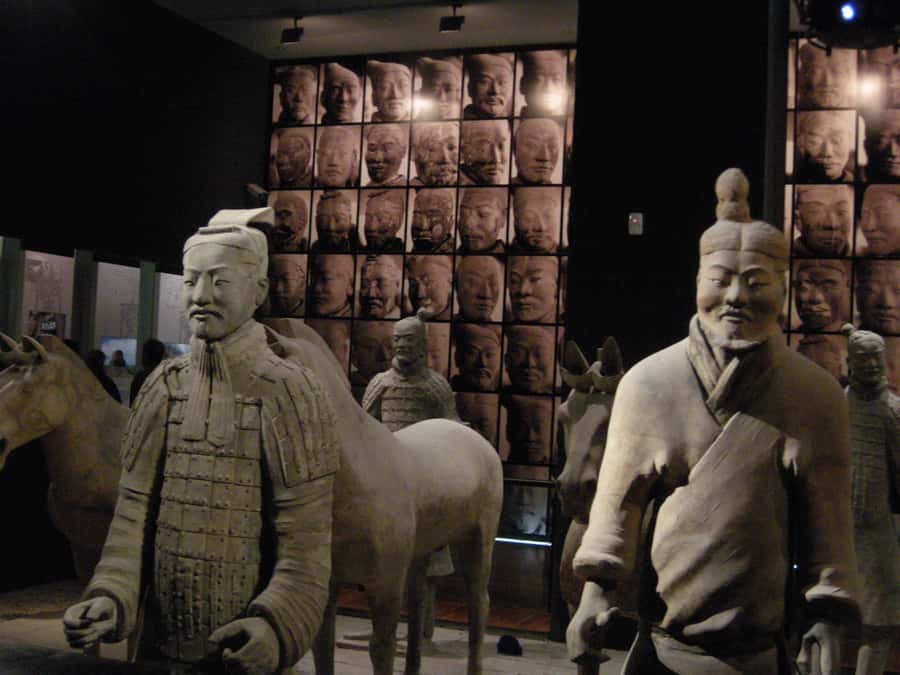
- Then take the faces seriously (that’s the point)
- Understand what the museum is showing you
- Two ways to tour: self-guided clarity vs a guide’s fast context
- Self-guided (best if you like your own pace)
- Guided (best if you want meaning without research time)
- Pacing tips: how to avoid the two classic Terracotta Warriors mistakes
- Mistake #1: rushing Pit No. 1 like it’s a photo stop
- Mistake #2: spreading your focus too thin across everything
- Price and value: is $188 per person worth it?
- Who this experience suits best (and who should choose something else)
- Practical notes that make the visit smoother
- Should you book this Terracotta Warriors entry with optional guide?
- FAQ
- How long does the Terracotta Warriors experience take?
- Is the tour private?
- Do I get an English-speaking guide?
- Is there a self-guided option?
- Does the price include Terracotta Warriors entrance fees?
- Is transportation from Xi’an included?
- What pickup options are available?
- What languages are supported?
- Is the experience wheelchair accessible?
- Is there free cancellation?
Key highlights at a glance
- Pre-booked entry into the Terracotta Warriors and Horses Museum (with booking support included)
- Flexible format: guided tour or self-guided option (self-guided runs about 2.5 hours)
- Private car transfer option from Xi’an, if you choose the transfer add-on
- English-speaking local guide available on the guided option
- One key stop with big payoff: Pit No. 1 and the museum’s main viewing areas
A local along for the day, more guided runs
Why the Terracotta Warriors still feel unreal
The Terracotta Warriors in Xi’an aren’t just impressive because they’re big. They’re impressive because they’re strangely specific. You’re looking at more than 8,000 life-size Qin Dynasty-era model soldiers, built as part of the burial complex connected to Emperor Qin Shihuang. The site sits east of the emperor’s tomb, and that orientation matters for how the display is presented.
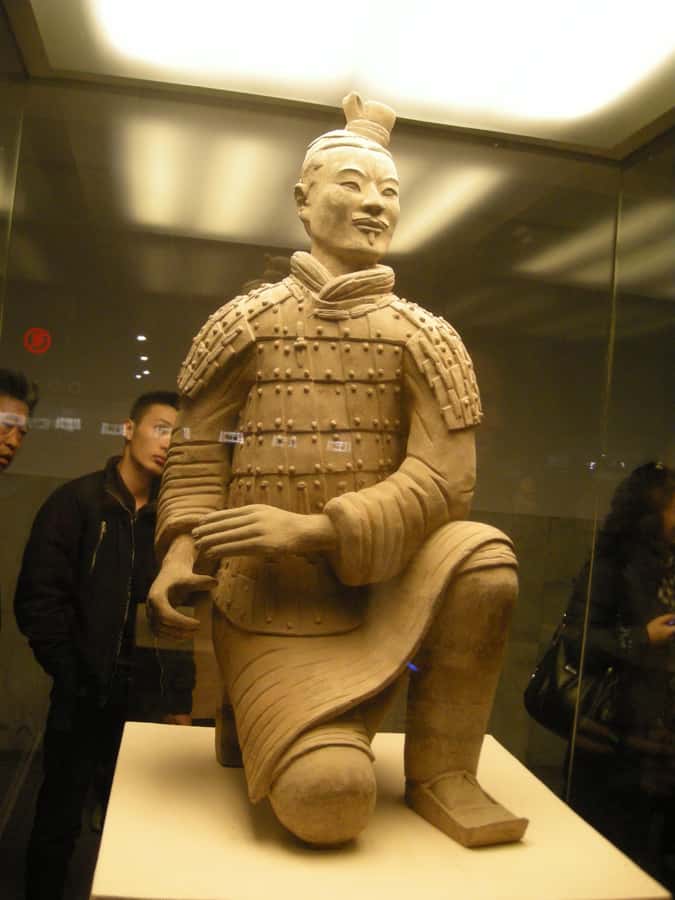
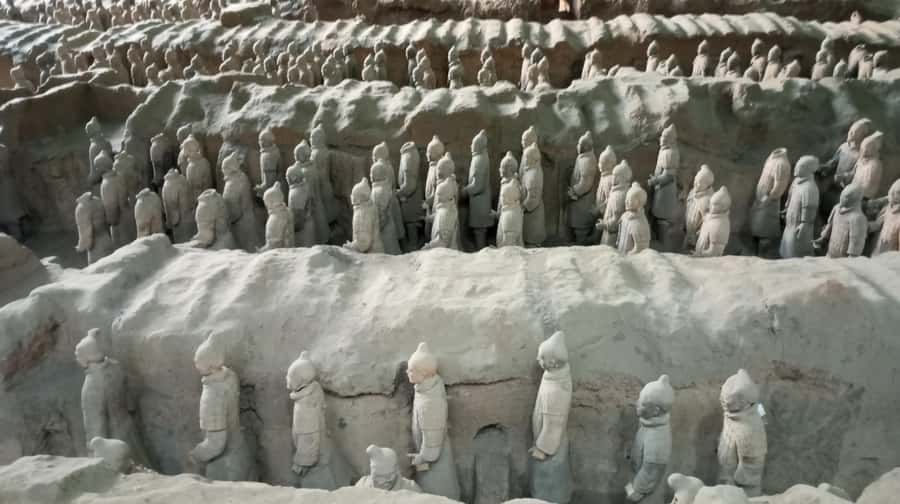
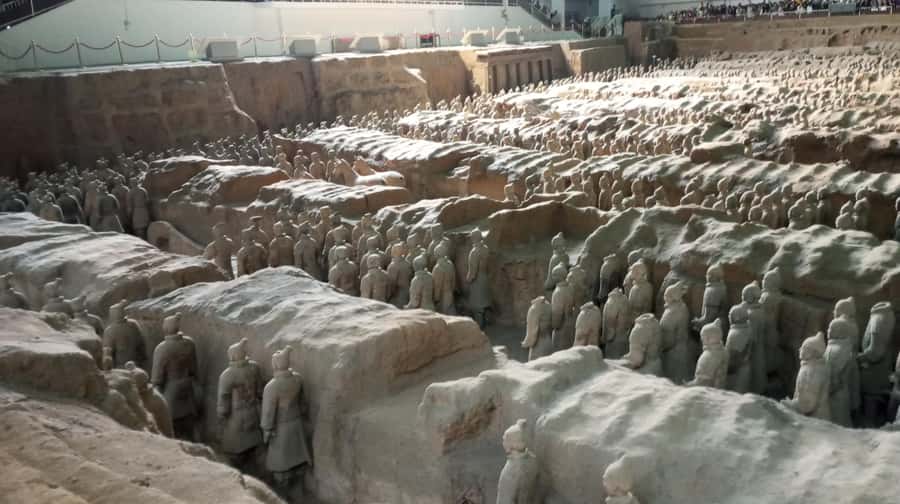
One of the best ways to explain the “why it hits” factor is the sheer scale and repetition. You can’t really absorb it by counting. Instead, you absorb it by pattern: rows, ranks, formations, and the way faces and details differ across figures. The museum presentation leans into that idea. You’ll see the warriors and horses arranged in an oblong battle formation of the Qin Dynasty, facing east, with expressions meant to communicate determination.
I also like the storyline the site supports. These were discovered in 1974, and since then the warriors have traveled around the world—from England to America to Chile—so the idea of them is already famous. But when you see them in Xi’an, the fame flips. It becomes physical and local again. The museum makes the soldiers feel less like a concept and more like an official force, tied to the emperor’s project of unifying the country after defeating the other six states.
Getting to the museum from Xi’an without turning it into a day-long mission
This is a half-day style experience, but it’s also built around convenience. Depending on the option you pick, you may have transport by air-conditioned car or minivan and pickup/drop-off from your hotel or another set location in Xi’an.
That matters more than it sounds. Terracotta Warriors visits can drag if you spend too long figuring out local transport, timing, and where you end up once you’re there. With the transfer-style option, you can keep your day cleaner: arrive, go in, see the main sights, and return without a travel puzzle in the middle.
Your total duration is listed as 2 to 7 hours, so don’t treat that like a strict rule. The likely reason for the range is the combination of pickup times and whether you choose a short self-guided window or a longer guided experience. If you’re trying to protect another plan later in Xi’an, I’d choose the option that matches your realistic attention span—because the museum is a lot, even when you move quickly.
Terracotta Army Museum: what you should focus on once inside

You’ll spend your time at the Terracotta Warriors and Horses Museum, centered on the three main pits. The museum is designed so you’re not just staring at individual figures; you’re seeing a system—pits, corridors, and the way the display helps you read the battlefield.
Here’s how I suggest you orient yourself during the visit:
Start with Pit No. 1 for the “wow” scale
Pit No. 1 is the best-known and largest pit. It contains more than 6,000 clay warriors and horses and is laid out in 11 corridors, each about three meters deep. That description tells you what to expect when you look out over the pit: depth, rank, and the sense that these figures were built to work together.
If you’re short on time, Pit No. 1 is where you’ll get the highest emotional payoff per minute. Even if you love galleries and detail work, this is the place that does the heavy lifting.
- Xi’an: Terra-Cotta Warriors Entry with Optional Guide★ 4.0 · 18 reviews
Then take the faces seriously (that’s the point)
The display presentation emphasizes that the warriors have different facial expressions. That variation isn’t random. It’s meant to reflect the emperor’s determination to wipe out the other states and unify China. Standing there, you start noticing the individual mood signals: seriousness, focus, and the subtle range in expression.
This is one of those moments where a guide can change your experience. If you go without one, you can still do it by yourself—just slow down for a few minutes and pick one line of figures to study like portraits, not decorations.
Understand what the museum is showing you
The pits and corridors are the archaeological core. But the museum also sets context through the way it presents the warriors and horses back in an organized, oblong battle formation. Facing east, the formation matches the narrative tied to Qin Shihuang’s tomb complex.
If you’ve seen photos before, you’ll still be surprised by how the real layout changes what your brain thinks you’re looking at. The scale is obvious, but the geometry is the secret sauce.
Two ways to tour: self-guided clarity vs a guide’s fast context
You have two clear choices: a self-guided tour (about 2.5 hours) or a guided tour with an English-speaking local guide.
Self-guided (best if you like your own pace)
The self-guided option is ideal if you:
- Want time freedom, no microphone schedule.
- Like walking through attractions at your own speed.
- Prefer to stop, look, and move on when you feel ready.
Your advantage here is control. You can spend extra time on Pit No. 1, then skim the rest quickly if you’ve already gotten what you came for. The risk is that you might miss how to read the pits and formation cues quickly—especially if you’ve never seen this site before. So if you go self-guided, I’d still spend a few minutes early on just to understand what each pit is and what the main viewing areas are meant to communicate.
Guided (best if you want meaning without research time)
On the guided option, you’ll have an English-speaking local guide. That’s the big value add. You’re not relying on guesses. You’re getting the storyline and the “what to notice” points in real time.
It also helps if you like getting practical context while you’re standing there. A guide can point out which areas matter most first, and explain the significance of features and how the pits relate to the emperor’s burial project. From what I’ve seen in similar experiences, this is where tours earn their keep: not by repeating museum plaques, but by translating them into a way your brain can hold onto while you’re facing the pit.
Also, the reviews for this kind of guided setup consistently mention a friendly, welcoming guide with helpful explanations. That social tone matters too, especially when you’re juggling language barriers and a big site.
Pacing tips: how to avoid the two classic Terracotta Warriors mistakes
This museum is the kind of place where two mistakes are common: trying to do too much too fast, or getting stuck in the wrong rhythm.
Mistake #1: rushing Pit No. 1 like it’s a photo stop
Yes, you’ll take photos. But the pit is the main event. If you rush it as a quick checklist item, you’ll miss the way the formation reads as organized forces.
Give yourself a real chunk of time there. Even 20–30 extra minutes changes how the site lands.
Mistake #2: spreading your focus too thin across everything
You only have a half-day window. So don’t treat every pit or corridor area like it deserves equal time. Prioritize Pit No. 1, then move through the rest at a pace that lets you stay curious, not overwhelmed.
If you feel yourself getting mentally overloaded, take a short breather and reset. The site is big visually, even when the itinerary sounds simple on paper.
Price and value: is $188 per person worth it?
At $188 per person, you’re paying for more than just entry. You’re paying for pre-booking support and, depending on your selected option, transport by air-conditioned car/minivan plus optional guide service.
Here’s how to judge value in a practical way:
- If you’re booking on your own, the real cost isn’t only the ticket. It’s time, energy, and the risk of ending up with the wrong entry timing or missing out on what you planned.
- With this setup, you’re shifting the effort from figuring logistics to actually enjoying the visit.
- If you choose the guided option, you’re also buying interpretation. That can be huge at a site like this, where the formations and pits matter.
So is it worth $188? For me, it becomes a clear yes when one of these is true:
- You want the simplest possible plan in Xi’an.
- You prefer a guide’s explanations so you can move with confidence.
- You don’t want to spend your limited time solving transport details.
If you’re very comfortable with independent ticketing and you’d rather keep everything self-managed, the self-guided format can be the sweet spot. You still benefit from the booking support, while keeping your own pace.
Who this experience suits best (and who should choose something else)
This is a strong fit for independent travelers who still want guardrails. The one-stop focus helps. You’re not bouncing across the city for multiple attractions.
You’ll likely enjoy this experience if you:
- Care about seeing the Terracotta Warriors as a centerpiece.
- Prefer private-group flexibility over crowded tour circuits.
- Want the option of an English-speaking local guide.
You might consider a different style of tour if you:
- Want a broader Xi’an itinerary in the same day.
- Enjoy deep museum reading time and want more than the half-day structure.
- Expect total freedom without any structured time window at all.
Practical notes that make the visit smoother
A few practical details will help you enjoy the day more:
- Plan for a serious walking and standing experience. Even when the itinerary is short, you’ll spend time moving between major viewing areas.
- Build in a calm pace. The museum is where you benefit from looking slowly, not just moving fast.
- If you choose a guided tour, use that time. Ask questions early, while your attention is freshest.
- If you choose self-guided, set a goal: see Pit No. 1 carefully, then scan the remaining pits with intent.
Also, the experience is listed as wheelchair accessible and offers private group options, so it’s built to be workable for a wider range of needs than some day trips.
Should you book this Terracotta Warriors entry with optional guide?

If your priority is seeing the Terracotta Warriors with less stress and more confidence, I’d book it. The combination of pre-booked entry, optional English-speaking guidance, and optional car transfer is a very practical way to protect your time in Xi’an.
Choose the guided option if you want meaning without doing homework first. Choose self-guided if you already know what you want to focus on and you’re the type who enjoys setting your own pace.
If you’re on the fence, I’d make your decision on one question: do you want help reading the pits and formations while you’re there, or do you want to experience it mostly on your own? Either way, you’re going to see one of the world’s most gripping archaeological displays—just with the level of support you prefer.
FAQ
How long does the Terracotta Warriors experience take?
Duration is listed as 2 to 7 hours, depending on the option and start time you choose.
Is the tour private?
Yes, private group options are available.
Do I get an English-speaking guide?
You get an English-speaking local guide only if you select the option that includes a guided tour.
Is there a self-guided option?
Yes. The self-guided tour time is listed as about 2.5 hours.
Does the price include Terracotta Warriors entrance fees?
Yes. Entrance fees and the booking services charge are included.
Is transportation from Xi’an included?
Transport by air-conditioned car or minivan is included if you select the option with transfer.
What pickup options are available?
Pickup optional options include hotel pick-up and drop-off service, depending on what you book. The meeting point may vary by option.
What languages are supported?
The guide is listed as Chinese and English.
Is the experience wheelchair accessible?
Yes, it is listed as wheelchair accessible.
Is there free cancellation?
Free cancellation is listed: you can cancel up to 24 hours in advance for a full refund.
Easier With a Beijing Guide
- Xian: Bus Tour of Terracotta Warriors With Guide & Lunch
★ 4.2 · 5 reviews
More Tour Reviews in Xi An
- Xian: Terracotta Army Admission Ticket
★ 4.6 · 5 reviews - Xian: Bus Tour of Terracotta Warriors With Guide & Lunch
★ 4.2 · 5 reviews
Just In: More Xi An Tours to Browse
Guided, compared.
 ★ 5.0MuBus: Mutianyu Great Wall ENG/ESP/RUS Guided Bus TourFrom $202,361 reviews
 ★ 5.0Beijing Forbidden City Ticket Booking (Optional: guide service)From $91,263 reviews
 ★ 5.0Forbidden City&T-Square Small GroupTours w/ ticket(Eng/Esp Guide)From $11995 reviews
 ★ 4.7Summer Palace Entry Ticket and Optional Guided TourFrom $12810 reviews
 ★ 4.9Hidden Gems Guided Food Tour with Beer and TastingsFrom $75306 reviews
 ★ 4.5Forbidden City Admission Ticket – With Guide OptionFrom $9151 reviews
 ★ 4.52-Day Beijing Highlights Small-Group Guided TourFrom $179120 reviews
 ★ 5.0Temple of Heaven Ticket with Optional Guide ServiceFrom $8120 reviews