
Reviewed · WALKING TOURS
Beijing: Peking University Campus Guided Walking Tour
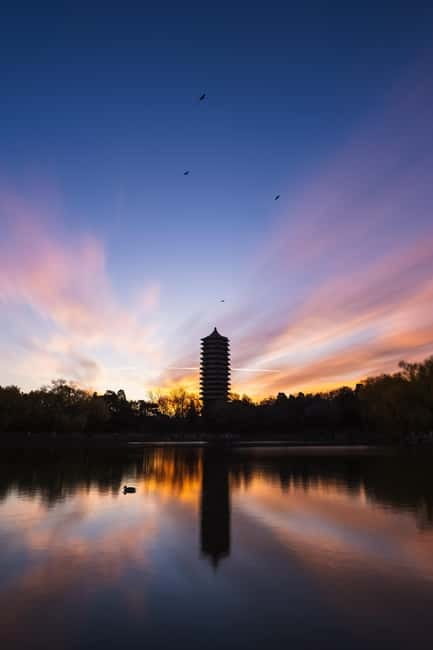
Peking University can feel like a living textbook. This 2-hour campus walk, led by English-speaking guides like Henry, ties the big-name landmarks to stories you can actually picture, from Boya Pagoda to Weiming Lake. I really like how the tour turns architecture and symbolism into something you can follow without needing a degree.
My second favorite part is the campus-reading skill you walk away with. You’ll understand the meaning behind PKU’s traditional gardens, courtyards, and building layouts, then see how that design supports an academic mindset—not just pretty scenery. That includes stops like the Peking University Library and the Statue of Cai Yuanpei, plus the campus’s evolution story.
One consideration: with only 2 hours and a small walking route from east gate to west gate, you may wish for more time at a few places. It’s still well-paced, but plan on walking steadily and snapping photos fast.
In This Review
- Key things I’d make sure you notice
- Starting at the East Gate: finding the stone lion and your walking rhythm
- Boya Pagoda, Weiming Lake, and the Bell Pavilion: campus icons with real explanations
- The Peking University Library and Cai Yuanpei statue: why academia isn’t just classrooms
- Hua Biao and Qilin statues: learning the symbolism before you think you already get it
- PKU’s evolution story: Yenching University, Yuanmingyuan, and Heshen
- Traditional gardens and courtyard layouts: how to read the campus like a local
- Group size, pace, and comfort: small-group walking that stays friendly
- Price and value: what $39 buys in a 2-hour English campus tour
- Who this tour suits best (and who might prefer solo exploring)
- Ending at the West Gate: plan your next step
- Should you book the Beijing Peking University Campus Guided Walking Tour?
- FAQ
- Where is the meeting point for the tour?
- How long is the Peking University campus guided walking tour?
- Is the tour guide available in English?
- What are the main landmarks you’ll visit during the walk?
- How big is the group?
- What’s included in the $39 price?
- What isn’t included?
- What should I bring?
- What is the cancellation policy?
- Is there a reserve and pay later option?
Key things I’d make sure you notice

- East Gate meeting spot: start at the stone lion on the right when you face the gate entrance
- Icon trio with context: Boya Pagoda, Weiming Lake, and the Bell Pavilion explained beyond postcard views
- Academic landmarks matter: the Peking University Library and Cai Yuanpei statue are tied to the school’s mission
- Symbol training: Hua Biao ornamental pillars and Qilin statues get the meaning they deserve
- How history shows up in space: PKU’s roots as Yenching University and ties to Yuanmingyuan and Heshen are put in place
Beijing at street level, more routes on foot
Starting at the East Gate: finding the stone lion and your walking rhythm
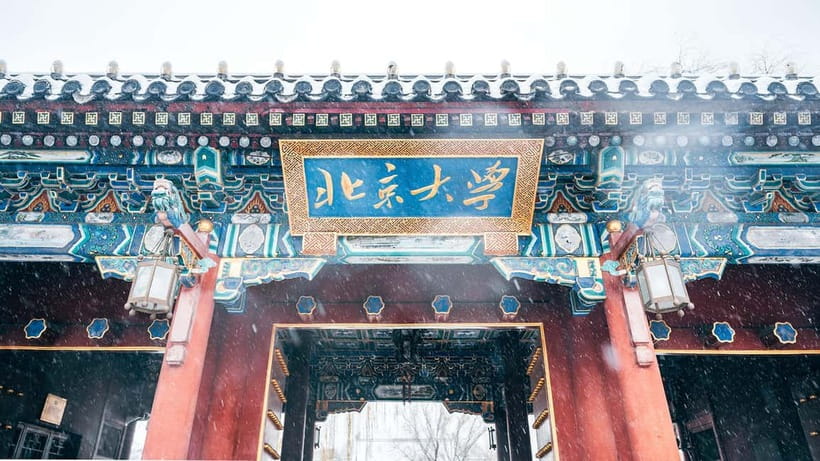
Your tour begins at 北京大学东门 (Peking University East Gate). The exact meet-up point is specific: the stone lion on the right side when you’re facing the gate entrance. I love this kind of clarity. It saves time, prevents that awkward hunt for the group, and helps you settle in before the first story begins.
Expect a calm start and then a steady walking pace across campus. Because the tour is designed to fit into a 2-hour window, the guide keeps the route moving, but not rushed. If you’re the type who likes to read every plaque and linger for photos, pack in extra time after the tour—don’t try to do everything during those two hours.
Also, since the guide works in English, you don’t need to guess what you’re looking at. That matters on a campus where buildings can look similar from a distance, but the details carry meaning up close.
Boya Pagoda, Weiming Lake, and the Bell Pavilion: campus icons with real explanations
This is where the tour earns its keep. You’re not just “seeing famous spots”—you’re getting a sense of why they matter and what they’re doing in the campus story.
Boya Pagoda (Boya Ta) is one of the big early stops, described as century-old. Guides usually help you spot the right vantage points and connect the pagoda to the idea of learning and cultural continuity. Even if you’re not a deep architecture person, the story gives you a reason to slow down and look.
Then comes Weiming Lake, which the guide frames as more than a pretty break in the campus walk. When a guide points out what people historically valued in garden and water design, you start noticing the shape of the shoreline, the visual calm, and how the lake changes the feel of the campus. It’s the kind of stop where you’ll probably take photos without thinking too hard about composition—because the setting does it for you.
The Bell Pavilion adds a different tone: sound and ritual. The guide’s job here is to explain how these structures connect daily life, tradition, and a scholarly atmosphere. If you’ve ever wondered why universities preserve certain buildings instead of replacing everything, this is a good place to get your answer.
A small practical note: these stops work best if you wear comfortable shoes and move at a walking pace. You’ll be outside for most of the tour, so plan for weather and bring a camera for quick shots, but also look up when the guide points out specific features.
The Peking University Library and Cai Yuanpei statue: why academia isn’t just classrooms
At PKU, academic spirit shows up in places you might not expect. The tour includes a visit to the Peking University Library, presented as grand and important enough to be a named highlight. This is the part I like most when a campus tour is trying to teach more than geography.
Libraries tend to feel intimidating on big university campuses, but the guide’s stories make it easier to connect the building to the school’s identity. You’re essentially learning what the university values through the physical space it chose to invest in.
Then you’ll visit the Statue of Cai Yuanpei. The guide explains Cai Yuanpei’s role as a revolutionary former president of PKU. That context matters because the statue can otherwise read as just another landmark. Here, it’s framed as respect for a person who helped shape the institution’s direction.
If you care about education history—how universities reform, organize, and evolve—this section is satisfying. It turns “look at the statue” into “understand what leadership meant for the institution.”
Hua Biao and Qilin statues: learning the symbolism before you think you already get it
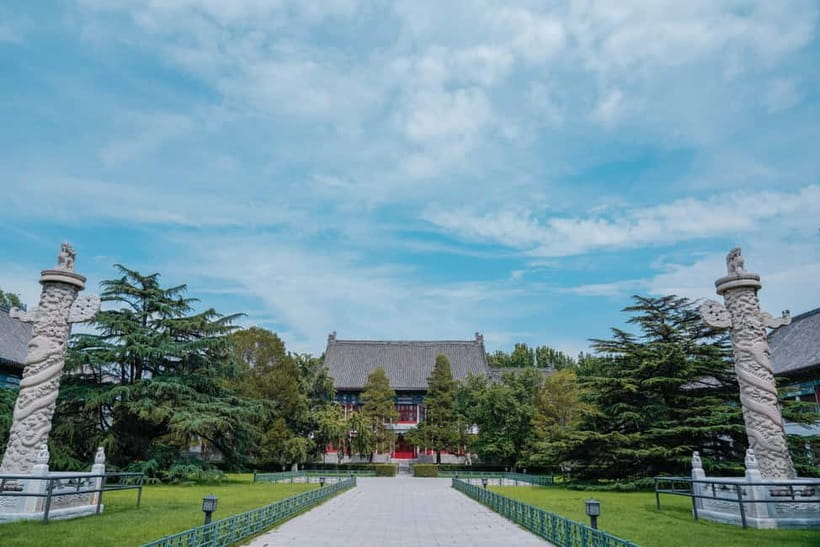
Not every campus tour explains the details people usually walk past. This one does. You’ll encounter Hua Biao (ornamental pillars) and Qilin statues, and the guide explains their cultural significance.
Even if you’ve seen similar decorative animals and carved pillars elsewhere in China, the meaning can be different based on location, tradition, and how a campus chooses to honor certain ideas. The guide helps you slow down and see how these elements fit into the broader PKU atmosphere.
Here’s why that’s valuable for you: after this stop, you’ll start looking at the campus like a designed system. Buildings and ornaments aren’t random. They’re signals—some historical, some cultural—used to shape how people feel when they walk through the grounds.
If you’re traveling with family, kids, or anyone who gets bored by lecture-style history, this kind of symbolic explanation often works well because it’s visual and quick to understand.
A local along for the day, more guided runs
- Beijing Forbidden City Ticket Booking (Optional: guide service)★ 5.0 · 1,263 reviews
- Forbidden City&T-Square Small GroupTours w/ ticket(Eng/Esp Guide)★ 5.0 · 995 reviews
- Beijing: Summer Palace Entry Ticket and Optional Guided Tour★ 4.7 · 810 reviews
- Beijing: Hidden Gems Guided Food Tour with Beer and Tastings★ 4.9 · 306 reviews
- Forbidden City Admission Ticket – With Guide Option★ 4.5 · 151 reviews
PKU’s evolution story: Yenching University, Yuanmingyuan, and Heshen

One of the most interesting parts of the walk is how the guide traces PKU’s evolution from its roots as Yenching University. This isn’t just trivia. It’s a way to understand why the campus holds on to certain identities while changing over time.
The tour also connects PKU’s story to the Old Summer Palace (Yuanmingyuan) and even to Heshen, described as an infamous Qing Dynasty official. You’ll hear how these historical threads show up in the wider narrative the campus carries.
Why I think this works for you: when you learn the historical context while you’re physically standing near symbolic structures, the past stops feeling abstract. The campus becomes a map of ideas—education reform, cultural memory, and what institutions choose to preserve.
Also, this is a reminder that history in Beijing isn’t only in museums. It’s in the layout of major institutions and the stories told around them.
Traditional gardens and courtyard layouts: how to read the campus like a local
This tour is especially strong on the “how to notice things” part. The guide points out hidden meanings behind PKU’s traditional Chinese gardens, courtyards, and the layout of buildings, emphasizing harmony between nature and scholarship.
Once the guide frames it this way, you’ll likely start noticing how:
- pathways guide your movement,
- open courtyards create pause points,
- and natural features like water and planting soften the geometry of learning spaces.
You’re not just walking past scenic spots. You’re learning a design logic. That makes the campus feel less like a set of landmarks and more like a thoughtfully planned environment for study, reflection, and community.
If you enjoy architecture or cultural design, this is where the tour becomes more than sightseeing. It helps you see how cultural values become built form—and how that form influences how people experience the university.
Group size, pace, and comfort: small-group walking that stays friendly
This is a small group tour, limited to 10 participants. That’s a sweet spot. It’s small enough for questions and for the guide to keep everyone on track, but not so small that you feel like you’re waiting for a private briefing.
Language is English, so you’ll want to stick with the group and listen when the guide calls out details. The best photo moments are usually the ones where you take a step back and let the guide finish pointing at what matters.
As for comfort, bring comfortable shoes. The tour is only 2 hours, but it’s still a campus walk, and PKU is not a flat, single-street stroll.
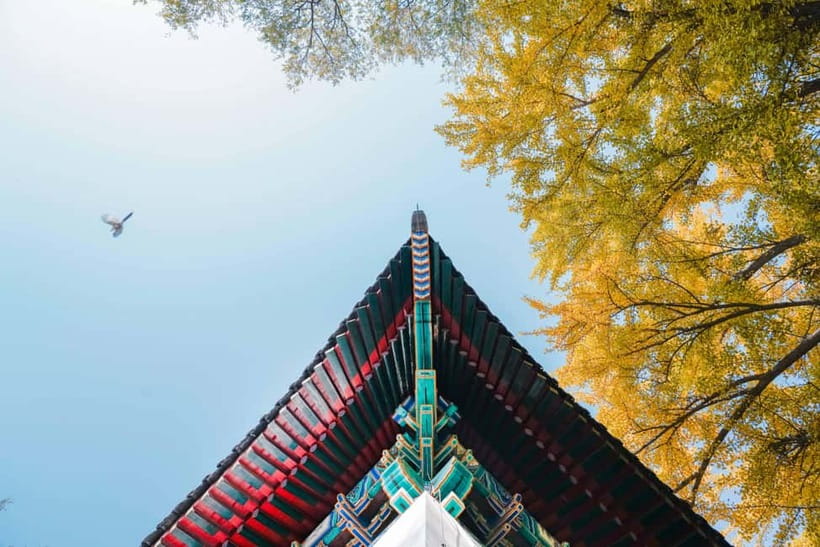
One more practical tip: bring your camera, but also plan for quick moments of observation. The guide’s stories often make you look up at specific features right when you’d otherwise be staring at your phone.
Price and value: what $39 buys in a 2-hour English campus tour
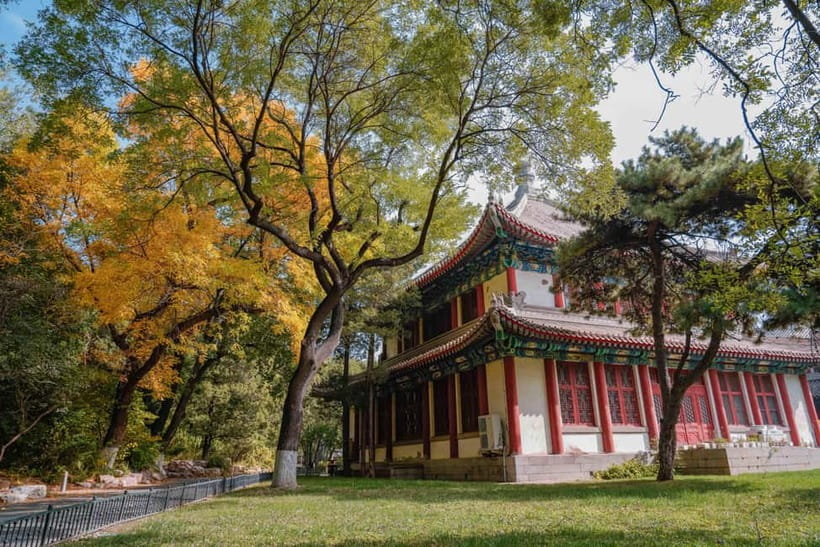
At $39 per person for a 2-hour guided walking tour, you’re paying for three things: time with an English-speaking guide, structured visits to major landmarks, and context that turns photos into understanding.
The included items are straightforward: a 2-hour guided walking tour, visits to historical and cultural sites, and stories plus insights into student life. What’s not included is also clear: food and drinks, and transportation to and from the university.
That pricing makes sense if you value:
- history explained in plain language,
- being able to ask questions without slowing the group,
- and avoiding the guesswork of trying to interpret a famous campus on your own.
If you’re traveling solo or with one companion, small-group format still gives you personal attention. And if you have a mix of interests—history, architecture, and culture—this tour checks multiple boxes without turning into a lecture.
Who this tour suits best (and who might prefer solo exploring)
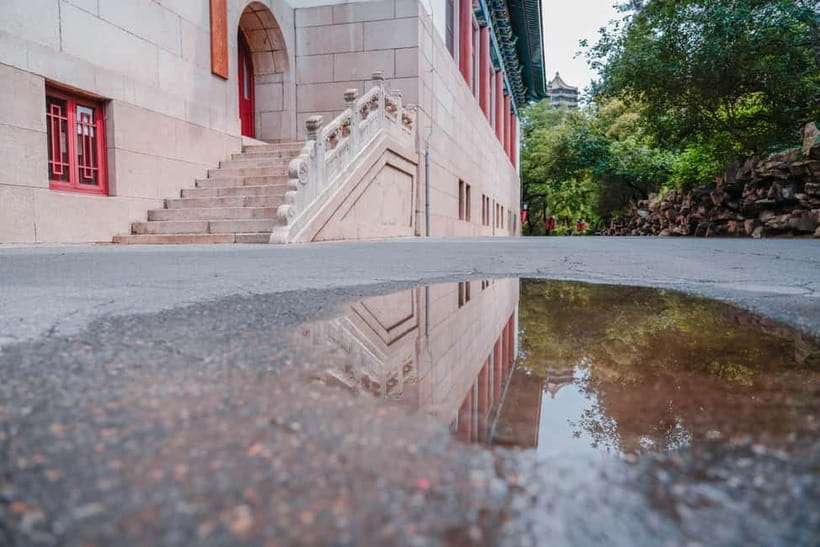
This tour is a great fit if you:
- want a clear, structured way to see PKU in a short time,
- enjoy learning the meaning behind design details like Hua Biao and Qilin statues,
- and like university history that connects people, buildings, and ideas.
It’s also useful if you’re not sure you’ll enjoy a self-guided campus walk. The guide helps you prioritize. It’s easy to miss the “why” when you’re on your own.
If you’re the type who loves lingering for 30 minutes at every viewpoint, you might find the route feels timed. It’s not a problem with the tour; it’s just the format. You’ll get a solid overview, and then you’ll want to return later for deeper independent exploring if that’s your style.
Ending at the West Gate: plan your next step
The tour finishes at 北京大学西门 (Peking University West Gate). Ending on the opposite side of the campus is convenient because it prevents the classic situation where you retrace every step.
After the tour, take a little time to refresh and decide where you want to go next—coffee, more walking, or nearby sightseeing. Since food and drinks aren’t included, I’d treat the tour as your cultural and architectural “hit,” then plan meals separately.
Should you book the Beijing Peking University Campus Guided Walking Tour?
I’d book it if you want a guided way to see PKU’s landmarks with context, especially if your goal is to understand the symbolic and historical layers of the campus in just two hours. The small-group size and English guide make it easy to follow, ask questions, and avoid the frustration of interpreting everything on your own.
I’d skip it only if you want long, unhurried time at a few places or you don’t care about cultural meaning behind garden design, statues, and the campus’s historical evolution.
FAQ
Where is the meeting point for the tour?
The meeting point is Peking University East Gate (北京大学东门). The exact spot is the stone lion on the right side when facing the gate entrance.
How long is the Peking University campus guided walking tour?
The tour lasts 2 hours.
Is the tour guide available in English?
Yes. The live tour guide provides the tour in English.
What are the main landmarks you’ll visit during the walk?
You’ll visit key PKU sites including the Boya Pagoda, Weiming Lake, and the Bell Pavilion, plus cultural and academic landmarks such as the Peking University Library and the Statue of Cai Yuanpei. You’ll also see Hua Biao (ornamental pillars) and Qilin statues.
How big is the group?
This is a small group limited to 10 participants.
What’s included in the $39 price?
Included are the 2-hour guided walking tour, visits to historical landmarks and cultural sites, and engaging stories and insights about PKU and student life.
What isn’t included?
The tour does not include food and drinks, and it does not include transportation to and from the university.
What should I bring?
Bring comfortable shoes for walking and a camera for photos.
What is the cancellation policy?
You can cancel up to 24 hours in advance for a full refund.
Is there a reserve and pay later option?
Yes. You can reserve now & pay later, which means you can book your spot without paying today.
Beijing on Foot, Continued
- Beijing Hutong Walking Food and Beer Tour at Hidden Restaurants
★ 5.0 · 1,132 reviews - Private Beijing Walking Tour of the Forbidden City with 7 Options
★ 5.0 · 675 reviews - Forbidden City Private Walking Tour with Optional Sights
★ 5.0 · 400 reviews - Beijing Private Hutong Food Walking Tour
★ 5.0 · 299 reviews - Beijing: Hutong Culinary Walking Tour with 15+ Tastings
★ 5.0 · 162 reviews - Beijing City Walk: Explore Hutongs Life and Old Beijing
★ 5.0 · 146 reviews
More Beijing Outings
- From Beijing: Mutianyu Great Wall Tours with Options
★ 4.9 · 9,216 reviews - Beijing: Forbidden City Tour(Group/Private)-Tickets Included
★ 4.8 · 7,974 reviews - Beijing: T-Square & Forbidden City Group or Private Tour
★ 4.8 · 4,446 reviews - All-Inclusive Tour: Tiananmen Square, Forbidden City, Great Wall
★ 5.0 · 2,873 reviews - MuBus: Mutianyu Great Wall ENG/ESP/RUS Guided Bus Tour
★ 5.0 · 2,361 reviews - 4-Hour Small Group Tour to Forbidden City with Entry Tickets
★ 5.0 · 1,863 reviews
More Tour Reviews in Beijing
- From Beijing: Mutianyu Great Wall Tours with Options
★ 4.9 · 9,216 reviews - Beijing: Forbidden City Tour(Group/Private)-Tickets Included
★ 4.8 · 7,974 reviews - Beijing: T-Square & Forbidden City Group or Private Tour
★ 4.8 · 4,446 reviews - All-Inclusive Tour: Tiananmen Square, Forbidden City, Great Wall
★ 5.0 · 2,873 reviews - MuBus: Mutianyu Great Wall ENG/ESP/RUS Guided Bus Tour
★ 5.0 · 2,361 reviews - 4-Hour Small Group Tour to Forbidden City with Entry Tickets
★ 5.0 · 1,863 reviews
Just In: More Beijing Tours to Browse



Walking Tours, compared.
 ★ 5.0Beijing Hutong Walking Food and Beer Tour at Hidden RestaurantsFrom $801,132 reviews
 ★ 5.0Private Beijing Walking Tour of the Forbidden City with 7 OptionsFrom $75675 reviews
 ★ 5.0Forbidden City Private Walking Tour with Optional SightsFrom $90400 reviews
 ★ 5.0Beijing Private Hutong Food Walking TourFrom $82299 reviews
 ★ 5.0Hutong Culinary Walking Tour with 15+ TastingsFrom $76162 reviews
 ★ 5.0Beijing City Walk: Explore Hutongs Life and Old BeijingFrom $15146 reviews
 ★ 5.0Highlights of Forbidden City Private Walking TourFrom $67104 reviews
 ★ 5.0Beijing Walking Food Tour with a Local FriendFrom $6073 reviews
Browse the lists this tour appears in