Reviewed · LAMA & CONFUCIUS TEMPLES
Beijing: Yonghe Lama Temple Tickets with guide (optional)
A temple you can see in one focused day.
This pre-booked Yonghegong Lama Temple ticket keeps you from hunting for entry time on the spot, and I love how the complex layers Tibetan Buddhism onto traditional Chinese design, with three archways and five main halls guiding you through. The one drawback to plan around: you’ll want to arrive early, because last entry and closing ground rules are strict.
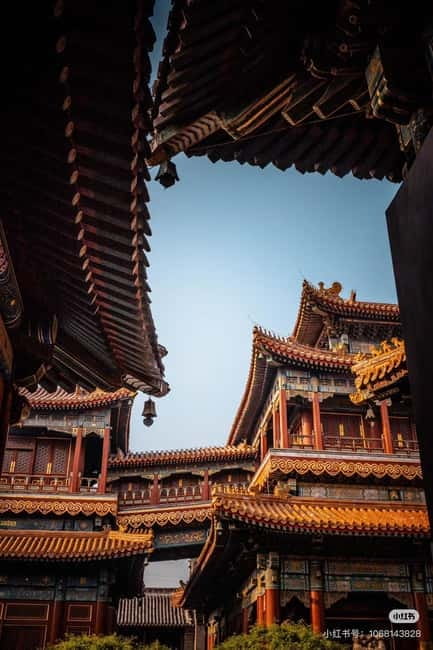
Inside, you’re looking at a site with real scale—over a thousand rooms, courtyards that narrow as you move south to north, and halls that rise in height as the route progresses. If you choose the English guide, you’ll get context for what you’re seeing (and why the architecture mixes Han, Manchu, Mongolian, and Tibetan influences), which makes the walking feel like more than just sightseeing.
This is a great fit if you like structured visits and clear orientation. It’s less ideal if you’re a wheelchair user, and you’ll need a passport for entry, plus you should expect temple rules like no alcohol or drugs.
In This Review
- Key points to know before you go
- Yonghegong Lama Temple: what you’re really visiting
- Getting there from Metro Line 5 without stress
- Your ticket + optional English guide: how the visit flows
- Entering the grounds: gates, towers, and the start of the route
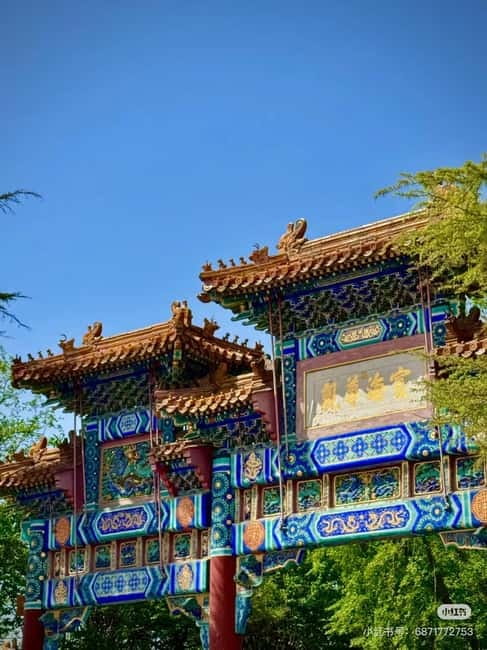
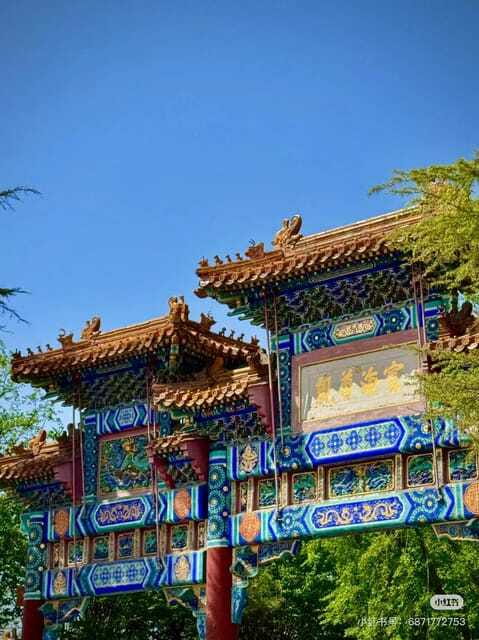
- The three archways and five main halls: the main event
- Zhaotai Gate and the opening “frame”
- Yonghe Gate and the transition to the ceremonial core
- Grand Hall (Hall of Great Buddha): the big spiritual focal point
- Yongyou Hall and the sense of progression
- Hall of the Wheel of the Dharma
- Pavilion of Ten Thousand Blessings: the finishing note
- The best time to go: opening hours and last entry reality check
- Price and value: is $12 actually fair?
- What to bring (and what to avoid inside)
- Who should book this and who should skip
- Should you book the Yonghegong Lama Temple ticket with guide?
- FAQ
- Where is the Yonghegong Lama Temple located?
- How do I get there by metro?
- How long is the visit?
- What are the opening hours?
- Do you stop entry before closing?
- Is an English guide included?
- What’s included in the price?
- What do I need to bring for entry?
- Is the temple visit wheelchair-friendly?
Key points to know before you go
- Pre-booked entry means you can spend your time walking, not queuing.
- Three archways, five main halls give the visit a clear shape.
- Tibetan-Chinese architectural mix is the main story here.
- Over 1,000 rooms makes the complex feel bigger than you expect.
- English guide option helps you connect details to meaning.
- Timing matters due to last admission and grounds clearing.
Incense and old cypresses, more temple mornings
Yonghegong Lama Temple: what you’re really visiting
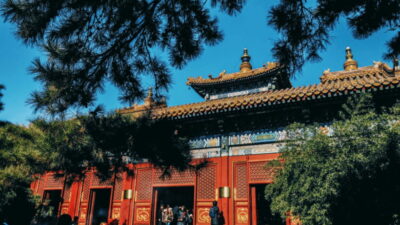
Yonghegong Lama Temple (Yonghegong) sits in Beijing’s Dongcheng District, at No. 12 Yonghegong Street, in the northeast corner of the city’s old-style urban grid. Built in 1694 during the Qing Dynasty (during Emperor Kangxi’s reign), it’s known as the highest-ranking Buddhist temple of its time in the late Qing period. That “rank” matters: the whole place is designed to feel formal, ordered, and important.
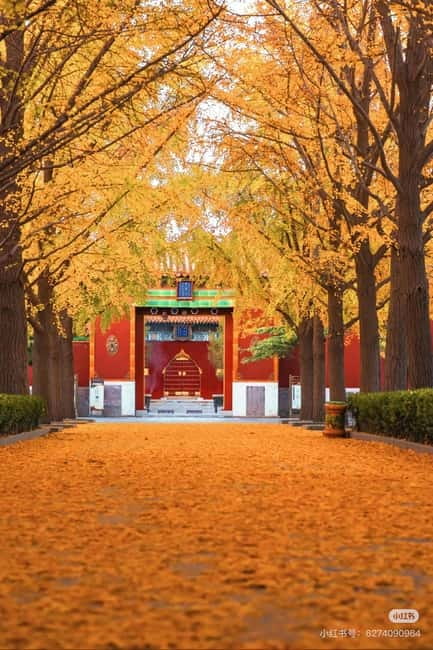
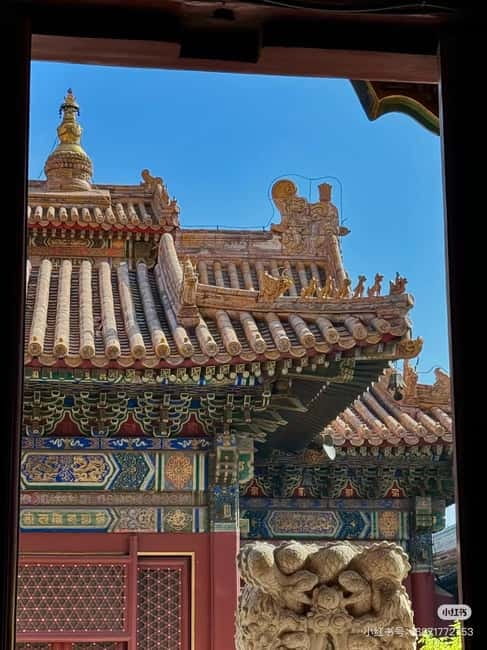
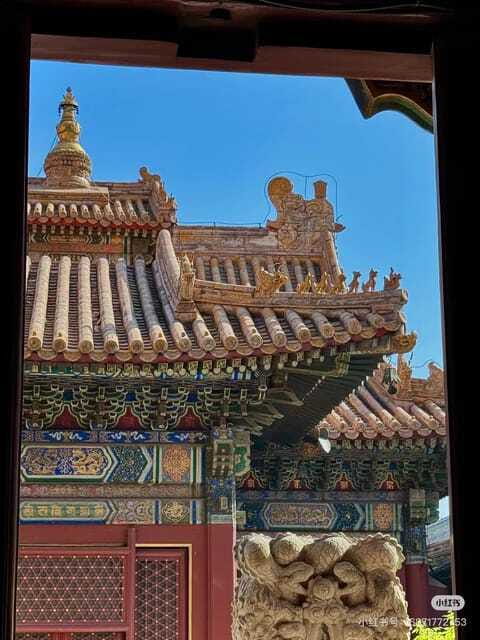
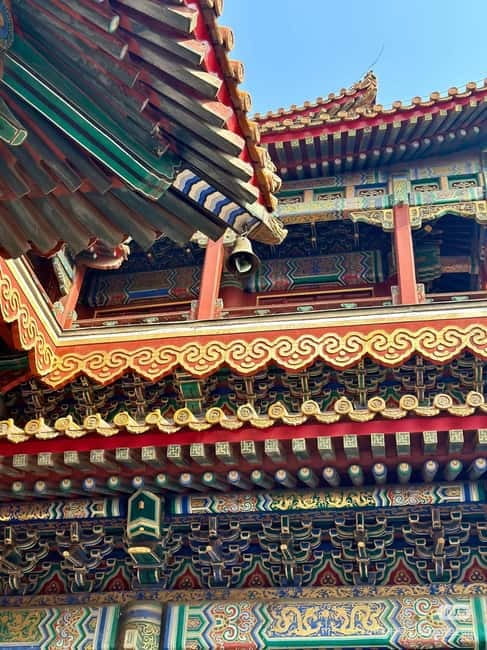
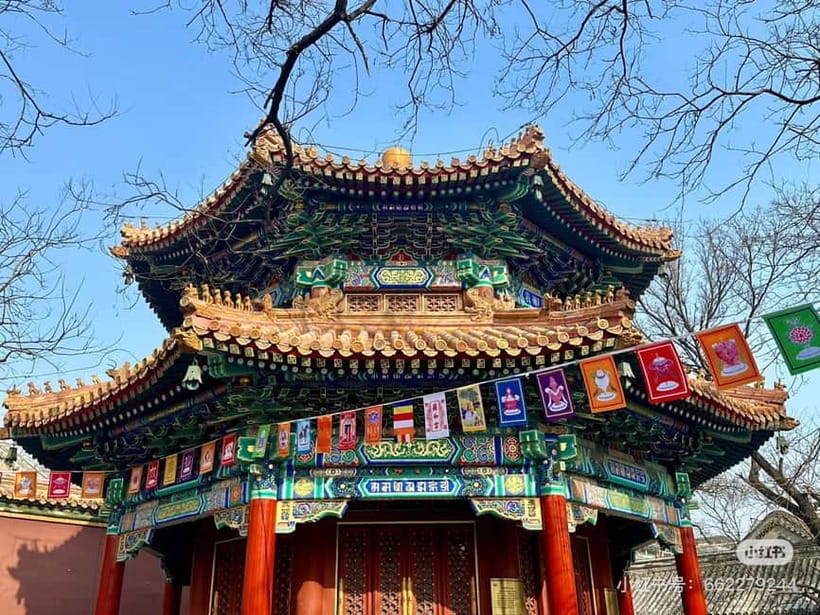
The big reason this temple feels distinctive is the blend of religions and cultures made visible in stone, wood, and layout. You’ll see Tibetan Buddhist influence braided into traditional Chinese architecture, with traces of Han, Manchu, Mongolian, and Tibetan elements. So instead of a single uniform style, you get a visual conversation between regions.
And then there’s the scale. The temple complex covers about 66,400 square meters and includes over a thousand rooms. Even if you only see the main areas on a guided visit, the sheer size gives you that “where does this go next?” feeling.
Getting there from Metro Line 5 without stress
You’ll find it easiest to use the metro. Get off at Yonghe Lama Temple station on Line 5. This keeps you away from the stop-and-go chaos that can make short sightseeing feel long.
Once you’re out, you’ll be walking within the Dongcheng area and can keep your day simple: arrive, follow the guide’s flow through the main gates and halls, then exit when the grounds clear. If you tend to wander, the guide helps you stay oriented so you don’t lose time backtracking.
Your ticket + optional English guide: how the visit flows
This is a one-day experience focused on getting you into the right place at the right time, with a live English-speaking guide available. The included items are straightforward: a Yonghegong Lama Temple ticket plus an information service fee.
Here’s the real value of a guided option: it turns “I’m in a temple” into “I know what I’m looking at.” The temple complex includes lots of named structures—gates, towers, halls, and pavilions—and the guide can help you connect them to the route design (moving south to north, courtyards narrowing, halls getting taller). Without that, you can still enjoy the architecture, but you might miss the logic behind the layout.
Group size is listed as small, which usually means you’re not stuck marching in a huge crowd. That matters here, because the temple is large and the route is built for walking through courtyards and halls in a set rhythm.
Entering the grounds: gates, towers, and the start of the route
Most of the drama happens as soon as you step into the complex. You’ll move through the major architectural markers that set the tone before you reach the most ceremonial halls.
Key structures you’ll encounter include:
- Zhaotai Gate
- Bell Tower
- Drum Tower
- Yonghe Gate
- Grand Hall (Hall of Great Buddha)
- Yongyou Hall
- Hall of the Wheel of the Dharma
- Pavilion of Ten Thousand Blessings
The route is built with intent. As you proceed through the courtyards, they gradually narrow from south to north. At the same time, the height of the halls increases in sequence. That combination creates a steady “growing importance” effect as you walk deeper in. It’s not just decoration—it’s wayfinding through architecture.
You’ll also feel how the site balances different styles. The Tibetan Buddhist influence isn’t just a single feature; it shows up in the overall spiritual design and how the structures relate to one another. Chinese architectural tradition anchors the environment so you get a sense of harmony rather than a random mix.
Weigh these up before you book this Beijing tour:
- Beijing: Forbidden City Tour(Group/Private)-Tickets Included★ 4.8 · 7,974 reviews
- 4-Hour Small Group Tour to Forbidden City with Entry Tickets★ 5.0 · 1,863 reviews
- Beijing: Tiananmen Square Registration Service(Ticket)★ 4.5 · 1,704 reviews
- Beijing: The Temple of Heaven or Summer Palace Entry Ticket★ 4.6 · 1,286 reviews
- Beijing Forbidden City Ticket Booking (Optional: guide service)★ 5.0 · 1,263 reviews
The three archways and five main halls: the main event
Think of the visit as moving through a layered performance. Even though you’re not watching anything theatrical, the design works like a staged show: entrance markers first, then grand halls, then more refined spiritual spaces.
The complex is described as having three archways and five main halls, with over 1,000 rooms in total. That sounds like a lot to process—and it is—so the best mindset is to focus on the main “anchors” and let smaller details be bonuses.
Zhaotai Gate and the opening “frame”
Zhaotai Gate is one of the key starting points. It functions like a frame: you enter, get your bearings, and then the route begins to pull you forward.
Yonghe Gate and the transition to the ceremonial core
The Yonghe Gate is another major threshold. By the time you reach it, you’re no longer in “arrival mode.” You’re in “this is the spiritual center” mode. Expect the atmosphere to feel more formal as the route leads you toward the main halls.
Grand Hall (Hall of Great Buddha): the big spiritual focal point
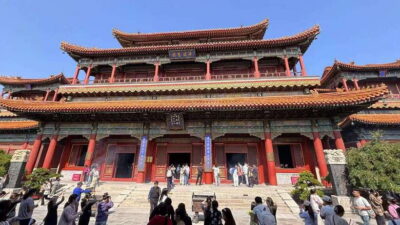
The Grand Hall, also called the Hall of Great Buddha, is one of the main stops. This is where you’ll feel the scale of the site most clearly. If you want photos, this is one of the places where people naturally gather—just manage your timing and don’t block others.
Yongyou Hall and the sense of progression
Yongyou Hall adds another layer to the progression. You’re building understanding: each hall feels like a chapter, not a repeat. The guide can help you connect why each space has its own role.
Hall of the Wheel of the Dharma
The Hall of the Wheel of the Dharma is another named highlight. This kind of naming isn’t arbitrary. It signals that you’re looking at Buddhist themes expressed through architecture and placement, not just a standard building.
Pavilion of Ten Thousand Blessings: the finishing note
The route often ends at or near the Pavilion of Ten Thousand Blessings, which feels like the “final statement” in the complex’s ordered walk. By this point, the narrowing courtyards and rising hall heights have done their job. You’re left with a clear sense that the site isn’t random. It’s designed.
The best time to go: opening hours and last entry reality check
Yonghegong’s hours change by season, so don’t assume one time works all year.
- Summer and autumn (April 1 – October 31): 9:00 AM – 5:00 PM
Last admission at 4:30 PM; entry ends and grounds are cleared by 5:00 PM.
- Winter (November 1 – March 31): 9:00 AM – 4:30 PM
Last admission at 4:00 PM; entry ends and grounds are cleared by 4:30 PM.
There’s also a note that entry stops at 16:00. That’s the part you should treat as a “safe rule,” especially if you’re arriving late or want buffer time to enjoy the halls instead of rushing.
My practical suggestion: plan to arrive early enough that you’re not thinking about closing every few minutes. This is a complex where the design rewards a slow, steady walk.
Price and value: is $12 actually fair?
The price listed is $12 per person for a 1-day visit, including your temple ticket and an information service fee. On paper, that sounds simple, but value depends on what you’d otherwise pay in time and stress.
Here’s why I think the value is decent:
- A guided English experience is usually the part that would cost extra if you paid separately. You’re getting context without scrambling to arrange it last minute.
- Pre-booking reduces the on-the-spot ticket hassle, so you can protect your day.
- It’s focused. You’re not paying for transportation you might not need or a long ride to “maybe see something.”
If you’re traveling on a tight schedule in Beijing, this kind of pay-for-your-time structure can be a smart move. You’re spending money so you don’t lose time to ticket uncertainty.
What to bring (and what to avoid inside)
For entry, you’ll need a passport. Temple rules also apply:
- No alcohol or drugs
- No making fire
That’s typical for religious sites, but it’s worth keeping in mind if you’re also drinking bottled drinks on the way over. Just keep it clean and simple.
Also note: wheelchair users aren’t suitable for this visit based on the information provided. If mobility is a concern for you, it’s best to choose a different format or ask before committing.
Who should book this and who should skip
You’ll likely love this experience if:
- You want a structured walk through a major Beijing religious complex in one day
- You appreciate architecture with cultural meaning (the Tibetan-Chinese blend is the core draw)
- You’d benefit from an English guide to understand named halls and the site’s layout logic
- You like small groups and hate wasting time at ticket counters
You might reconsider if:
- You have mobility limits and need wheelchair-friendly access
- You’re the type who needs flexible admission times (last entry rules are strict)
- You don’t care about context and just want casual wandering—while you can do that, the guide is the fastest way to get value from all the named stops
Should you book the Yonghegong Lama Temple ticket with guide?
If you’re doing Beijing with limited time, I think it’s a smart booking. The temple complex is big, and the route is designed to be walked in a particular order. Pre-booking helps you start sooner, and an English guide option helps you understand why the architecture is arranged the way it is.
If you already know you’ll arrive early, prefer self-guided travel, and you don’t mind figuring things out on-site, you could manage without a guide. But if you want your visit to feel coherent and worth your ticket the moment you enter, this is the kind of experience that rewards booking ahead.
FAQ
Where is the Yonghegong Lama Temple located?
It’s at No. 12 Yonghegong Street, Dongcheng District, Beijing.
How do I get there by metro?
Take Metro Line 5 and get off at Yonghe Lama Temple station.
How long is the visit?
The experience is listed as valid for 1 day.
What are the opening hours?
Summer and autumn (April 1 – October 31) are 9:00 AM – 5:00 PM (last admission 4:30 PM). Winter (November 1 – March 31) are 9:00 AM – 4:30 PM (last admission 4:00 PM).
Do you stop entry before closing?
Yes. The information notes that stop entering at 16:00, and entry ends at the seasonal closing times listed.
Is an English guide included?
A live tour guide in English is available, and the activity is offered as a small group option.
What’s included in the price?
The ticket for Yonghegong Lama Temple and an information service fee are included.
What do I need to bring for entry?
You need to bring a passport.
Is the temple visit wheelchair-friendly?
No. It is not suitable for wheelchair users based on the provided information.
Tickets and Fast-Track Entry
- Beijing: Forbidden City Tour(Group/Private)-Tickets Included
★ 4.8 · 7,974 reviews - 4-Hour Small Group Tour to Forbidden City with Entry Tickets
★ 5.0 · 1,863 reviews - Beijing: Tiananmen Square Registration Service(Ticket)
★ 4.5 · 1,704 reviews - Beijing: The Temple of Heaven or Summer Palace Entry Ticket
★ 4.6 · 1,286 reviews - Beijing Forbidden City Ticket Booking (Optional: guide service)
★ 5.0 · 1,263 reviews - Beijing: Mutianyu Gt Wall Trip, Depart 8-10am Bus w/ Tickets
★ 4.9 · 1,256 reviews
More Tour Reviews in Beijing
- From Beijing: Mutianyu Great Wall Tours with Options
★ 4.9 · 9,216 reviews - Beijing: Forbidden City Tour(Group/Private)-Tickets Included
★ 4.8 · 7,974 reviews - Beijing: T-Square & Forbidden City Group or Private Tour
★ 4.8 · 4,446 reviews - All-Inclusive Tour: Tiananmen Square, Forbidden City, Great Wall
★ 5.0 · 2,873 reviews - MuBus: Mutianyu Great Wall ENG/ESP/RUS Guided Bus Tour
★ 5.0 · 2,361 reviews - 4-Hour Small Group Tour to Forbidden City with Entry Tickets
★ 5.0 · 1,863 reviews
Beijing's Temple Quarter
- Temple Heaven, Lama Temple, Summer Palace & Peking Duck Bus Tour
★ 5.0 · 377 reviews - Temple Heaven, Summer Palace, Lama Temple, Hutong Bus Tour
★ 4.7 · 319 reviews - Temple of Heaven, Summer Palace, Lama Temple, Hutong Tours
★ 5.0 · 311 reviews - Beijing: Lama Temple (Yonghe Temple) Admission Ticket
★ 4.8 · 297 reviews - Beijing Historical Tour II including Summer Palace, Lama Temple & Panda Garden
★ 4.0 · 187 reviews - Beijing: Yonghe Lama Temple Entry Ticket
★ 4.5 · 147 reviews
Just In: More Beijing Tours to Browse



Lama & Confucius Temples, compared.
 ★ 5.0Temple Heaven, Lama Temple, Summer Palace & Peking Duck Bus TourFrom $56377 reviews
 ★ 4.7Temple Heaven, Summer Palace, Lama Temple, Hutong Bus TourFrom $58319 reviews
 ★ 5.0Temple of Heaven, Summer Palace, Lama Temple, Hutong ToursFrom $99311 reviews
 ★ 4.8Lama Temple (Yonghe Temple) Admission TicketFrom $10297 reviews
 ★ 4.0Beijing Historical Tour II including Summer Palace, Lama Temple & Panda GardenFrom $93187 reviews
 ★ 4.5Yonghe Lama Temple Entry TicketFrom $9147 reviews
 ★ 3.7Beijing Lama temple ticket; #1 efficacious; limited DiscountFrom $10116 reviews
 ★ 4.4Confucius Temple and the Impercial College E-ticketFrom $792 reviews
Browse the lists this tour appears in