Reviewed · PEKING DUCK & FOOD TOURS
Old Beijing Dinner Tour
Old Beijing is best eaten at night. This small-group dinner tour takes you into working hutong lanes, where local families cook and serve comfort food you usually won’t spot on the main tourist routes. I love the small-group pace and the way the guide gets you moving through narrow streets without fuss. I also love that you come away with a real sense of northern Chinese flavors, not just a checklist of dishes.
The only real catch: you should expect a lot of food and some standing/walking, including in tighter alleys, so plan light the rest of the evening.
In This Review
- Key things you’ll notice
- Entering Old Beijing hutongs at 7:00 pm
- The food plan: why this tour is better than picking restaurants
- Stop-by-stop: what each part feels like (and what to watch for)
- Stop 1: UnTour Food Tours meeting point and orientation
- Stop 2: Hutong Tour in the working lanes
- Stop 3: Nuoyan Rice Wine shop and mijiu tasting flight
- Stop 4: Ghost Street (Gui Jie) snack moment
- Drinks, food pacing, and how to order without stress
- Logistics that matter: where you start and how you’ll get back
- What the reviews reveal about the best parts
- Value check: why $75 often works (and when it doesn’t)
- Who this tour is for (and who should skip it)
- Brief FAQ
- FAQ
- How long is the Old Beijing Dinner Tour?
- How much does the tour cost?
- Where does the tour start?
- Where does the tour end?
- What time does it start?
- What group size should I expect?
- What’s included in the price?
- Are hotel pickup and drop-off included?
- Can the tour accommodate dietary requirements?
- Should you book this Old Beijing Dinner Tour?
Key things you’ll notice
- Small-group, relaxed pace (standard size 8, sometimes up to 12) so you’re not shoved along.
- Hutong walking route in Old Beijing that would be hard to follow on your own.
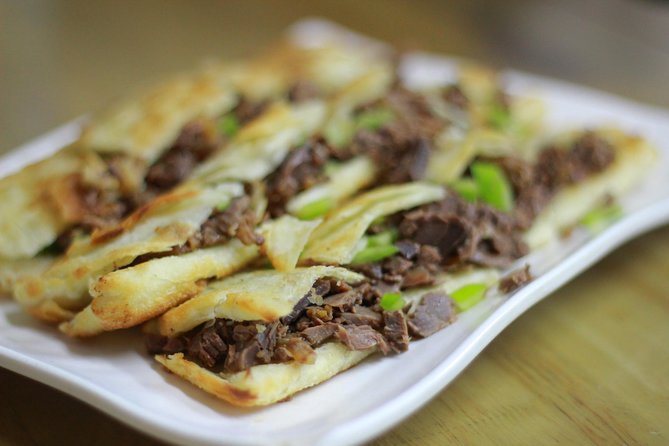
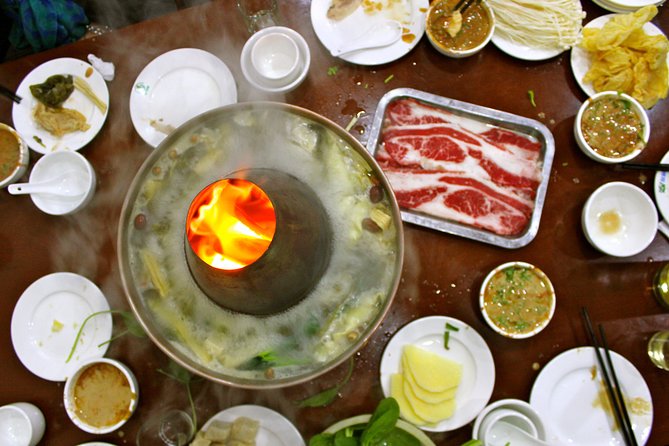
- Multiple local tastings like hotpot, dumplings, and sauced meats, plus beer and soft drinks.
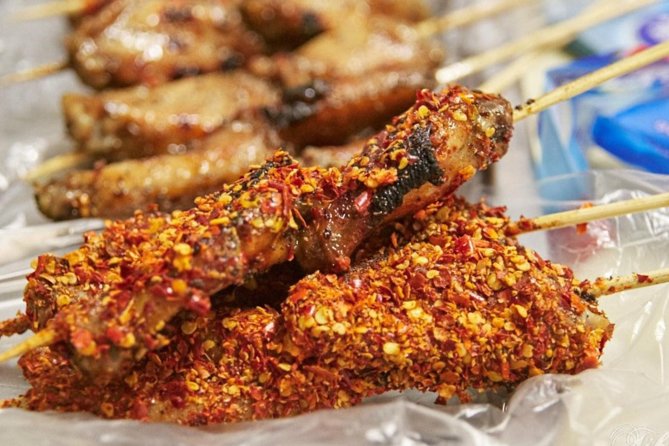
- Old-school snack street stop at Ghost Street (Gui Jie) near the end.
- Rice wine shop tasting with a short history lesson and a flight of mijiu.
- Guide support after the tour, including directions back toward your hotel.
Crisp duck and hutong snacks, still hungry?
Entering Old Beijing hutongs at 7:00 pm
This is an evening tour with a very practical meeting point: Beixinqiao Station (Dongzhimen/Dongcheng). It starts at 7:00 pm and runs about 3 hours. That timing matters. Daytime Beijing traffic can be chaotic, and hutong neighborhoods feel more like real neighborhoods after dinner hours begin.
You’ll walk through Old Beijing’s hutongs—those narrow lanes where you’ll often see residents, open-front shops, and family-run kitchens. The value here isn’t just “views.” It’s getting to the places that sit one turn past the tourist map, where you’d likely wander around confused before finding the right doorway.
The group stays small (typically 8). In some cases it can run up to 12, with a second guide. That keeps the tour social, but still controlled enough for narrow lanes and small restaurant seating.
The food plan: why this tour is better than picking restaurants
This tour is built around the idea that your “best dinner” in Beijing isn’t always the most famous place. Your guide takes you to a string of local stops, so you taste variety instead of committing to one restaurant and hoping you picked the right specialty.
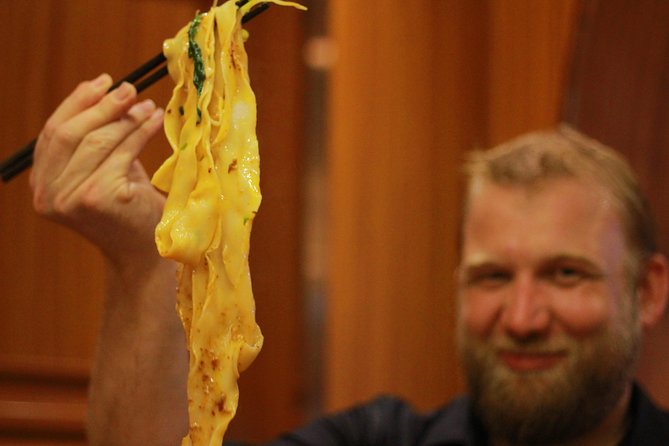
The included meal portions add up fast. You get bottled water, soft drinks, and local alcoholic beverages, plus the guide brings a bottle of local beer for pairing during the tastings. In plain terms: you’ll likely eat enough during the tour that you won’t need to schedule another full meal afterward.
One note I think you should take seriously: don’t overdo the first stop if it includes something hearty. One review mentioned Mongolian-style hotpot as an early highlight, and the advice was basically to pace yourself so later tastings still feel enjoyable.
Stop-by-stop: what each part feels like (and what to watch for)
Stop 1: UnTour Food Tours meeting point and orientation
The tour begins at UnTour Food Tours, then you’re quickly on the move through hutong neighborhoods. Expect the guide to set the tone early—how the tastings work, what you’ll learn, and how to order or react if something looks unfamiliar.
This first segment is useful because it gets you oriented to the neighborhood rhythm. Hutongs aren’t a theme park; they’re narrow, local, and slightly unpredictable. When the guide explains how to navigate and what to look for, you spend more time enjoying and less time figuring things out.
Weigh these up before you book this Beijing tour:
- 4-Hour Private Illuminated Beijing Tour with Authentic Chinese Dinner on Hutong Street★ 5.0 · 34 reviews
- Din Tai Fung Dinner and VIP Class River Cruise Experience in Shanghai★ 5.0 · 31 reviews
- Beijing:Temple of Heaven Private Tour w/Option Show & Dinner★ 4.8 · 18 reviews
- Beijing Imperial Dining Experience at Bai Jia Da Yuan Restaurant with Houhai Lake Bar Tour★ 5.0 · 16 reviews
- Beijing Evening Tour: Chaoyang Acrobatic Show with Peking Duck Dinner★ 5.0 · 13 reviews
Stop 2: Hutong Tour in the working lanes
This is the heart of the experience: you head deeper into the hutongs and stop at local restaurants and street-food style spots. The tour structure is simple: walk a bit, taste something, learn what it is, repeat.
The standout value is the “off tourist trail” factor. You’re not just eating; you’re learning why these dishes fit everyday life in Beijing—what they’re made of, how they’re served, and where the flavors connect to northern Chinese cooking.
What you might see during the tastings:
- Mongolian-style hotpot
- Hand-stuffed boiled dumplings
- Beijing’s sauced meats
You’ll also likely have a moment where you realize you would never have found these places on your own. That’s the point of the guide’s route.
Possible drawback: hotpot and meat dishes can be heavy. If you’re not a big eater, tell your guide you want smaller portions. The tour includes plenty of food regardless, so your best strategy is pacing.
Stop 3: Nuoyan Rice Wine shop and mijiu tasting flight
Near the middle-to-end portion, you shift from savory food to drink culture at a boutique rice wine producer (mijiu). The shop includes a short lesson and a small tasting flight.
The explanation you’ll hear is that rice wine brewing is traced far back—your stop shares the idea that Chinese rice wine methods go back around 1,000 BC, and that the method spread across East Asia. You may also hear the comparison to Japan’s sake and Korea’s cheongju.
This stop works well for two reasons:
- It breaks up the meal so you’re not just eating your way through 3 hours.
- It gives context, so the drink isn’t random. It connects the flavors you just ate with a traditional pairing style.
At the very least, you’ll leave with a better sense of what “rice wine” means in real life, not just as a label.
Stop 4: Ghost Street (Gui Jie) snack moment
The tour then ends near Ghost Street (Gui Jie). You’ll get a short 10-minute look at why Gui Jie is a popular snack street.
This portion is brief by design. You’re not being sent home to shop for souvenirs. It’s more like a final atmosphere check: walk the lane, see the snack energy, and get your bearings for what comes next.
If you want to add your own snack after the official tour, this is the right vibe for it. Just remember you’ve already eaten a lot.
Drinks, food pacing, and how to order without stress
One of the most useful things the guide does is handle the ordering rhythm for you. You’re walking in and out of small places, and you’re tasting unfamiliar dishes. Without a guide, you’d spend time pointing, translating, and second-guessing menus.
Tours with guides like Shan, Garth, Kelly, Jesus, Eric, Zeben, Katie, or Julia (names seen from past groups) tend to follow the same pattern: they explain what you’re eating, why it matters, and what you should watch for. That’s especially helpful if you have an allergy concern.
For example, one review specifically praised how the guide took a shellfish allergy seriously and focused on safe, vetted restaurants. If you have any dietary needs, the tour notes that you should advise at booking with advance notice so the team can try to accommodate.
Logistics that matter: where you start and how you’ll get back
Meeting is easy in theory and smoother in practice because the meeting point is near public transit: Beixinqiao Station. If you’re coming in by subway, it’s a normal stop on Line 5, and the route is straightforward.
The tour ends near the intersection of Dongsi North St and Dongsi 10th Alley, close to Zhangzizhong Rd (Line 5). Your guide will also help you get directions back to your hotel afterward.
In practical terms, this is a good fit if your hotel is somewhere within taxi/subway range of central Dongcheng. It’s less ideal if you’re far out and hate late-night commuting.
What the reviews reveal about the best parts
The overall rating is very high, and the repeated theme is that guides make the difference. People consistently single out:
- Story + food pairing: you get context about dishes, hutongs, and China alongside the tastings.
- Comfort in tight spaces: guides manage narrow lanes, restaurant timing, and group flow.
- Problem solving on the fly: there’s at least one example of a reservation hiccup, handled by shifting to an alternate nearby stop with beer and extra snacks while waiting.
That matters to you because it means the tour isn’t just a pre-made path. It’s responsive. When something changes (busy hours, a reservation delay), the experience still moves forward.
Value check: why $75 often works (and when it doesn’t)
At $75 per person, you’re paying for more than food. You’re paying for:
- A guided route through hutongs you’d likely miss
- Admission for multiple stops (the tour includes ticketed entries at several locations)
- A large set of tastings that add up to what feels like a full dinner experience
- Drinks: beer, soft drinks, bottled water, and local alcoholic beverages
- A post-tour welcome packet with restaurant recommendations and local travel tips
If you’re someone who likes structure on food trips—walk, taste, learn, repeat—this price starts to make sense fast. A guided evening where you don’t have to figure out what to order can be cheaper than buying a string of meals and still getting a mediocre result.
When it might not be the best value: if you’re on a very strict budget and you already know exactly where you want to eat, you could potentially do a DIY street-food plan for less. But DIY comes with the usual problems—language barriers, safety concerns, and finding the right “family-run” spot quickly.
Who this tour is for (and who should skip it)
You’ll probably enjoy this tour if you:
- Want a Beijing food tour that goes beyond the obvious tourist blocks
- Like walking but don’t want to guess your way through hutongs
- Prefer tasting multiple items instead of hunting for one perfect restaurant
- Want a guided intro to northern flavors like dumplings, sauced meats, and hotpot
I’d consider skipping or choosing a lighter meal strategy if you:
- Don’t eat much (the tastings add up, and one review explicitly warned that the first hot dish can be too much)
- Have trouble with walking and standing in narrow lanes
- Are looking for a long museum-style history program (this is food-first, with stories tied to what you’re tasting)
Brief FAQ
FAQ
How long is the Old Beijing Dinner Tour?
It’s about 3 hours.
How much does the tour cost?
The price is $75.00 per person.
Where does the tour start?
You meet near Beixinqiao Station (Dongzhimen, Dongcheng, Beijing).
Where does the tour end?
It ends near Dongsi North St & Dongsi 10th Alley, close to Zhangzizhong Rd Metro (Line 5).
What time does it start?
The start time is 7:00 pm.
What group size should I expect?
Standard group size is 8, with some groups up to 12 (a second guide may be added).
What’s included in the price?
Dinner tasting stops, bottled water, soft drinks, local alcoholic beverages, guide fee, and a post-tour welcome packet with restaurant recommendations and local travel tips.
Are hotel pickup and drop-off included?
No, hotel pickup and drop-off are not included.
Can the tour accommodate dietary requirements?
Yes, but you must advise dietary needs at the time of booking with advance notice.
Should you book this Old Beijing Dinner Tour?
Yes, if you want an easy, guided way to eat your way through Old Beijing hutongs without spending hours figuring out where to go and what to order. The strongest reason to book is the combination of small-group walking plus a sequence of tastings (savory dishes, beer pairing, and a mijiu rice wine flight) that adds up like a full dinner.
Skip it only if you know you’ll be uncomfortable with a lot of food, standing in busy small spots, or late-night commuting. If those are not your issues, this is one of the more practical ways to experience Beijing’s everyday food culture in a single evening.
More Beijing Outings
- From Beijing: Mutianyu Great Wall Tours with Options
★ 4.9 · 9,216 reviews - Beijing: Forbidden City Tour(Group/Private)-Tickets Included
★ 4.8 · 7,974 reviews - Beijing: T-Square & Forbidden City Group or Private Tour
★ 4.8 · 4,446 reviews - All-Inclusive Tour: Tiananmen Square, Forbidden City, Great Wall
★ 5.0 · 2,873 reviews - MuBus: Mutianyu Great Wall ENG/ESP/RUS Guided Bus Tour
★ 5.0 · 2,361 reviews - 4-Hour Small Group Tour to Forbidden City with Entry Tickets
★ 5.0 · 1,863 reviews
More Tour Reviews in Beijing
- From Beijing: Mutianyu Great Wall Tours with Options
★ 4.9 · 9,216 reviews - Beijing: Forbidden City Tour(Group/Private)-Tickets Included
★ 4.8 · 7,974 reviews - Beijing: T-Square & Forbidden City Group or Private Tour
★ 4.8 · 4,446 reviews - All-Inclusive Tour: Tiananmen Square, Forbidden City, Great Wall
★ 5.0 · 2,873 reviews - MuBus: Mutianyu Great Wall ENG/ESP/RUS Guided Bus Tour
★ 5.0 · 2,361 reviews - 4-Hour Small Group Tour to Forbidden City with Entry Tickets
★ 5.0 · 1,863 reviews
Eat Beijing: More Food Walks
- Beijing Hutong Walking Food and Beer Tour at Hidden Restaurants
★ 5.0 · 1,132 reviews - Temple Heaven, Lama Temple, Summer Palace & Peking Duck Bus Tour
★ 5.0 · 377 reviews - Beijing: Hidden Gems Guided Food Tour with Beer and Tastings
★ 4.9 · 306 reviews - Beijing Private Hutong Food Walking Tour
★ 5.0 · 299 reviews - Beijing: Hutong Culinary Walking Tour with 15+ Tastings
★ 5.0 · 162 reviews - Beijing Hutong Breakfast Food Tour
★ 5.0 · 155 reviews
Just In: More Beijing Tours to Browse

Peking Duck & Food Tours, compared.
 ★ 5.0Beijing Hutong Walking Food and Beer Tour at Hidden RestaurantsFrom $801,132 reviews
 ★ 5.0Temple Heaven, Lama Temple, Summer Palace & Peking Duck Bus TourFrom $56377 reviews
 ★ 4.9Hidden Gems Guided Food Tour with Beer and TastingsFrom $75306 reviews
 ★ 5.0Beijing Private Hutong Food Walking TourFrom $82299 reviews
 ★ 5.0Hutong Culinary Walking Tour with 15+ TastingsFrom $76162 reviews
 ★ 5.0Beijing Hutong Breakfast Food TourFrom $45155 reviews
★ 5.0Beijing Hutong Breakfast Food TourFrom $55120 reviews
★ 5.0Beijing Hutong Breakfast Food TourFrom $45155 reviews
★ 5.0Beijing Hutong Breakfast Food TourFrom $55120 reviews
 ★ 5.0Boutique Tour: Four Must-sees of Beijing and Peking DuckFrom $188104 reviews
Browse the lists this tour appears in