Reviewed · SUMMER PALACE TOURS
Summer Palace, Hutong Rickshaw, Lama and Confucius Temple Tour
A day that stitches Beijing’s beliefs. You start with the Summer Palace, then zip through Hutongs by rickshaw, finishing at the Lama Temple and the Confucius site with a real meal break built in. It’s a lot in one day, but the structure keeps you from wandering in circles.
What I like most is that you get expert guidance plus door-to-door ease. A professional guide keeps the stories straight (I’ve seen guides like Susan, Nancy, and Cathy make the temples feel instantly understandable), and the included hotel pickup removes the biggest first-timer headache. I also love the Peking duck lunch as a pre-set stop, so you’re not hunting for something good after a full morning. One consideration: the day runs efficiently, so if you love slow museum time, you may feel a bit rushed between the four major stops.
In This Review
- Key takeaways before you go
- Entering Beijing’s big sights without the hassle
- Morning logistics: 9:00 start, hotel pickup, and mobile tickets
- Summer Palace: Cixi’s world, Kunming Lake, and the long painted corridor
- Hutong rickshaw tour: old Beijing life through Courtyard Squares and Hou Hai
- Lama Temple (Yonghegong): Kangxi’s plan, the 26-meter Buddha, and nan mu niches
- Temple of Confucius and Guozijian Museum: a living lesson plan from Yuan to Qing
- Peking duck lunch: the included break you’ll actually appreciate
- Guide quality: what you gain from names like Susan, Nancy, and Cathy
- Price and value: $180.90 for four sights, transport, and duck lunch
- Who this tour suits best (and who should reconsider)
- Should you book this Summer Palace + Hutongs + Lama + Confucius day?
- FAQ
- How long is the tour?
- What time does the tour start?
- Does the tour include hotel pickup and drop-off?
- Are entrance fees included?
- What lunch is included?
- Are bottled drinks included?
- What languages are available for the guide?
- Is this a private tour?
- Can I get a full refund if I cancel?
Key takeaways before you go
- Four major sights, one smooth plan with hotel pickup and drop-off
- Hutong rickshaw ride for backstreet Beijing views and photo moments
- Temple time with a guide’s context (Lama Temple wonders and Confucius education history)
- All entrance fees + Peking duck lunch included for easier budgeting
- Professional multilingual guide options (English, Spanish, French, German)
Lakeside pavilions and the long corridor, more days out
Entering Beijing’s big sights without the hassle
This tour is built for people who want the classic Beijing hits, but don’t want to spend the day managing buses, lines, and directions. You’re not trying to “figure it out” across a spread-out city. Instead, you’re dropped into a tight sequence: imperial garden, everyday neighborhoods, and two major spiritual/academic landmarks.
The best part is how different the stops feel from each other. The Summer Palace is about power and leisure. The Hutongs are about daily life and community. Lama Temple shifts you into Tibetan-style religious art and major imperial connections. And the Temple of Confucius plus Guozijian Museum shows the state-sponsored side of learning.
You’ll get a full day of contrasts, with a guide who helps you connect the dots instead of just pointing at buildings.
Morning logistics: 9:00 start, hotel pickup, and mobile tickets
You kick off at 9:00 am, which helps you beat the day getting too chaotic. The tour includes hotel pickup and drop-off, so you don’t need to plan a meeting point across Beijing’s traffic maze. You’ll also have the convenience of mobile tickets, which usually means faster entry once you arrive.
A comfortable air-conditioned car is included, and that matters in Beijing heat. Even if you’re traveling in comfortable weather, the day still moves from site to site, so you’ll want a real break between walking sections.
One practical tip: wear comfortable shoes you can stand in for a while. The tour gives you time at each stop, but you’re still moving as a group through big sites.
Summer Palace: Cixi’s world, Kunming Lake, and the long painted corridor
Your first major stop is the Summer Palace (Yiheyuan), a well-preserved imperial garden. The ticket is included, and you get about 2 hours here, which is a solid window for first-time visitors who also want to understand what they’re seeing.
The Summer Palace story is dramatic. It was built around 1750, burned in 1860, then rebuilt in 1888. That rise-and-repair arc helps you understand why the place feels both grand and curated. You also spend time on the parts tied to Empress Dowager Cixi, including her opera house and the rooms associated with her birthday celebrations.
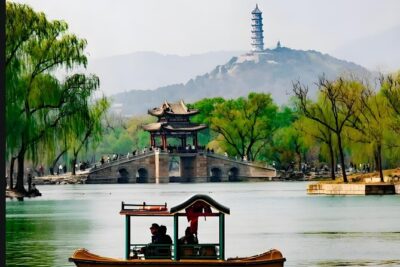
Then there’s the scenery. You’ll see Kunming Lake and major garden areas, and you’ll also hear about the famous longest painted corridor—exactly the kind of detail that turns a pretty walkway into something worth stopping for.
What can be tricky? This is one of Beijing’s headline attractions. If you’re prone to getting tired of crowd flow, focus on quality moments: pick a few must-sees (like the corridor and lake views) and don’t try to check every corner in the same way a checklist tourist would.
Hutong rickshaw tour: old Beijing life through Courtyard Squares and Hou Hai
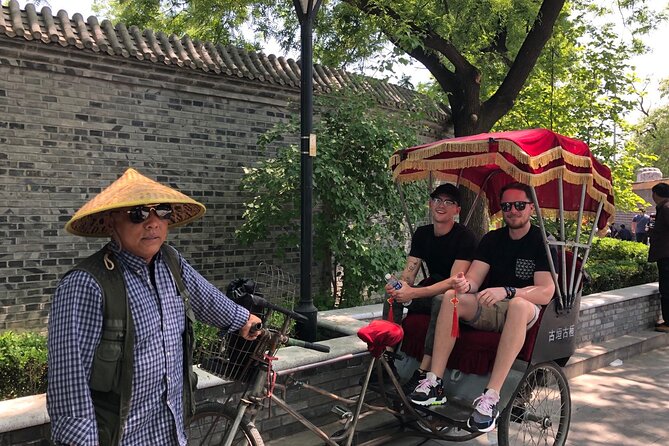
After the palace, you shift gears into the real “street” Beijing: the Hutongs. Instead of bus windows, you get a rickshaw ride, which is slow enough to notice details, but still fun enough to feel like an activity rather than a transit chore.
You’ll spend about 1.5 hours on this portion, with stops that help you see how the neighborhood works. The tour includes a visit to a representative square courtyard, where you can learn the culture behind the space and how courtyard life shaped daily routines.
Then there’s a photo stop around the Yin Ding Bridge in the Hou Hai Lake area. That break gives you a chance to switch from “riding and listening” to “looking and photographing,” which is a nice rhythm change after the formal palace atmosphere.
A practical consideration: rickshaws are open-air, so if it’s windy or hot, dress accordingly. Also, pay attention to where you step—some lanes can be uneven.
Incense and old cypresses, more temple mornings
- Temple Heaven, Lama Temple, Summer Palace & Peking Duck Bus Tour★ 5.0 · 377 reviews
- Temple Heaven, Summer Palace, Lama Temple, Hutong Bus Tour★ 4.7 · 319 reviews
- Temple of Heaven, Summer Palace, Lama Temple, Hutong Tours★ 5.0 · 311 reviews
- Beijing: Lama Temple (Yonghe Temple) Admission Ticket★ 4.8 · 297 reviews
- Beijing Historical Tour II including Summer Palace, Lama Temple & Panda Garden★ 4.0 · 187 reviews
Lama Temple (Yonghegong): Kangxi’s plan, the 26-meter Buddha, and nan mu niches
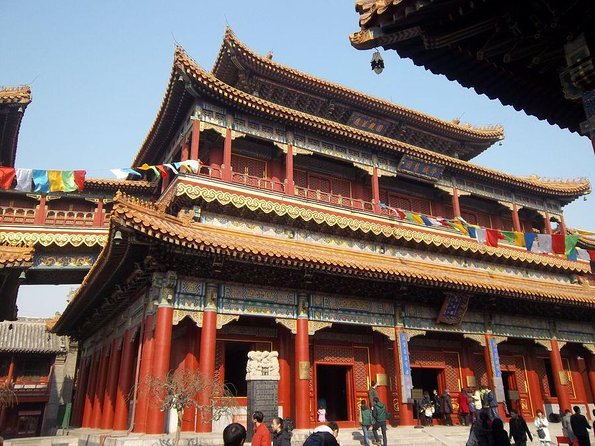
Next up is the Lama Temple (Yonghegong), one of Beijing’s biggest Tibetan-style religious sites. You get about 1.5 hours here, and the structure of the visit is built around key sights.
This temple has serious imperial ties. It was built in 1694 by Emperor Kangxi for his fourth son, Yin Zhen. Later, it became important again when the next emperor, Qianlong, was born there—so the temple is closely linked with the idea of a blessed place for two emperors.
Your guide focuses the visit on three standout wonders:
- the Five Hundred Arhats mountain area
- the 26-meter high sandalwood Buddha, noted in the Guinness World Book (1900)
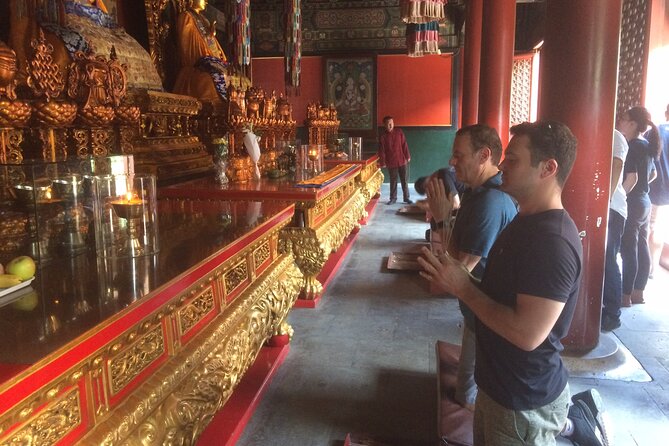
- the exquisite nan mu Buddha niches, which reward close looking
This part of the tour is a big win for anyone who likes religious art but gets lost when nobody explains the symbols. With a guide in the room, you can understand why the carvings and figures matter, not just how they look.
One thing to plan for: it’s an indoor/outdoor mix depending on how you move through the complex. You’ll likely do a fair amount of walking at a steady pace, so keep water on you (the tour includes bottled water, but you’ll still want a sip schedule).
Temple of Confucius and Guozijian Museum: a living lesson plan from Yuan to Qing
After Lama Temple, you cross the street to the Temple of Confucius, built in 1302 during the Yuan dynasty. This is a strong contrast from the Lama Temple. Instead of Tibetan-style religious focus, you’re looking at worship and respect centered on Confucius and the Confucian tradition.
Then you continue to the Guozijian Museum, often described as an imperial college site. You’ll explore one of the most preserved and complete locations tied to the highest institution and administration for education, spanning Yuan, Ming, and Qing dynasties. That timeline matters because it shows the state’s role in shaping learning, not only philosophy.
You’re given about 1.5 hours for this combination, and that amount of time feels right. It gives you enough space to appreciate the temple atmosphere and then slow down for the museum side.
If you like ideas as much as architecture, this is the stop that can surprise you. Confucius isn’t just a name on a map here—this site connects respect for teachers to a system that operated at government scale.
Peking duck lunch: the included break you’ll actually appreciate
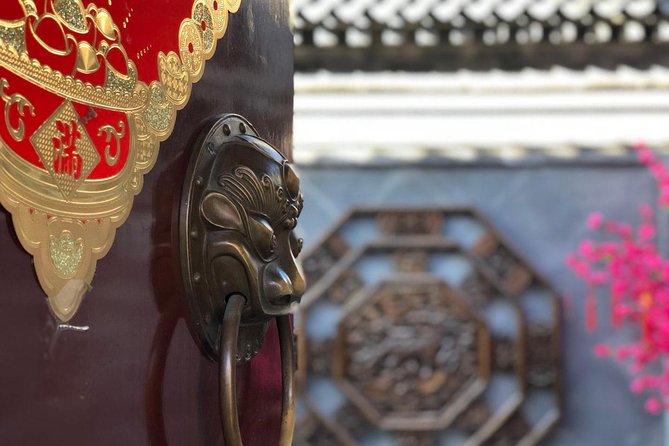
A big value point is that lunch is handled for you. The tour includes a Peking roast duck lunch at a popular duck restaurant, plus bottled water.
This matters more than it sounds. After multiple major sites, hunger can turn into crankiness fast. Having lunch built into the schedule means you won’t spend your best energy bargaining for food while everyone else is already moving on.
If you have dietary limits, you’ll want to tell the operator in advance. The tour data doesn’t list specific meal adjustments, so planning ahead is your best move.
Guide quality: what you gain from names like Susan, Nancy, and Cathy
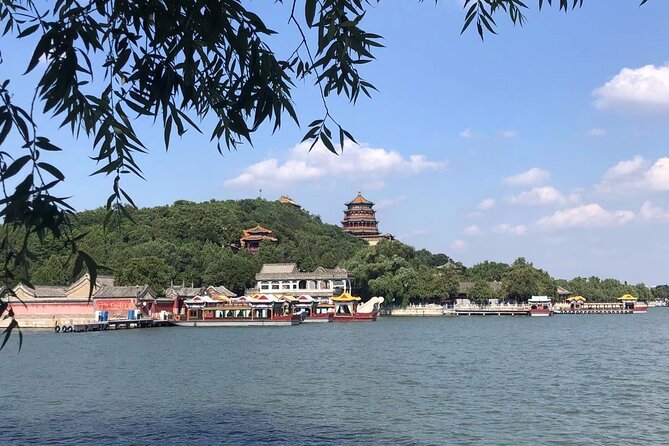
The tour is designed for guided learning, not solo wandering. You’ll have a professional English/Spanish/French/German speaking guide who stays with your group and keeps the pacing logical.
In the practical world, this is what makes a difference between a “see it” day and a “understand it” day. The guides featured on this kind of itinerary—people like Susan, Cathy, Nancy, and Diego—tend to deliver history with clarity rather than just facts. That also shows up in how they connect landmarks to the people behind them, such as Cixi at the Summer Palace and imperial-era education in the Confucius site.
Some guides may also add small cultural extras when time and flow allow, such as calligraphy, tai chi, or performance elements. You should treat that as a bonus, not a guarantee, but it’s a nice reminder that the guide can shape the day beyond the printed route.
Price and value: $180.90 for four sights, transport, and duck lunch
At $180.90 per person, this tour is not the cheapest way to see Beijing—but it’s also not priced like a luxury-only experience. You’re paying for the pieces that usually add up fast when you travel independently:
- Hotel pickup and drop-off
- Air-conditioned car for transfers
- All entrance fees for the included sights
- A guide for the whole day
- Peking duck lunch
- Bottle of water
For many visitors, that math is the whole story. If you try to arrange even two of these separately—getting to remote sites, paying for admissions, and finding a guide for context—you’ll feel the cost creep quickly. This tour bundles the day into one predictable experience.
The main “cost” isn’t money. It’s time. You’re doing four major stops plus a rickshaw ride in about 8 hours. If you want a more relaxed pace, you may prefer a shorter route or fewer stops.
Who this tour suits best (and who should reconsider)
This tour fits best if you:
- want a first Beijing day that covers major landmarks
- like history with explanations, not just photos
- value convenience and hate logistics planning
- want a mix of grand imperial sites and real neighborhoods (Hutongs)
You might reconsider if you:
- dislike tight schedules
- want slow, unstructured museum time
- prefer shopping breaks over guided temple circuits
It’s a smart choice for people who want a complete day with a guide and a clear flow—rather than an all-day struggle to coordinate multiple tickets and transport.
Should you book this Summer Palace + Hutongs + Lama + Confucius day?
If you want Beijing in one packed but organized day, I’d book it. The combination of the Summer Palace, a Hutong rickshaw ride, Lama Temple, and Confucius + Guozijian covers the city’s big themes: power, daily life, spirituality, and education. Add hotel pickup, entrance fees, and Peking duck lunch, and the value becomes easy to justify.
My advice is simple: plan for walking, keep expectations realistic about time, and lean into the guide. When the day moves fast, the guide’s context is what keeps it meaningful.
FAQ
How long is the tour?
It runs for about 8 hours (approximately).
What time does the tour start?
The start time is 9:00 am.
Does the tour include hotel pickup and drop-off?
Yes. Hotel pickup and drop-off are included.
Are entrance fees included?
Yes. All sights entrance fees are included.
What lunch is included?
The tour includes a Peking roast duck lunch.
Are bottled drinks included?
Yes. The tour includes a bottle of water.
What languages are available for the guide?
The guide is available in English, Spanish, French, or German.
Is this a private tour?
Yes. It’s private, and only your group participates.
Can I get a full refund if I cancel?
Yes. You can cancel up to 24 hours in advance for a full refund.
Deeper Into the Hutongs
- Beijing Hutong Walking Food and Beer Tour at Hidden Restaurants
★ 5.0 · 1,132 reviews - Temple Heaven, Summer Palace, Lama Temple, Hutong Bus Tour
★ 4.7 · 319 reviews - Temple of Heaven, Summer Palace, Lama Temple, Hutong Tours
★ 5.0 · 311 reviews - Beijing Private Hutong Food Walking Tour
★ 5.0 · 299 reviews - The Hutong Experience by Bike
★ 5.0 · 163 reviews - Beijing: Hutong Culinary Walking Tour with 15+ Tastings
★ 5.0 · 162 reviews
Beijing's Temple Quarter
- Temple Heaven, Lama Temple, Summer Palace & Peking Duck Bus Tour
★ 5.0 · 377 reviews - Temple Heaven, Summer Palace, Lama Temple, Hutong Bus Tour
★ 4.7 · 319 reviews - Temple of Heaven, Summer Palace, Lama Temple, Hutong Tours
★ 5.0 · 311 reviews - Beijing: Lama Temple (Yonghe Temple) Admission Ticket
★ 4.8 · 297 reviews - Beijing Historical Tour II including Summer Palace, Lama Temple & Panda Garden
★ 4.0 · 187 reviews - Beijing: Yonghe Lama Temple Entry Ticket
★ 4.5 · 147 reviews
Around the Summer Palace Lake
- Beijing: The Temple of Heaven or Summer Palace Entry Ticket
★ 4.6 · 1,286 reviews - Mubus: Mutianyu Great Wall Bus Tour with Summer Palace Options
★ 5.0 · 1,272 reviews - Beijing: Mutianyu Great Wall & Summer Palace Day Tour
★ 4.8 · 1,004 reviews - Mutianyu Great Wall&Summer Palace Excursion:Group/Private Options
★ 5.0 · 816 reviews - Beijing: Summer Palace Entry Ticket and Optional Guided Tour
★ 4.7 · 810 reviews - Beijing Classic Full-Day Tour including the Forbidden City, Tiananmen Square, Summer Palace and Temple of Heaven
★ 4.0 · 610 reviews
Just In: More Beijing Tours to Browse

Summer Palace Tours, compared.
 ★ 4.6The Temple of Heaven or Summer Palace Entry TicketFrom $71,286 reviews
 ★ 5.0Mubus: Mutianyu Great Wall Bus Tour with Summer Palace OptionsFrom $201,272 reviews
 ★ 4.8Mutianyu Great Wall & Summer Palace Day TourFrom $291,004 reviews
 ★ 5.0Mutianyu Great Wall&Summer Palace Excursion:Group/Private OptionsFrom $124816 reviews
 ★ 4.7Summer Palace Entry Ticket and Optional Guided TourFrom $12810 reviews
 ★ 4.0Beijing Classic Full-Day Tour including the Forbidden City, Tiananmen Square, Summer Palace and Temple of HeavenFrom $99610 reviews
 ★ 5.0Mutianyu Great Wall and Summer Palace One Day Bus TourFrom $29466 reviews
 ★ 4.9Mutianyu & Summer Palace Tour–Group/Private OptionsFrom $131423 reviews
Browse the lists this tour appears in