
Reviewed · HUTONG WALKS & RICKSHAW TOURS
Beijing Hutongs Walking Tour
Hutongs move slower than you expect. This small-group Beijing Hutongs Walking Tour trades big monuments for lived-in lanes, courtyard houses, and stories that explain how the city worked long before today’s skyline.
I love the courtyard-house focus, from Nanluogixiang’s older lane fabric to Mao’er Hutong’s character-filled stretches, plus a stop at Empress’s Mansion tied to Puyi’s empress Wanrong. I also like how Roy leads with solid English and keeps the walk lively with questions and guided storytelling.
One consideration: this is a street-level maze. The meet-up is specific (Nanluoguxiang metro station exit E), so arriving late or at the wrong exit can leave you out of the group’s start.
In This Review
- Key things to know before you go
- Why hutong walking beats hopping between big sights
- Meeting at Nanluoguxiang: metro lines 6 and 8, exit E
- Nanluogixiang lanes: a Yuan-dynasty mood on foot
- Mao’er Hutong: stories you can attach to a street
- Empress’s Mansion: Wanrong and a real photo stop
- Bell and Drum Towers area: time-keeping meets street life
- The Qianhai–Houhai narrow channel: a small scenic link
- Price and what you actually get for $30
- Small-group guidance: how Roy’s style shows up on the ground
- A balanced look at the one risk: timing at the start
- Who should book this hutong walk
- Should you book the Beijing Hutongs Walking Tour?
- FAQ
- How long is the Beijing Hutongs Walking Tour?
- How much does the tour cost?
- What is the meeting point for the tour?
- Which metro lines are used to reach the meeting point?
- What metro exit should I use?
- Who is the guide and what language do they speak?
- Where does the tour end?
- What places do we see during the walk?
- Is there a mobile ticket?
- Is free cancellation available?
- FAQ
- Is the tour group size limited?
Key things to know before you go

- Small group, relaxed pace that keeps you from feeling rushed through the lanes
- Nanluogixiang to Mao’er Hutong for a real feel of courtyard architecture and lane life
- Empress’s Mansion photo stop connected to Wanrong (Puyi’s empress)
- Bell-and-Drum Towers area context including Chinese time-keeping themes
- Qianhai–Houhai connection via a narrow channel between the lakes
Down the grey-brick lanes on foot or by pedicab
Why hutong walking beats hopping between big sights
Beijing’s official sights are impressive, but they can feel like a checklist. Hutongs feel human. You move at sidewalk speed and suddenly the city makes sense: where people lived, how lanes connected daily life, and how important places fit into neighborhoods.
This tour leans into that. You’re not just looking at doors. You’re learning how the lane-and-courtyard design shaped what people could do, where they gathered, and how history left its fingerprints.
You also get a practical advantage: the guide helps you navigate the downtown warren. Hutongs can twist and fork in ways that make a map feel like a prank. With a small group, you stay oriented instead of doing extra laps.
Meeting at Nanluoguxiang: metro lines 6 and 8, exit E
The walk starts near South Luogu Lane / Nanluoguxiang. The stated meet point is Nan Luo Gu Xiang (南锣鼓巷), in Dongcheng, and the practical key is the metro exit.
Your guide meets you at Nanluoguxiang metro station on either Line 8 or Line 6, Exit E. The Chinese reference is 南锣鼓巷南口 or 南锣鼓巷地铁站E出口. If you’re using a translation app, copy-pasting those names helps you avoid the wrong gate.
Start time is 10:00 am. The tour runs about 1 hour 30 minutes to 2 hours, so you’ll want to be on the right street fast and ready to move.
A smart approach: give yourself extra time getting out of the station. In hutong areas, one wrong turn can cost you more than you expect, and this is the kind of tour where everyone stays together from the beginning.
Nanluogixiang lanes: a Yuan-dynasty mood on foot
The first part of the route uses Nanluogixiang lane as the entry point. The tour frames it as a place that brings you back to the Yuan Dynasty, mainly through the look and feel of the old lane and traditional architecture.
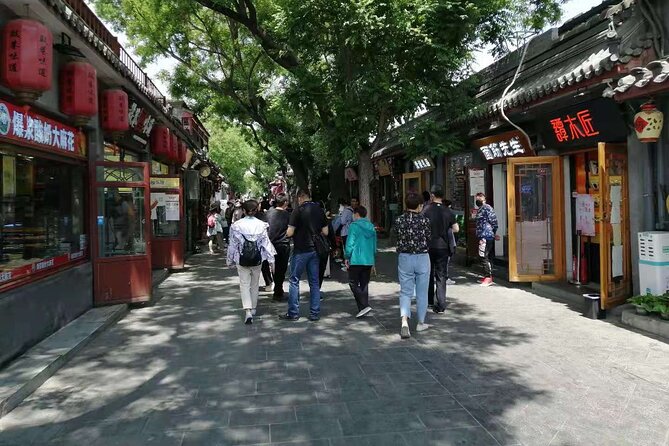
What you’re watching for here is texture. The lane setting includes grey vernacular courtyard houses and old trees that soften the street. It’s the kind of scene that helps you understand how Beijing’s traditional architecture worked in everyday life, not only as an image in a museum.
Nanluogixiang also works well for orientation. After you see the lane style once with a guide, the rest of the hutong network becomes easier to read. You’ll start noticing how lanes funnel movement and how courtyard walls shape privacy and sound.
Mao’er Hutong: stories you can attach to a street
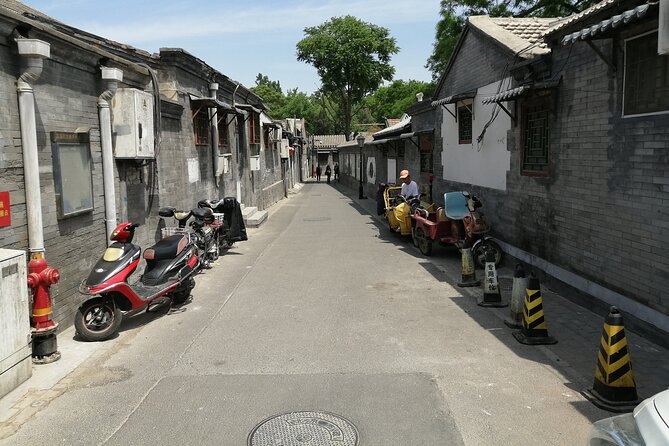
After Nanluogixiang, the route continues into Mao’er Hutong. This is where the tour shifts from architecture to people—because the lane has famous buildings and character stories tied to it.
A big value of this part is how the guide connects details to larger historical themes. Instead of generic facts, you get story anchors you can hold onto as you walk: who lived where, why a particular location mattered, and how the city’s life linked to the politics and culture of different eras.
The tempo here is also friendly. It’s a “laid-back” style walk, so you’re not constantly sprinting for the next photo. That matters in hutongs, where the best moments are often the slow ones: a doorway, a courtyard edge, a small shift in street angle that reveals what’s behind it.
Beijing at street level, more routes on foot
- Beijing Hutong Walking Food and Beer Tour at Hidden Restaurants★ 5.0 · 1,132 reviews
- Private Beijing Walking Tour of the Forbidden City with 7 Options★ 5.0 · 675 reviews
- Forbidden City Private Walking Tour with Optional Sights★ 5.0 · 400 reviews
- Beijing Private Hutong Food Walking Tour★ 5.0 · 299 reviews
- Beijing: Hutong Culinary Walking Tour with 15+ Tastings★ 5.0 · 162 reviews
Empress’s Mansion: Wanrong and a real photo stop
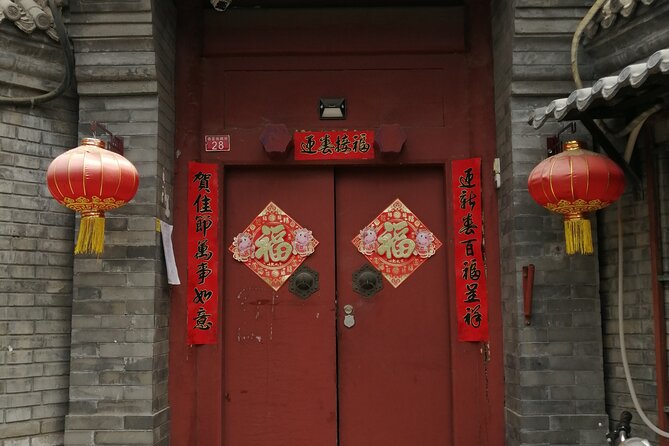
One of the most concrete highlights is the stop at Empress’s Mansion, presented as the former residence of Puyi’s empress Wanrong. This is the kind of stop that you can actually picture later, because you’re given a specific historical identity tied to a specific place.
It’s also practical. The tour notes a picture stop here, which means you’re not guessing when you’ll have a chance to pause. You can step back, look at the frontage and surroundings, and place the story.
This part is especially useful if you want to understand the end of imperial history without getting buried in dates. Wanrong is a gateway figure. Once you know who she was, the tour’s broader theme about the fate of China’s last emperor becomes easier to follow during the rest of the walk.
Bell and Drum Towers area: time-keeping meets street life
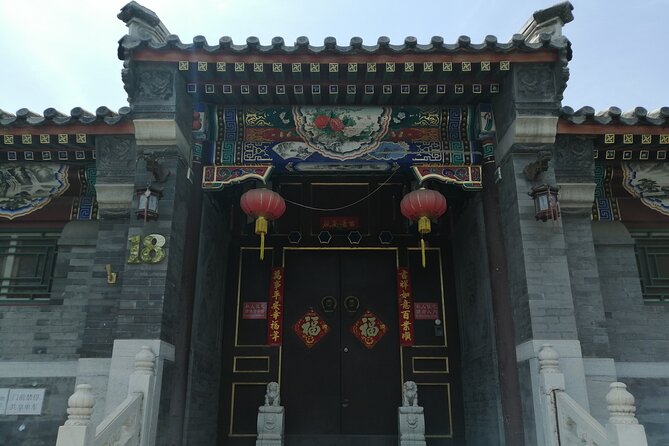
The tour name points to the Bell and Drum Towers, and the schedule starts with that area context. You’ll connect this part of the route to the idea of Chinese time-keeping, which the tour highlights as a topic you’ll learn about as you stroll.
Here’s why this works: time-keeping isn’t just trivia. In traditional cities, the way you marked hours shaped daily routines—work, markets, and even the rhythm of travel. When you learn that while walking in a neighborhood scale setting, the history becomes less abstract.
The tour route also finishes near the Drum Tower area. Even if you’re not staring at the structure the whole time, it gives you a satisfying end point: you leave hutongs and end up with a landmark that helps you orient your mental map of Beijing.
The Qianhai–Houhai narrow channel: a small scenic link
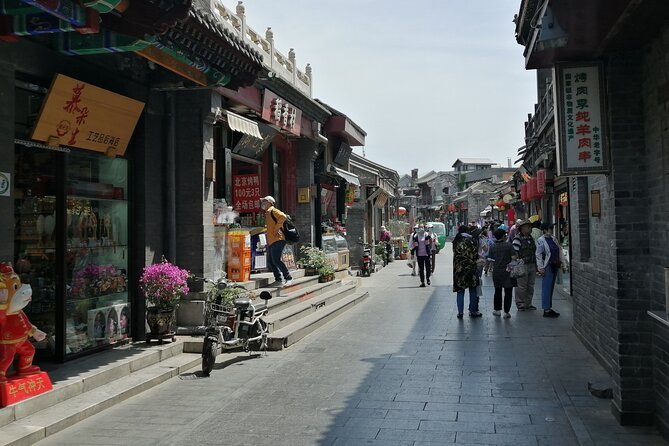
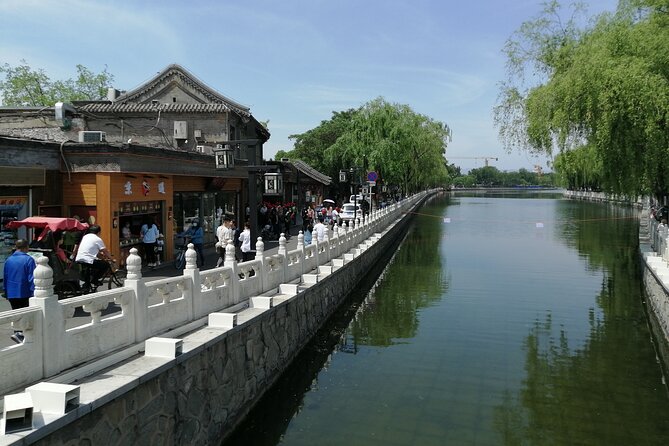
Another interesting slice of the walk is a visit to a narrow channel joining Qianhai Lake and Houhai Lake. This is one of those details that doesn’t dominate guidebooks, but it’s exactly the sort of connection that makes city walking worthwhile.
Why it matters: those lake areas sit close to hutong neighborhoods, so you can feel how Beijing blends natural features with dense urban life. The narrow channel also gives a visual break from straight lane sightlines, and it helps the route feel varied rather than repetitive.
If you like photos, this is a good spot to slow down and frame the water-channel relationship to nearby structures. Even without major architectural scale, the contrast gives your walk a “Beijing has layers” payoff.
Price and what you actually get for $30
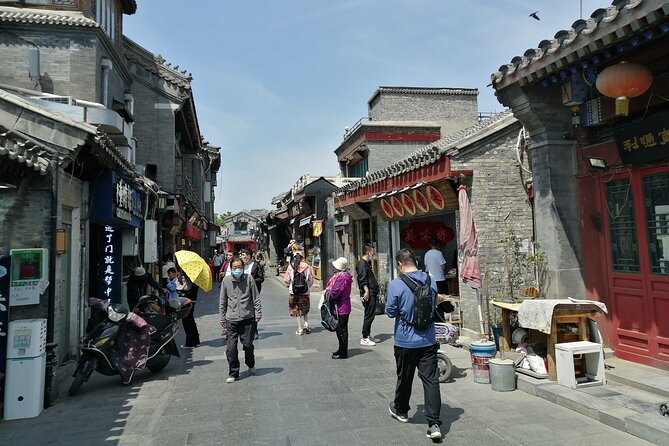
At $30 per person, the tour is priced for a short, high-value neighborhood experience. You’re not paying for museum admissions. The main “cost” you’re covering is the guide’s time and the benefit of not wandering in circles.
It also helps that the group size is capped at 15 travelers. That usually means you can ask questions without shouting, and the guide can adjust for the pace of your group.
The duration—about 1.5 to 2 hours—is ideal for a first or second day in Beijing. You’re getting history, context, and street-level atmosphere without losing half your day.
One extra practical plus: you get a mobile ticket, and you’ll receive confirmation at booking time. That keeps the planning part simple.
Small-group guidance: how Roy’s style shows up on the ground
The standout repeated strength is the guide. Roy comes through as the kind of leader who can explain history clearly in English and keep it moving. In particular, there’s praise for the way he stays engaged and uses interaction—like quizzing—to make facts stick.
That approach matters in a hutong walk because the setting changes fast: lane turns, courtyard edges, and story shifts. When the guide turns those changes into a learning sequence, the whole experience feels more cohesive.
Also, a calm, organized guide helps you enjoy the lane itself rather than constantly focusing on where to go next. In other words: you get the city without the stress.
A balanced look at the one risk: timing at the start
Here’s the caution to take seriously: when the meeting point is specific and the route begins immediately, the start matters. If you end up late, you can miss the group’s initial alignment.
So do two simple things:
- Arrive early enough to exit the metro and locate the exact meet spot.
- Use the stated entrance references (Exit E / 南口 names) so you’re not bargaining with your sense of direction.
I’d still book this kind of tour on a “don’t waste time” day—but not on a day when you might be stuck in a long line, or traveling through Beijing’s rush-hour confusion.
Who should book this hutong walk
This tour is a great fit if you want:
- A first taste of hutongs with guidance
- A history connection that focuses on real places, not only palaces
- A short neighborhood walk with a clear start and end point
It’s also a good option if you appreciate an English-speaking guide and want a group that stays small. Since it’s near public transportation and service animals are allowed, it’s generally easy to integrate into a day plan.
If you prefer doing everything at your own pace without interacting with anyone, you might find a guided walk slightly less flexible. But the relaxed tempo is designed to avoid that problem.
Should you book the Beijing Hutongs Walking Tour?
If you want a hutong experience that’s easy to follow and historically anchored, I think you’ll like this one. The combination of Nanluogixiang, Mao’er Hutong, and the Empress’s Mansion stop gives you both atmosphere and real story context tied to specific figures like Wanrong.
The price feels fair for what you get: an organized two-hour street walk with an English guide and a small group. Add the fact that it’s geared for relaxed pacing, and it’s a smart way to get oriented without doing a full-day commitment.
Just respect the start. Get to the Nanluoguxiang Exit E meet point in time, and you’ll spend your energy enjoying the lanes instead of troubleshooting them.
FAQ
How long is the Beijing Hutongs Walking Tour?
It lasts about 1 hour 30 minutes to 2 hours.
How much does the tour cost?
The price is $30.00 per person.
What is the meeting point for the tour?
The meeting point is South Luogu Lane / Nan Luo Gu Xiang area in Dongcheng, at the Nanluoguxiang metro station meeting spot.
Which metro lines are used to reach the meeting point?
The guide meets you at Nanluoguxiang station on Line 8 or Line 6.
What metro exit should I use?
Use Exit E (南锣鼓巷地铁站E出口 / 南锣鼓巷南口 is also referenced).
Who is the guide and what language do they speak?
The tour includes an English-speaking guide. The tour provider is Roy Li Tours Beijing, and Roy is mentioned in feedback.
Where does the tour end?
The tour ends in the Drum Tower area, with the end listed near Houhai in the Xicheng District.
What places do we see during the walk?
The route includes Nanluogixiang lane and Mao’er Hutong, with a photo stop at Empress’s Mansion, plus a narrow channel joining Qianhai Lake and Houhai Lake. The tour also connects to Bell and Drum Towers context.
Is there a mobile ticket?
Yes, the tour uses a mobile ticket.
Is free cancellation available?
Yes. You can cancel up to 24 hours in advance for a full refund.
FAQ
Is the tour group size limited?
Yes. The maximum group size is 15 travelers.
More Beijing Outings
- From Beijing: Mutianyu Great Wall Tours with Options
★ 4.9 · 9,216 reviews - Beijing: Forbidden City Tour(Group/Private)-Tickets Included
★ 4.8 · 7,974 reviews - Beijing: T-Square & Forbidden City Group or Private Tour
★ 4.8 · 4,446 reviews - All-Inclusive Tour: Tiananmen Square, Forbidden City, Great Wall
★ 5.0 · 2,873 reviews - MuBus: Mutianyu Great Wall ENG/ESP/RUS Guided Bus Tour
★ 5.0 · 2,361 reviews - 4-Hour Small Group Tour to Forbidden City with Entry Tickets
★ 5.0 · 1,863 reviews
More Tour Reviews in Beijing
- From Beijing: Mutianyu Great Wall Tours with Options
★ 4.9 · 9,216 reviews - Beijing: Forbidden City Tour(Group/Private)-Tickets Included
★ 4.8 · 7,974 reviews - Beijing: T-Square & Forbidden City Group or Private Tour
★ 4.8 · 4,446 reviews - All-Inclusive Tour: Tiananmen Square, Forbidden City, Great Wall
★ 5.0 · 2,873 reviews - MuBus: Mutianyu Great Wall ENG/ESP/RUS Guided Bus Tour
★ 5.0 · 2,361 reviews - 4-Hour Small Group Tour to Forbidden City with Entry Tickets
★ 5.0 · 1,863 reviews
Deeper Into the Hutongs
- Beijing Hutong Walking Food and Beer Tour at Hidden Restaurants
★ 5.0 · 1,132 reviews - Temple Heaven, Summer Palace, Lama Temple, Hutong Bus Tour
★ 4.7 · 319 reviews - Temple of Heaven, Summer Palace, Lama Temple, Hutong Tours
★ 5.0 · 311 reviews - Beijing Private Hutong Food Walking Tour
★ 5.0 · 299 reviews - The Hutong Experience by Bike
★ 5.0 · 163 reviews - Beijing: Hutong Culinary Walking Tour with 15+ Tastings
★ 5.0 · 162 reviews
Just In: More Beijing Tours to Browse




Hutong Walks & Rickshaw Tours, compared.
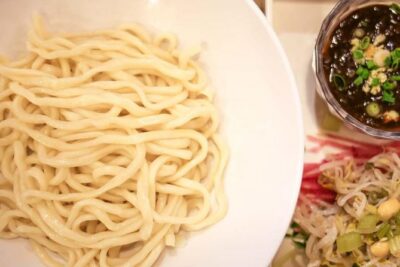 ★ 5.0Beijing Hutong Walking Food and Beer Tour at Hidden RestaurantsFrom $801,132 reviews
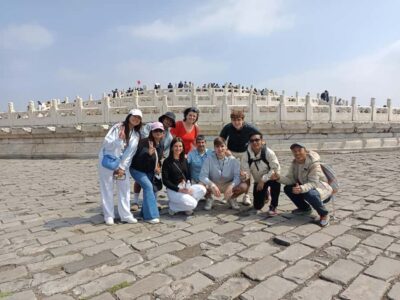 ★ 4.7Temple Heaven, Summer Palace, Lama Temple, Hutong Bus TourFrom $58319 reviews
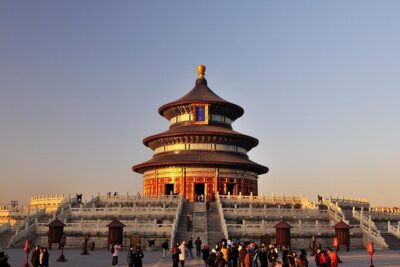 ★ 5.0Temple of Heaven, Summer Palace, Lama Temple, Hutong ToursFrom $99311 reviews
 ★ 5.0Beijing Private Hutong Food Walking TourFrom $82299 reviews
 ★ 5.0The Hutong Experience by BikeFrom $150163 reviews
 ★ 5.0Hutong Culinary Walking Tour with 15+ TastingsFrom $76162 reviews
 ★ 5.0Beijing Hutong Breakfast Food TourFrom $45155 reviews
 ★ 5.0Beijing City Walk: Explore Hutongs Life and Old BeijingFrom $15146 reviews
Browse the lists this tour appears in