
Reviewed · WORKSHOPS
Beijing Private Tai Chi Class
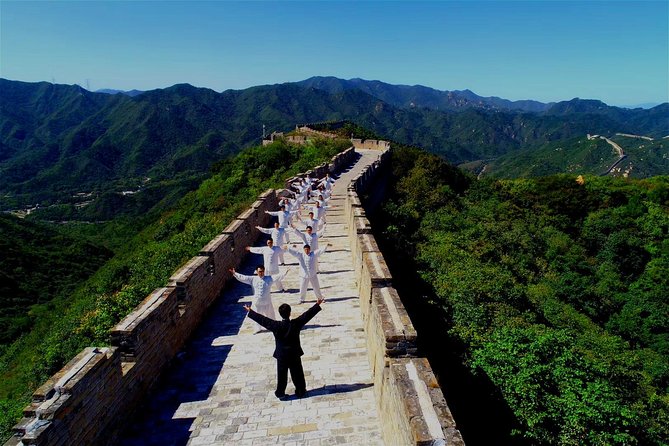
Tai chi in Beijing is a slow way to feel time. This private class focuses on beginner-friendly instruction and the deeper ideas behind yin and yang and Taoism, not just memorizing moves. I love how the session mixes tai chi forms, standing meditation, and self-massage so you get practical techniques in 1.5 hours. One possible drawback: it’s designed for beginners, so if you’re looking for fast, high-intensity sparring practice, this will feel calm rather than competitive.
You’ll also get flexibility: choose a morning or afternoon class time, and you’ll meet back where you start. Plus, because it’s private, your instructor can slow down for your questions and fix common form mistakes without the usual group-pressure.
In This Review
- Key things to know before you go
- Private Tai Chi in Beijing: what you’re really paying for
- Where you’ll meet (and why the area is a good fit)
- The lesson flow: tai chi form, meditation, and self-massage
- Tai Chi and its culture (yin and yang, Taoism)
- 9-step form practice
- Standing meditation and push hands experience
- Self-massage for daily relief
- Why the private format feels worth it
- Morning or afternoon: how to choose your time
- What to bring and how to prepare
- Accessibility and fitness reality check
- Instructor quality: what matters most
- Price and value vs. “group classes”
- Weather, refunds, and simple logistics (kept short)
- Who this class is best for
- Should you book this private Tai Chi class in Beijing?
- FAQ
- How long is the Beijing Private Tai Chi Class?
- Where does the class meet and end?
- Can I choose a morning or afternoon time?
- Is the class only for beginners?
- What will I learn during the session?
- Are the instructors English speaking?
- What’s included in the price?
- What is not included?
- Do I need to bring special clothing or shoes?
- Is it a private tour or shared group?
Key things to know before you go
- Private lesson format means full attention from your English-speaking instructor for the group you bring
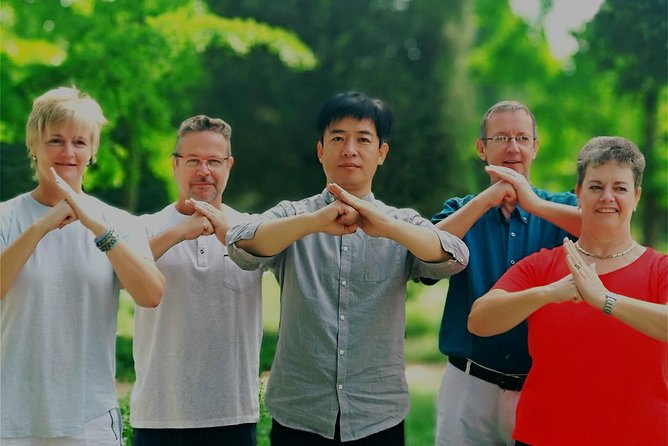
- Built for beginners with step-by-step practice of a 9-step tai chi form
- More than “just the form”: you’ll practice standing meditation and get a push-hands experience
- Self-massage included with methods meant to help relieve everyday pain and stress
- Weather matters since the experience requires good weather, with an alternative date or refund if it’s canceled
- Meeting point is fixed to start and you’ll return to it at the end
Your group only, at your own pace



Private Tai Chi in Beijing: what you’re really paying for
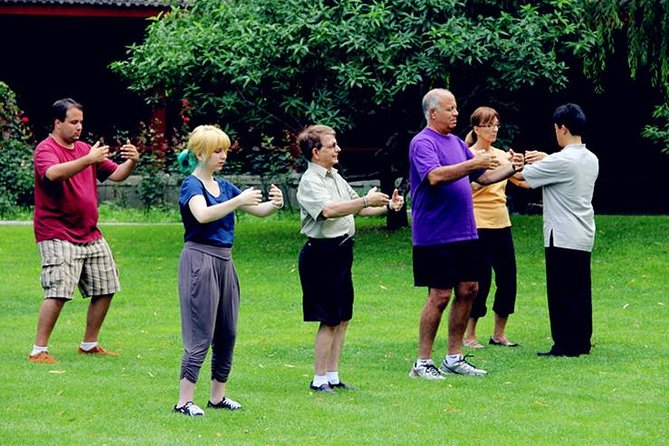
At $58 per person for about 1 hour 30 minutes, this doesn’t feel like “cheap activity pricing.” You’re mostly paying for time with an instructor and a lesson structure that’s made for newcomers. The big value here is that the class isn’t just a casual demonstration. It’s a guided, teach-you-the-foundations format with enough repetition to make the movements stick.
It also helps that the teaching is aimed at English speakers. You’re not left guessing what the instructor is saying while everyone else quietly understands. The session runs through tai chi culture (yin and yang, Taoism philosophy) and then turns that meaning into body mechanics: slow movements, deep breathing, and focused attention.
One more detail that adds value: the experience includes an entrance ticket. That matters in areas where park entry or access ties into where lessons happen. If you’re comparing costs, build the total value in, not just the headline price.
Where you’ll meet (and why the area is a good fit)
You start at 旻园1 Tian Tan Dong Lu, Dong Cheng Qu, Bei Jing Shi 100061, and the class ends back at that same meeting point. That sounds simple, but location is part of what makes tai chi feel right. Tai chi is easier when you’re not rushing across the city, dodging traffic, or dealing with unclear meetup logistics.
From the feedback people shared, the Temple of Heaven area comes up as a natural place for learning tai chi in the Beijing park setting. Even when the exact spot varies, the general idea is consistent: you’re learning in a calm outdoor environment where slow movement doesn’t feel out of place.
Practical tip: wear comfortable shoes and expect you’ll stand and shift weight a lot. Tai chi is gentle, but it’s not “sit down the whole time” yoga. Your feet and ankles will do work.
The lesson flow: tai chi form, meditation, and self-massage
This class is set up as a full mini-program. You’ll learn a tai chi form (specifically 9 steps) and you’ll also practice internal-martial-arts basics that connect movement to breath and mental focus. It’s a beginner lesson, but it doesn’t treat beginners like they’re only there to watch.
Tai Chi and its culture (yin and yang, Taoism)
Before you start moving, you’ll get the context. The instructor explains tai chi’s philosophical background, including Taoism ideas and yin and yang. This matters because tai chi isn’t meant to be performed like a dance routine. The cultural framing helps you understand why the movement feels soft and controlled rather than forceful.
If you’ve ever tried to copy a tai chi video and thought, I don’t get why it looks so different, this section often clears that up fast.
Make a keepsake to take home
- Beijing: Dumpling Making Workshop with Meal and Tea★ 4.7 · 69 reviews
- Online Cooking Class Beijing Dumplings and Cuisine by Sunflowerli Renowned Chef★ 5.0 · 65 reviews
- Beijing Wangfujing Calligraphy Class Nearby Forbidden City★ 5.0 · 56 reviews
- Chinese Kungfu class in old temple beside Forbidden Ci★ 4.8 · 53 reviews
- Noon Calligraphy Class★ 5.0 · 47 reviews
9-step form practice
Then you’ll practice the 9 steps tai chi form study in a simple, step-by-step way. For beginners, that’s a relief. Many tai chi lessons assume you already know the basic positions and terminology. Here, the idea is to build correct fundamentals before you worry about speed or complexity.
Expect lots of slow repetition and instructor corrections. The pacing is intentional: tai chi depends on timing and body alignment, not rushing.
Standing meditation and push hands experience
Next comes a more “tai chi internal” part: standing meditation and a push-hands experience. Push hands is often misunderstood as a fighting drill, but in a beginner setting it’s usually about sensitivity, balance, and learning how to respond to pressure rather than meeting it with brute strength.
Standing meditation builds a different skill. You’re learning how to stay relaxed while staying upright. That’s useful beyond tai chi too—especially if you spend lots of time sitting during travel days.
Self-massage for daily relief
Finally, you’ll learn methods of self massage intended to help with daily pain and stress. This is a practical addition, and it’s one of the reasons this lesson feels more valuable than a “forms only” class. Even if you don’t become a regular tai chi student, the body-work techniques can still make sense for your day-to-day routine.
Why the private format feels worth it
A private class changes how you learn. In a group lesson, it’s easy to get lost: you watch, you attempt, and you hope the instructor notices you. In a private session, the instructor can keep your form consistent and fix your misunderstandings immediately.
The reviews you’ll see for this experience often highlight the instructor’s patience and friendliness, including an English-speaking teacher named Eric Liu. If you’re completely new, that kind of guided attention is the difference between feeling awkward for the first 20 minutes and feeling capable by the end.
Private also means your questions matter. If you wonder how yin and yang connects to something as basic as how you shift weight, you can ask without waiting your turn.
Morning or afternoon: how to choose your time
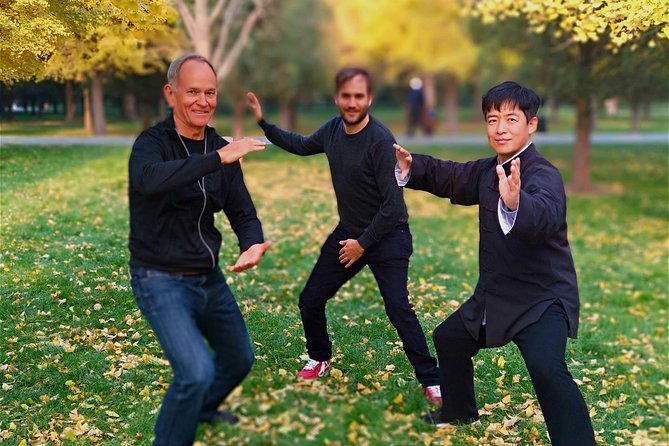
The class offers a choice of morning or afternoon. Here’s how I’d decide based on how tai chi feels in your body:
- Morning tends to work well if you want to start the day grounded and calm, before your sightseeing schedule heats up.
- Afternoon can be ideal if you want a gentle reset after walking around for hours, especially if your feet or shoulders feel tight.
Either way, remember the session is slow and requires steady focus. Don’t schedule it so tightly that you’ll feel rushed arriving or leaving.
What to bring and how to prepare
You don’t need special gear. But you do need comfort and a calm mindset.
- Wear comfortable shoes
- Dress for outdoor movement and changing weather (the experience requires good weather)
- Bring a willingness to slow down and repeat simple things until they feel natural
- If you’re traveling with kids, children must be accompanied by an adult
Most people can participate. If you have mobility concerns, you might find it helpful to tell the instructor in advance so the lesson can be coached with your comfort level in mind.
Accessibility and fitness reality check
Tai chi is often marketed as easy, but “easy” doesn’t mean “nothing to do.” You’ll stand for parts of the lesson and practice controlled transitions.
The experience states that most travelers can participate, which is reassuring. Still, if you have balance issues or recent injuries, tai chi’s slow pacing can work, but you should approach it carefully and communicate your needs.
In general, beginners benefit most from this type of class because you’re not expected to already know forms. The instructor’s job is to build your movement step-by-step.
Instructor quality: what matters most
The most consistently praised element here is the teaching. A good tai chi instructor does two things at once: they correct your body and they translate the philosophy into something you can feel.
Names that show up in the feedback include Eric Liu, and the comments often focus on him being patient, kind, and helpful—especially for brand-new students. That combination is exactly what you want for a first tai chi experience: calm guidance, clear explanations, and enough pacing for you to keep up.
Price and value vs. “group classes”
It’s useful to compare what’s included.
What you get:
- Private lesson format
- English-speaking tai chi masters
- Instruction covering culture, 9-step form, standing meditation, push hands, and self-massage
- An entrance ticket is included
What you don’t get:
- Hotel pickup and drop-off
- Food and drinks
So the real question becomes: do you value personal instruction enough to pay extra for it? If you’re the type who learns faster when someone watches your form and corrects it in real time, this price is easier to justify. If you’re happy learning from videos or casual group classes, you might find other options cheaper—but you’ll likely lose that tailored attention.
Weather, refunds, and simple logistics (kept short)
This experience requires good weather. If it’s canceled due to poor weather, you’ll be offered a different date or a full refund.
You’ll receive confirmation at booking, and it’s flexible in the sense that you can cancel for a full refund up to 24 hours before the experience’s start time. The cutoff uses local time, and changes within 24 hours can’t be accepted.
Meeting is at the Tian Tan Dong Lu address listed, and the class ends back at that point.
Who this class is best for
This private Beijing tai chi class is a great match for:
- First-timers who want authentic foundations without confusion
- Travelers who want something calming and skill-based, not just sightseeing
- People who like structured learning with a teacher who can explain the why
- Anyone who wants practical body tools like self-massage
It may be less ideal if:
- You’re chasing intense training or advanced fighting technique
- You want a long, guided tour of Beijing’s sights rather than a focused movement class
- You’re expecting a “watch and leave” performance
Should you book this private Tai Chi class in Beijing?
If you want one experience in Beijing that feels genuinely different from museums and photo stops, this is a strong choice. The lesson is built for beginners, and the mix of form + meditation + push hands experience + self-massage means you take home more than a souvenir memory.
Book it if you value personal instruction and you’ll actually use the techniques at home. Skip it only if you’re looking for a high-energy workout or you know you won’t enjoy slow, mindful movement. Either way, wear comfy shoes, choose morning or afternoon based on your energy, and give yourself permission to learn at a human pace.
FAQ
How long is the Beijing Private Tai Chi Class?
The class runs about 1 hour 30 minutes.
Where does the class meet and end?
You start at 旻园1 Tian Tan Dong Lu, Dong Cheng Qu, Bei Jing Shi, China, 100061, and the activity ends back at the same meeting point.
Can I choose a morning or afternoon time?
Yes, you can choose either a morning or afternoon class to match your schedule.
Is the class only for beginners?
Yes. The class is specifically made for beginners.
What will I learn during the session?
You’ll learn tai chi and its culture, study a 9-step tai chi form, practice standing meditation and a push-hands experience, and learn self-massage methods for relief from pain and stress.
Are the instructors English speaking?
Yes. The class is instructed by English-speaking tai chi masters.
What’s included in the price?
Included are the English-speaking tai chi masters and an entrance ticket.
What is not included?
Hotel pickup and drop-off and food and drinks are not included.
Do I need to bring special clothing or shoes?
Comfortable shoes are recommended.
Is it a private tour or shared group?
This is a private tour/activity, so only your group participates. Confirmation is received at booking, and children must be accompanied by an adult.
Make a Little Beijing to Take Home
- Beijing Calligraphy Class
★ 4.9 · 112 reviews - Chinese Calligraphy Class for Small Group
★ 5.0 · 104 reviews - Beijing: Dumpling Making Workshop with Meal and Tea
★ 4.7 · 69 reviews - Online Cooking Class Beijing Dumplings and Cuisine by Sunflowerli Renowned Chef
★ 5.0 · 65 reviews - Beijing Wangfujing Calligraphy Class by Forbidden City
★ 5.0 · 58 reviews - Beijing Wangfujing Calligraphy Class Nearby Forbidden City
★ 5.0 · 56 reviews
Your Party, Your Pace
- Beijing: Forbidden City Tour(Group/Private)-Tickets Included
★ 4.8 · 7,974 reviews - Beijing: T-Square & Forbidden City Group or Private Tour
★ 4.8 · 4,446 reviews - Beijing:Mutianyu Great Wall Private Trip with English Driver
★ 5.0 · 1,263 reviews - Private Mutianyu Great Wall Trip with English-Speaking Driver
★ 5.0 · 927 reviews - Private Mutianyu Great Wall Trip With English-Speaking Driver
★ 5.0 · 899 reviews - Mutianyu Great Wall&Summer Palace Excursion:Group/Private Options
★ 5.0 · 816 reviews
More Tour Reviews in Beijing
- From Beijing: Mutianyu Great Wall Tours with Options
★ 4.9 · 9,216 reviews - Beijing: Forbidden City Tour(Group/Private)-Tickets Included
★ 4.8 · 7,974 reviews - Beijing: T-Square & Forbidden City Group or Private Tour
★ 4.8 · 4,446 reviews - All-Inclusive Tour: Tiananmen Square, Forbidden City, Great Wall
★ 5.0 · 2,873 reviews - MuBus: Mutianyu Great Wall ENG/ESP/RUS Guided Bus Tour
★ 5.0 · 2,361 reviews - 4-Hour Small Group Tour to Forbidden City with Entry Tickets
★ 5.0 · 1,863 reviews
Just In: More Beijing Tours to Browse




Workshops, compared.
 ★ 4.9Beijing Calligraphy ClassFrom $20112 reviews
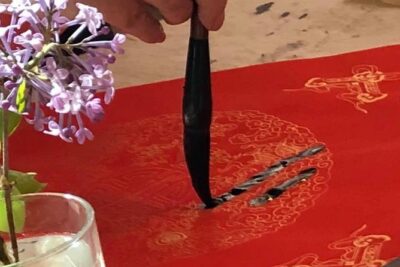 ★ 5.0Chinese Calligraphy Class for Small GroupFrom $20104 reviews
 ★ 4.7Dumpling Making Workshop with Meal and TeaFrom $3569 reviews
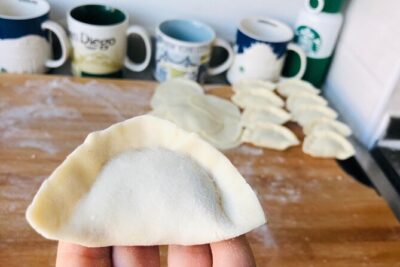 ★ 5.0Online Cooking Class Beijing Dumplings and Cuisine by Sunflowerli Renowned ChefFrom $2065 reviews
 ★ 5.0Beijing Wangfujing Calligraphy Class by Forbidden CityFrom $2058 reviews
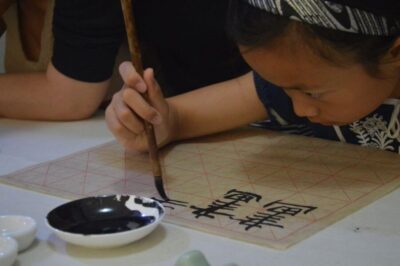 ★ 5.0Beijing Wangfujing Calligraphy Class Nearby Forbidden CityFrom $3556 reviews
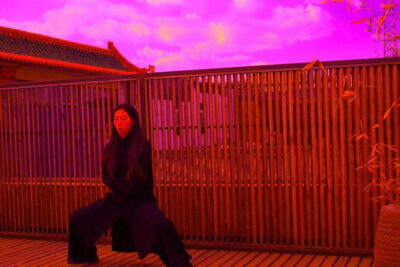 ★ 4.8Chinese Kungfu class in old temple beside Forbidden CiFrom $4553 reviews
 ★ 5.0Noon Calligraphy ClassFrom $2047 reviews
Browse the lists this tour appears in