Reviewed · CHINESE CALLIGRAPHY CLASSES
Noon Calligraphy Class
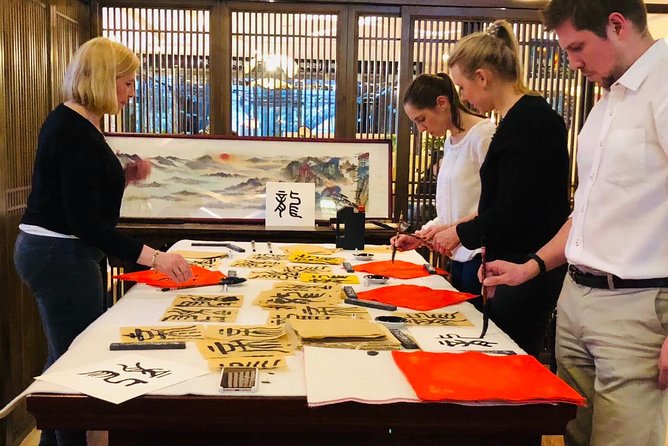
Ink strokes calm your mind fast. In Beijing, this calligraphy class is a hands-on break where you write with brushes and rice paper while learning what makes the strokes matter in Chinese culture. It is the kind of activity that feels focused, not complicated.
I love that the lesson is teacher-led, with time to ask questions and guidance on how to handle the tools correctly. You also get cultural context along the way, including basics like ink strokes, brush technique, and the feel of traditional materials such as ink stones and paper.
One thing to think about: you choose the class length in advance (30, 60, or 90 minutes), so shorter sessions can mean less repetition and a quicker wrap-up.
In This Review
- Key things to know before you go
- A midday Chinese calligraphy class near Wangfujing
- What you will practice: brush strokes, ink stones, rice paper, and seals
- Inside the lesson: how the class flows
- Teacher-led guidance with room to ask questions
- Timing and duration: 30, 60, or 90 minutes
- Getting to the meeting point at Hilton Beijing Wangfujing
- The real value: what your $20 buys you
- Small group size makes it calmer and more effective
- Is it good for kids and families?
- Who should book this Beijing calligraphy class
- Should you book the noon calligraphy class in Beijing?
- FAQ
- How long is the calligraphy class?
- What is included in the price?
- Where do I meet for the class in Beijing?
- What is the class location address?
- Is there a limit on group size?
- Can children join?
- Is free cancellation available?
Key things to know before you go
- Pick your time slot: multiple daily class times let you fit it around the rest of your day
- Small group energy: max 15 people means you are not lost in a crowd
- Real tools, not props: brushwork on traditional materials like rice paper, ink stones, and ink
- Cultural meaning, not just copying: you learn why strokes and characters carry weight
- A take-home final piece: you typically finish with something you can keep
- Good for adults and kids: children attend with an adult
Brush, ink and rice paper, more quiet hours
A midday Chinese calligraphy class near Wangfujing
Beijing is full of big sights, but sometimes you need something quieter and more personal. A noon-ish calligraphy class works well because it is short enough to slot between sightseeing blocks, and the activity itself naturally slows you down.
This class is based in the downtown Wangfujing area, with an easy meeting setup at Hilton Beijing Wangfujing. From there, you head to the class space near No. 8 Wangfujing Dongjie, Dong Cheng District (the address is also written in Chinese as 北京东城区王府井东街8号). It is a convenient base if you are already exploring central Beijing.
And yes, the vibe really matters here. The strongest praise in the feedback you will see is about how the session feels light, calm, and friendly. You are not pressured to be an expert. You are learning a skill that rewards patience and steady hands.
What you will practice: brush strokes, ink stones, rice paper, and seals
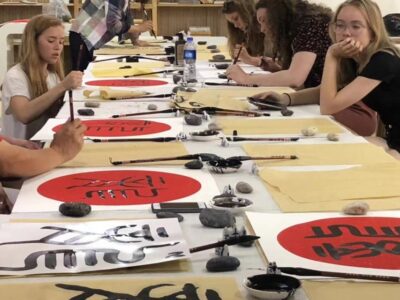
Calligraphy is not just writing characters. It is a physical skill, and this class treats it like one. You work through the mechanics of Chinese calligraphy step by step, using the materials that make it feel authentic.
You should expect to learn practical tool basics such as:
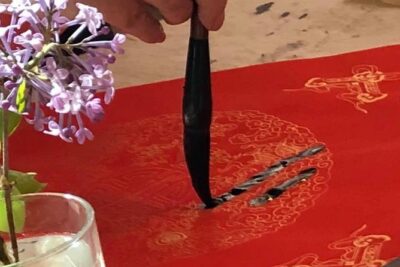
- how to handle the brush
- how to use ink and an ink stone
- how to work on rice paper
- how strokes and control connect to the character you are making
Some classes also include seal carving as part of the experience. Even if you only touch the idea briefly, it is a nice reminder that Chinese writing has artistic layers beyond the main character strokes.
If you have never done calligraphy before, this is actually a good thing. Beginners get the same foundational focus: grip, brush angle, and rhythm. That is why the experience is often described as relaxing or even meditative. Your hands finally get the chance to do something slow and precise.
Inside the lesson: how the class flows
The session is designed to move through a repeatable rhythm. You start with instruction on technique. Then you practice. Finally, you create a finished piece.
Here is what you can generally expect during your time in class:
- The teacher explains how to form strokes, including the order and the feel of each movement.
- You get guided practice so you can correct your hand position before you commit to your final work.
- You work toward a finished piece that you can keep.
The best part is not simply that you watch someone write. You get your own time with the brush, and the teacher is there to help you correct issues while you are working.
The feedback consistently praises instruction that is both kind and detailed. The class does not treat calligraphy as a mysterious art reserved for trained artists. It treats it as a skill you can build, even if you are starting from zero.
Teacher-led guidance with room to ask questions
This is a real teacher experience. You do not just get a worksheet and a time limit. The format includes an art teacher leading the class, and people are encouraged to ask questions.
Some class feedback specifically mentions instructors such as Richard as being informative and kind. Other feedback names Li, with emphasis on practiced instruction that helps you accomplish a lot quickly. Either way, the consistent theme is clarity: you learn what to do with your hand, and you also understand why it matters.
You will also pick up cultural context tied to the character or concept you are working on. Calligraphy has a meaning that goes beyond meaning in English. A stroke’s weight, direction, and rhythm connect to the idea of human language shown in a tangible form.
That sounds philosophical, but the practical takeaway for you is simple: when you understand what the teacher wants, your writing improves faster. You stop guessing and start shaping your strokes on purpose.
Make a keepsake to take home
- Beijing: Dumpling Making Workshop with Meal and Tea★ 4.7 · 69 reviews
- Online Cooking Class Beijing Dumplings and Cuisine by Sunflowerli Renowned Chef★ 5.0 · 65 reviews
- Beijing Wangfujing Calligraphy Class Nearby Forbidden City★ 5.0 · 56 reviews
- Chinese Kungfu class in old temple beside Forbidden Ci★ 4.8 · 53 reviews
- Noon Calligraphy Class★ 5.0 · 47 reviews
Timing and duration: 30, 60, or 90 minutes
The program you book controls your total time. While the tour summary may say about an hour, the class options include 30-minute, 1-hour, and 1.5-hour sessions.
This matters because calligraphy is repetition-heavy. If you book a shorter slot, you will still learn the basics, but you will likely have less practice before your final piece. If you want the experience to feel more like a true skill-building session, you will probably prefer the longer time option.
Also, multiple daily class times are offered. That is helpful in Beijing where your day can change fast depending on weather and crowds. On a rainy day, this kind of indoor activity can become a smart default plan.
Getting to the meeting point at Hilton Beijing Wangfujing
Your meeting point is set at Hilton Beijing Wangfujing. The details given include the area address format for 王府井东街8号 with postal code 100006. After the activity, the class ends back at the meeting point.
The class location itself is listed as No. 8 Wangfujing Dongjie, Dong Cheng District, Beijing. Since it is in a central area and is noted as near public transportation, you should have workable options to reach it, even if your hotel setup is different from the meeting point.
If you like a tight schedule, this is an advantage. You are not planning a half-day detour. You are creating a compact cultural stop in the middle of a sightseeing day.
The real value: what your $20 buys you
At $20 per person, this is priced like a practical cultural workshop, not a high-end art class. The big value is that supplies are included. That includes the tools you need during class, such as the materials for writing.
You are also buying:
- instruction from an art teacher
- hands-on practice
- a structured finish with a take-home piece
So the question is not only cost. It is what you leave with. A calligraphy piece (or seal-related souvenir, depending on the session) is far more personal than many tourist items. It is also something you can look at later and remember how the strokes felt in your own hand.
One more value angle: the group limit is 15 travelers. In a small group, the teacher can correct issues without you waiting your turn for long. That improves learning, and it makes the class more comfortable.
Small group size makes it calmer and more effective
The class caps at 15 people, and that shows in the experience. Small groups mean:
- you can actually hear the instructions
- you get help if your brush control is off
- the atmosphere stays relaxed instead of chaotic
This is part of why the feedback describes it as soothing, even close to morning meditation. You switch into a different pace than you would on the street. You focus on the surface of the paper. You learn to slow down your hand so the stroke lands cleanly.
There is also a social comfort factor. If you are traveling solo, a small group makes it easy to ask questions without feeling like you are performing. If you are with a partner or family, it is structured enough that you are not all wandering around waiting for the same thing.
Is it good for kids and families?
Yes, children can participate, but there is one condition: children must be accompanied by an adult.
It works especially well as a family activity because calligraphy is tactile. Kids often like the physical action of brushing ink onto paper. And it is not a high-pressure competition. The teacher-led pace keeps things moving while still giving enough attention to basic technique.
If you are traveling with both adults and children, this is a rare activity where everyone can join without needing any language skills. You are learning through demonstration, practice, and correction.
Who should book this Beijing calligraphy class
Book it if you want a cultural activity that is hands-on, short, and genuinely learnable. It is especially well-suited for:
- first-time calligraphy learners
- people who prefer small-group activities
- travelers who want something indoors during weather changes
- families with children who can follow along with a teacher
- anyone who wants a take-home art piece made with their own brush
It is also a good “reset” activity. If your Beijing day has been heavy with museums, queues, and constant walking, this gives your body and mind a slower rhythm.
Should you book the noon calligraphy class in Beijing?
If you want a practical cultural souvenir and a real skill you can feel in your hand, I think it is a strong choice. The $20 price makes it approachable, and the included supplies remove the usual beginner friction. Small-group size also keeps the experience supportive.
The only reason I would hesitate is if you are looking for a long, in-depth art immersion. Your time will depend on the session you choose, and shorter slots mean less practice. If you care about repetition and want your strokes to improve noticeably, select the longer duration option.
Otherwise, this is the kind of activity that adds texture to a Beijing trip without eating up half your day.
FAQ
How long is the calligraphy class?
Class length depends on what you choose when booking. Options listed are 30 minutes, 1 hour, or 1.5 hours.
What is included in the price?
The class includes calligraphy supplies to use during the session, plus instruction from an art teacher. A calligraphy admission ticket is included.
Where do I meet for the class in Beijing?
You meet at Hilton Beijing Wangfujing. The activity ends back at the same meeting point.
What is the class location address?
The class is listed at No. 8 Wangfujing Dongjie, Dong Cheng District, Beijing (北京东城区王府井东街8号).
Is there a limit on group size?
Yes. The maximum group size is 15.
Can children join?
Children can participate, but they must be accompanied by an adult.
Is free cancellation available?
Yes. Free cancellation is available up to 24 hours before the experience start time for a full refund.
Make a Little Beijing to Take Home
- Beijing Calligraphy Class
★ 4.9 · 112 reviews - Chinese Calligraphy Class for Small Group
★ 5.0 · 104 reviews - Beijing: Dumpling Making Workshop with Meal and Tea
★ 4.7 · 69 reviews - Online Cooking Class Beijing Dumplings and Cuisine by Sunflowerli Renowned Chef
★ 5.0 · 65 reviews - Beijing Wangfujing Calligraphy Class by Forbidden City
★ 5.0 · 58 reviews - Beijing Wangfujing Calligraphy Class Nearby Forbidden City
★ 5.0 · 56 reviews
More Tour Reviews in Beijing
- From Beijing: Mutianyu Great Wall Tours with Options
★ 4.9 · 9,216 reviews - Beijing: Forbidden City Tour(Group/Private)-Tickets Included
★ 4.8 · 7,974 reviews - Beijing: T-Square & Forbidden City Group or Private Tour
★ 4.8 · 4,446 reviews - All-Inclusive Tour: Tiananmen Square, Forbidden City, Great Wall
★ 5.0 · 2,873 reviews - MuBus: Mutianyu Great Wall ENG/ESP/RUS Guided Bus Tour
★ 5.0 · 2,361 reviews - 4-Hour Small Group Tour to Forbidden City with Entry Tickets
★ 5.0 · 1,863 reviews
The Brush and the Ink
- Beijing Calligraphy Class
★ 4.9 · 112 reviews - Chinese Calligraphy Class for Small Group
★ 5.0 · 104 reviews - Beijing Historic City Guided Walking Tour + Calligraphy Creation
★ 5.0 · 59 reviews - Beijing Wangfujing Calligraphy Class by Forbidden City
★ 5.0 · 58 reviews - Beijing Culture: Tea Ceremony, Heritage Instrument & Calligraphy
★ 5.0 · 57 reviews - Beijing Wangfujing Calligraphy Class Nearby Forbidden City
★ 5.0 · 56 reviews
Just In: More Beijing Tours to Browse




Chinese Calligraphy Classes, compared.
 ★ 4.9Beijing Calligraphy ClassFrom $20112 reviews
 ★ 5.0Chinese Calligraphy Class for Small GroupFrom $20104 reviews
 ★ 5.0Beijing Historic City Guided Walking Tour + Calligraphy CreationFrom $559 reviews
 ★ 5.0Beijing Wangfujing Calligraphy Class by Forbidden CityFrom $2058 reviews
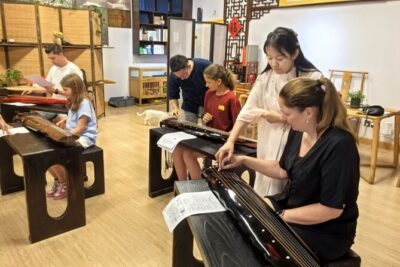 ★ 5.0Beijing Culture: Tea Ceremony, Heritage Instrument & CalligraphyFrom $7857 reviews
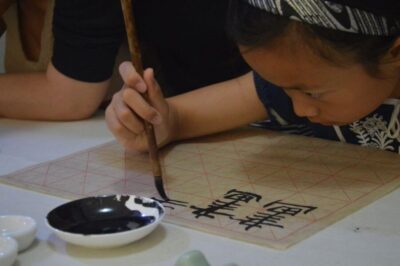 ★ 5.0Beijing Wangfujing Calligraphy Class Nearby Forbidden CityFrom $3556 reviews
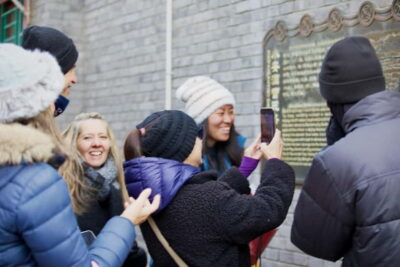 ★ 4.3Discover Old Beijing: Hutong Walking Tour & CalligraphyFrom $2524 reviews
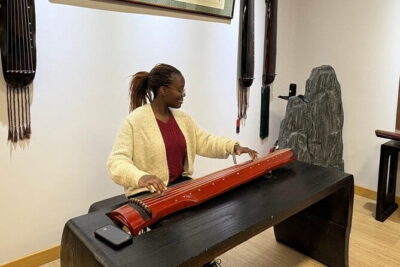 ★ 5.0Beijing Culture Event: Tradition Music, Tea Ceremony, CalligraphyFrom $1511 reviews
Browse the lists this tour appears in