
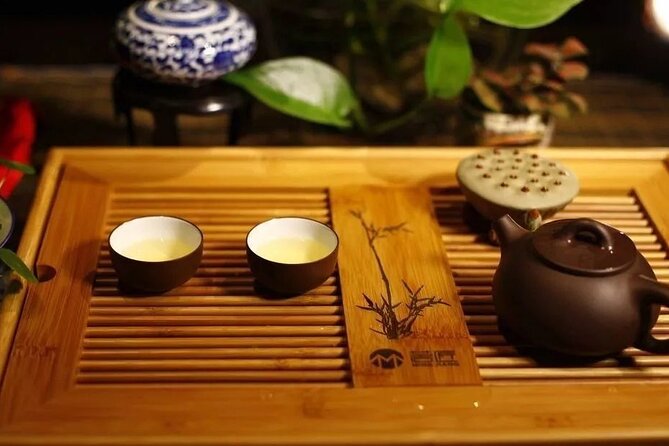
Reviewed · TEA CEREMONY EXPERIENCES
Beijing Tai Chi and Tea Ceremony Experience
Start your morning with slow movement and warm tea. This Beijing Tai Chi and tea ceremony experience blends a beginner-friendly class with a guided tasting of multiple Chinese teas and small bites in a tea house setting. It’s an easy way to slow down while still feeling like you learned something real about Chinese health traditions.
I especially like two parts: the Tai Chi instruction from English-speaking master Eric, who adjusts the lesson to your level and keeps things calm, clear, and patient. I also like how the tea portion isn’t just watching—it’s a chance to taste 4–5 different teas and learn how to notice tea quality while enjoying a Kungfu-style tea ceremony with snacks.
One drawback to plan for: this experience doesn’t include food or private transportation, so you’ll want to eat before you go (or be ready for snack-only options during the tea segment). Since the meeting point is in central Beijing, getting there on your own via public transit is part of the deal.
In This Review
- Key highlights at a glance
- Your 3-hour plan in Beijing: where it starts and how it flows
- Tai Chi class with Eric: slow, practical, and actually for beginners
- What you’ll practice beyond the forms
- The Taoist idea behind the movements: Qi, harmony, and temperament
- Tea house tastings and Kungfu ceremony: 4–5 teas, 3–5 snacks, real guidance
- What happens during the ceremony
- A practical tip: take your time with the senses
- Why this pairing works: mind-body practice with a sensory payoff
- Price and value: what $95 buys you in Beijing
- What to wear and bring (so the morning feels easy)
- Who this tour suits best
- Should you book this Beijing Tai Chi and Tea Ceremony experience?
- FAQ
- How long is the Beijing Tai Chi and tea ceremony experience?
- What time does it start, and where does it meet?
- What do you learn during the Tai Chi part?
- How many teas and snacks are included?
- What’s included in the price?
- Is food included?
- Do I need private transportation?
- FAQ
- What’s the cancellation policy?
Key highlights at a glance
- English-speaking master Eric teaches Tai Chi in a beginner-friendly way and can adapt to your experience level
- Taoist framing connects the movements to Qi flow, relaxation, and harmony with nature
- 1-hour Tai Chi plus a longer tea segment makes it a complete morning reset
- Tea house tasting of 4–5 Chinese teas with 3–5 snacks, led by a tea master
- Kungfu tea ceremony guidance helps you taste, compare, and understand what you’re drinking
- Private group format means your class stays focused on your group, not a huge crowd
Slow pours and warm cups, more tea sittings
Your 3-hour plan in Beijing: where it starts and how it flows
This is a 3-hour experience that runs in a smooth sequence: first a Tai Chi class, then you head into the tea house for a guided tasting and ceremony. You start at 9:00 am, and it ends back at the meeting point, so your morning stays simple.
The meeting spot is Jixiaolan Former Residence (Ji Xiao Lan Gu Ju) in the Qianmen area (前门, Xi Cheng Qu), with the local address listed as 100052. It’s also marked as being near public transportation, which matters in Beijing where transit is usually your fastest bet. If you’re planning the rest of your day around major sights, this format is especially good as a first stop—one traveler even called it a great match for a morning near the Temple of Heaven.
Tai Chi class with Eric: slow, practical, and actually for beginners
The Tai Chi portion is about 1 hour, and the goal isn’t fancy performance. It’s learning what Tai Chi is for, and how to start doing it with proper relaxation and body awareness.
You’ll cover Taoism-related knowledge, basic relaxation work, and typical Tai Chi movements. There’s also self-massage included, which is one of those smart add-ons that often gets skipped in rushed classes. The class is taught by an English-speaking master, and from the experience write-ups you can expect a friendly, structured approach—especially if you’re new.
What stands out is how Eric works with your level. In the feedback, the instruction is described as kind and patient, with the teacher checking where you are before moving you through the lesson. If you’ve never done Tai Chi before, that matters. You’re not left guessing what “correct” feels like—you get guided cues and a clear starting point.
What you’ll practice beyond the forms
This type of Tai Chi teaching usually gives you more than muscle memory. You’re learning how to coordinate mind and body while moving slowly, which is why it can feel calming even when you’re still learning.
You’ll also hear why Tai Chi became popular worldwide and how it’s used for health. The way the experience is framed emphasizes relaxation work and better internal flow rather than fitness-only results. That’s a key difference between “exercise as a workout” and “movement as a practice.”
The Taoist idea behind the movements: Qi, harmony, and temperament
The experience doesn’t treat Tai Chi as just a Western-style fitness trend. It connects the practice to Taoism, including the idea of improving Qi through a series of relaxation movements so the Qi can flow more freely through the body.
It also talks about why this matters beyond the body—there’s an emphasis on harmony between people and nature and on improving overall health. Even if you’re not making any spiritual identity change, I think that framing helps you stay patient. Slow work is easier when you understand it’s doing something, not just taking time.
Tea gets tied into the same worldview in the description of the experience. Chinese tea is presented as important for Taoist practice—said to enhance Shen (a mental/spiritual aspect) and support stable temperament and moral conduct. Whether you connect with the philosophy or not, it’s a useful context for why the tea session is treated as part of the practice rather than a casual free drink.
- From Beijing: Mutianyu Great Wall Tours with Options★ 4.9 · 9,216 reviews
- Beijing: Forbidden City Tour(Group/Private)-Tickets Included★ 4.8 · 7,974 reviews
- Beijing: T-Square & Forbidden City Group or Private Tour★ 4.8 · 4,446 reviews
- All-Inclusive Tour: Tiananmen Square, Forbidden City, Great Wall★ 5.0 · 2,873 reviews
- MuBus: Mutianyu Great Wall ENG/ESP/RUS Guided Bus Tour★ 5.0 · 2,361 reviews
Tea house tastings and Kungfu ceremony: 4–5 teas, 3–5 snacks, real guidance
After Tai Chi, you move into the tea house for the tasting portion. This is where the experience shifts from body awareness to sensory awareness—smell, taste, and noticing differences in quality.
You’ll sample 4–5 types of Chinese tea and 3–5 snacks. The tea master helps you distinguish tea quality yourself, which I love because it makes you an active participant. Instead of just hearing facts, you compare cups and learn what you should pay attention to.
What happens during the ceremony
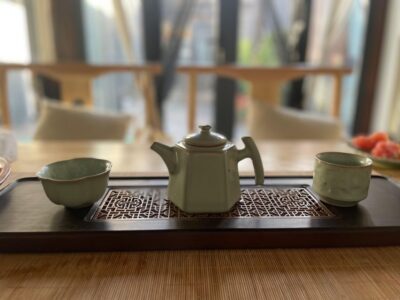
You’ll also enjoy a Kungfu tea ceremony, guided step-by-step. Kungfu tea style typically puts emphasis on how the tea is prepared and served, so the tasting becomes more than sipping—it becomes learning how a ceremony changes what you taste.
In the feedback, the tea host is named Alice, who gives an overview of tea history and culture. The tone comes through as warm and welcoming, with special focus on how to appreciate the teas in a calm, mindful way. One reviewer specifically praised the tea history and culture explanation and how it paired well with the earlier Tai Chi focus on presence.
A practical tip: take your time with the senses
If you rush this part, you’ll miss the point. Give each tea a real moment: smell first, sip slowly, and notice how it feels afterward. Even without deep tea vocabulary, you can usually track things like aroma strength, aftertaste, and how the tea sits in your mouth.
Why this pairing works: mind-body practice with a sensory payoff
I think the best value of this combo is that it trains attention twice. First, Tai Chi helps you slow the body and soften the mind. Then the tea ceremony gives you a focused routine for tasting and noticing.
That sequence is especially helpful if you’re sightseeing all day. Beijing can feel loud and intense, and a structured calm morning gives you a reset you can actually feel later. It’s not just a break—it’s a small routine you can reuse at home: slow movement, then a mindful break with tea.
Also, the experience doesn’t force you to be “into wellness” to enjoy it. Even if you mostly want something culturally grounded and easy to join, the class structure and the tasting guidance make it approachable.
Price and value: what $95 buys you in Beijing
At $95 per person for roughly 3 hours, the price is fair mainly because you’re getting two guided components: an instructor-led Tai Chi class and a tea ceremony with multiple tastings. Many tea experiences are either short and light on instruction, or they’re just a performance with one tea cup. Here, you get a sequence with actual teaching time.
The experience is also described as having group discounts and a mobile ticket option, and it’s run as a private tour/activity, meaning only your group participates. Private doesn’t automatically mean better, but in a class-and-tasting format, fewer people usually means more attention.
One thing to weigh: food isn’t included. You’ll get snacks during the tea segment, and coffee and/or tea is included, but you should plan a full breakfast or plan to eat after. If you’re traveling on a tight schedule, that’s a minor planning step that affects value.
What to wear and bring (so the morning feels easy)
You don’t need special equipment for this. The big practical requirement is comfort.
- Wear comfortable walking shoes
- Dress for movement—Tai Chi means you’ll be standing and shifting weight
- Bring a layer if the morning air feels cool to you
Since private transportation isn’t included, plan your route to the meeting point. If you’re already using Beijing’s transit system, this location being near public transport is a plus.
Who this tour suits best
This experience is a strong choice if you want cultural practice that doesn’t feel staged.
You’ll likely love it if:
- you’re curious about Taoism-linked wellness and not just a generic exercise class
- you’re a first-timer in Tai Chi and want guided basics
- you want to learn to taste tea by attention, not just by trivia
- you like morning activities that reset your pace before big sights
You might want to skip or reconsider if:
- you’re mainly looking for a long, food-focused experience (food isn’t included beyond tea snacks)
- you want a super flexible schedule with lots of free time
- you don’t enjoy structured instruction and prefer wandering on your own
Should you book this Beijing Tai Chi and Tea Ceremony experience?
I’d book it if you want a calm, guided morning that combines two traditions in a way that’s easy for beginners. The Tai Chi part is built for clarity—English instruction, patient teaching, and attention to your level—then the tea house turns the experience into hands-on tasting with 4–5 teas and a real Kungfu tea ceremony.
If you’re visiting Beijing for major landmarks and you want one activity that gives you something different from photos and crowds, this is a solid choice. Just come ready to get yourself to the meeting point and start the day with a meal, since food beyond tea snacks isn’t included.
FAQ
How long is the Beijing Tai Chi and tea ceremony experience?
It runs for about 3 hours.
What time does it start, and where does it meet?
The start time is 9:00 am at Jixiaolan Former Residence (Ji Xiao Lan Gu Ju) in Qianmen (前门, Xi Cheng Qu).
What do you learn during the Tai Chi part?
You learn Tai Chi Taoism knowledge, basic relaxation forms, typical Tai Chi movements, and self-massage methods. It’s taught by an English-speaking master.
How many teas and snacks are included?
You taste 4–5 types of Chinese tea and 3–5 snacks during the tea ceremony portion.
What’s included in the price?
The experience includes coffee and/or tea, plus all fees and taxes.
Is food included?
No. Food is not included in the experience.
Do I need private transportation?
No private transportation is included, so you’ll get to the meeting point using public transportation.
FAQ
What’s the cancellation policy?
You can cancel for a full refund up to 24 hours in advance of the experience’s start time.
More Tour Reviews in Beijing
- From Beijing: Mutianyu Great Wall Tours with Options
★ 4.9 · 9,216 reviews - Beijing: Forbidden City Tour(Group/Private)-Tickets Included
★ 4.8 · 7,974 reviews - Beijing: T-Square & Forbidden City Group or Private Tour
★ 4.8 · 4,446 reviews - All-Inclusive Tour: Tiananmen Square, Forbidden City, Great Wall
★ 5.0 · 2,873 reviews - MuBus: Mutianyu Great Wall ENG/ESP/RUS Guided Bus Tour
★ 5.0 · 2,361 reviews - 4-Hour Small Group Tour to Forbidden City with Entry Tickets
★ 5.0 · 1,863 reviews
Beijing by the Teacup
- Traditional Chinese Tea Ceremony Experience
★ 4.7 · 74 reviews - Beijing Culture: Tea Ceremony, Heritage Instrument & Calligraphy
★ 5.0 · 57 reviews - Chinese Tea ceremony in Beijing Hutong courtyard
★ 4.7 · 26 reviews - Beijing Culture Event: Tradition Music, Tea Ceremony, Calligraphy
★ 5.0 · 11 reviews - Beijing: Temple Of Heaven+Tai Chi Class+Tea Ceremony
★ 5.0 · 8 reviews - Traditional Chinese Tea Ceremony Experience
★ 5.0 · 7 reviews
Just In: More Beijing Tours to Browse



Tea Ceremony Experiences, compared.
 ★ 4.7Traditional Chinese Tea Ceremony ExperienceFrom $974 reviews
 ★ 5.0Beijing Culture: Tea Ceremony, Heritage Instrument & CalligraphyFrom $7857 reviews
 ★ 4.7Chinese Tea ceremony in Beijing Hutong courtyardFrom $3126 reviews
 ★ 5.0Beijing Culture Event: Tradition Music, Tea Ceremony, CalligraphyFrom $1511 reviews
 ★ 5.0Temple Of Heaven+Tai Chi Class+Tea CeremonyFrom $1298 reviews
★ 5.0Traditional Chinese Tea Ceremony ExperienceFrom $97 reviews
★ 5.0Temple Of Heaven+Tai Chi Class+Tea CeremonyFrom $1298 reviews
★ 5.0Traditional Chinese Tea Ceremony ExperienceFrom $97 reviews
Browse the lists this tour appears in