
Reviewed · CHINESE CALLIGRAPHY CLASSES
Beijing Hands-On Culture Tour: Tea, Instrument, Calligraphy
Hands-on Beijing culture beats sightseeing. This tea, Guqin, and calligraphy workshop turns you from spectator into maker. I especially like the chance to play the Guqin yourself and the way calligraphy turns into a calm, do-it-with-your-hands activity (not copied homework). The one drawback: you’ll need comfortable clothes for the Hanfu dressing part, and the time is limited, so don’t expect full mastery.
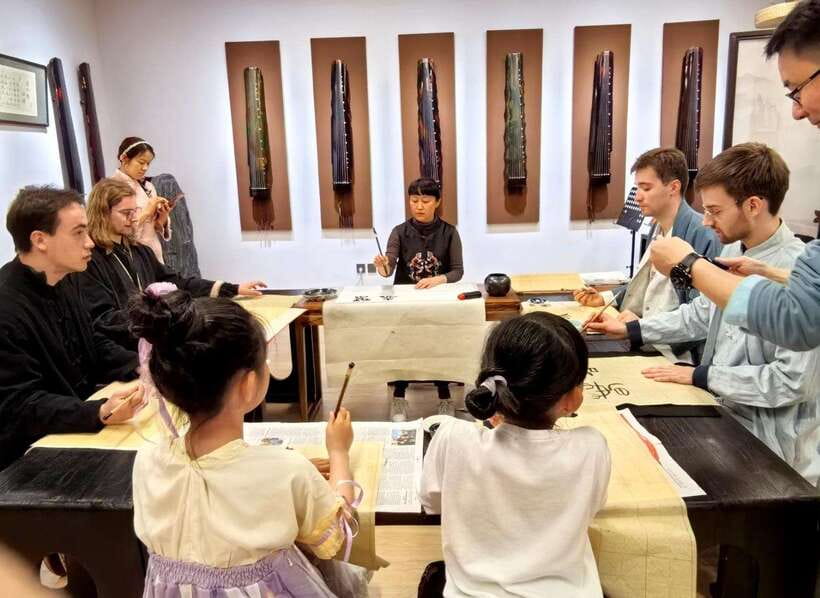
This is built as a small-group session (up to 10 people) in an air-conditioned private space, which helps a lot when you’re trying to stay relaxed. You’ll get English guidance, and if you’re lucky like one family I read about, a helper named Sylvia can even help you get oriented before you start.
If you want your Beijing day to feel real and personal, this format makes it easier. You’ll come away with skills, photos, and a better understanding of what these traditions actually mean.
In This Review
- Quick hits before you go
- Why this Beijing tea, Guqin, and calligraphy session feels different
- Starting in Hanfu: dressing up without turning it into a hassle
- Six steps to better tea: red, green, and floral, explained through tasting
- Plucking the Guqin: learning a full melody instead of watching one
- Brush & ink calligraphy: writing your name and a word like peace
- The timing that keeps everything from feeling rushed
- Photoshooting, ticket, and souvenirs: what you actually take home
- Price and time value: why $15 can feel like a lot (and where you should think twice)
- Who this Beijing culture tour suits best
- Should you book this tour or skip it
- FAQ
- How long is the Beijing Hands-On Culture Tour?
- What activities are included in the tour?
- What does the tea experience cover?
- Can I actually play the Guqin during the class?
- What can I write during the calligraphy part?
- Is this tour suitable for families and different ages?
- Is there air-conditioning, or is it outdoors?
- What should I wear for the Hanfu dressing session?
- Is it in English?
- Is the group small?
Quick hits before you go
- Six-in-one culture in about 2.5–3 hours: tea ritual, Guqin, calligraphy, cultural explanations, Hanfu, photos.
- Hands-on tea ritual: learn a Six-Step tea process and taste three classic styles (red, green, floral).
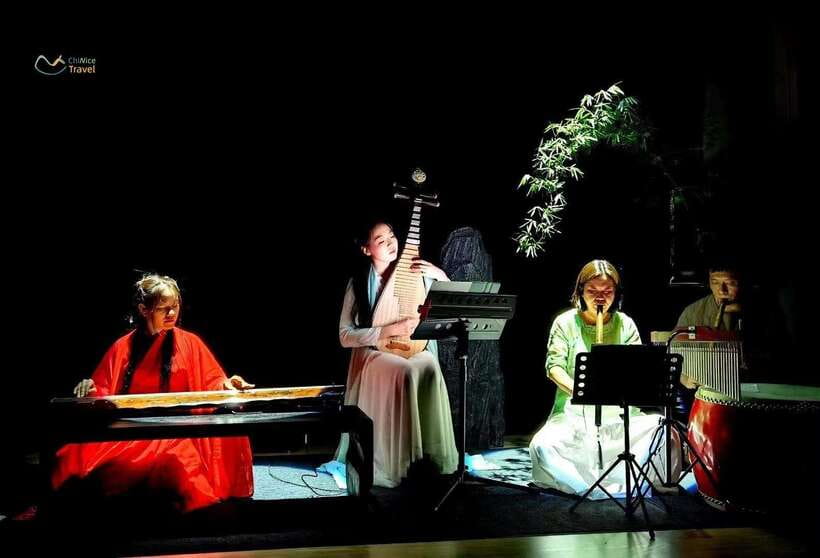
- Guqin lessons that go past the demo: you learn a full melody step by step and pluck strings yourself.
- Brush & ink writing with purpose: write your name or a meaningful word like peace or blessing.
- Air-conditioned, small-group vibe: stress-free pacing for kids and adults.
- Photoshooting included: you’ll leave with visual proof, not just memories.
Brush, ink and rice paper, more quiet hours
Why this Beijing tea, Guqin, and calligraphy session feels different
Beijing has no shortage of cultural performances where you sit, watch, clap, and move on. This one is different because it hands you the tools. You taste tea, pluck strings, and hold a brush. That simple switch changes the whole experience.
I like that it’s structured like a sequence, not three random activities stapled together. By the time you’re wearing Hanfu, the room is already set up for the idea that you’re participating in culture, not just consuming it.
The other thing I really appreciate is the tone: welcoming and low-pressure. The space is described as air-conditioned with no big crowds, so you’re not fighting heat or noise just to try something new.
Starting in Hanfu: dressing up without turning it into a hassle
You’ll start with Hanfu rental included, and the main practical advice is straightforward: wear comfortable clothes. That matters because dressing sessions can be awkward if you show up in tight pants, hard-to-remove shoes, or layers you’ll regret taking off.
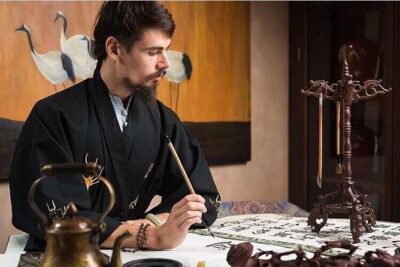
What you get here is more than a costume. Hanfu signals that you’re stepping into a different rhythm. Even if you only keep it on for photos and a bit of the session, it helps you feel connected to the ritual side of tea and the formal calm you’re expected to bring to calligraphy.
Also, the session pacing is set up for families. If you’re traveling with kids or older relatives, this “everyone can participate” style tends to work better than tours built around long standing lines.
Tip: arrive about 10 minutes early so you can settle in and get dressed without rushing. That small buffer keeps the whole experience smooth.
Six steps to better tea: red, green, and floral, explained through tasting
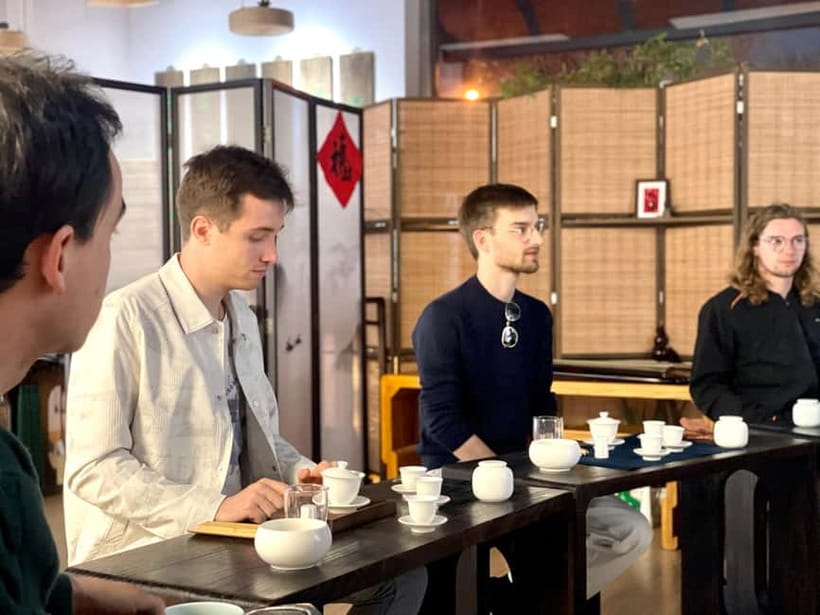
Tea isn’t just a drink in Chinese culture. It’s a sequence: water, aroma, temperature, steeping, and attention. This experience teaches the Six-Step Tea Ritual under the guidance of a professional tea master.
Here’s what that means in practice. You’re not just handed a cup. You learn the logic behind each step, then you brew and taste three classic types:
- Red tea (with a fuller, darker profile)
- Green tea (cleaner, fresher notes)
- Floral tea (fragrance-forward)
The value for you is how quickly you’ll start to notice differences. When you can smell, steep, and compare, tea becomes tangible. You also leave with a framework you can use later, whether you buy tea in Beijing or replicate a ritual at home.
A small but important detail: water and tea are included. That avoids the common situation where you start a cultural lesson and then suddenly have to buy drinks mid-activity.
Plucking the Guqin: learning a full melody instead of watching one
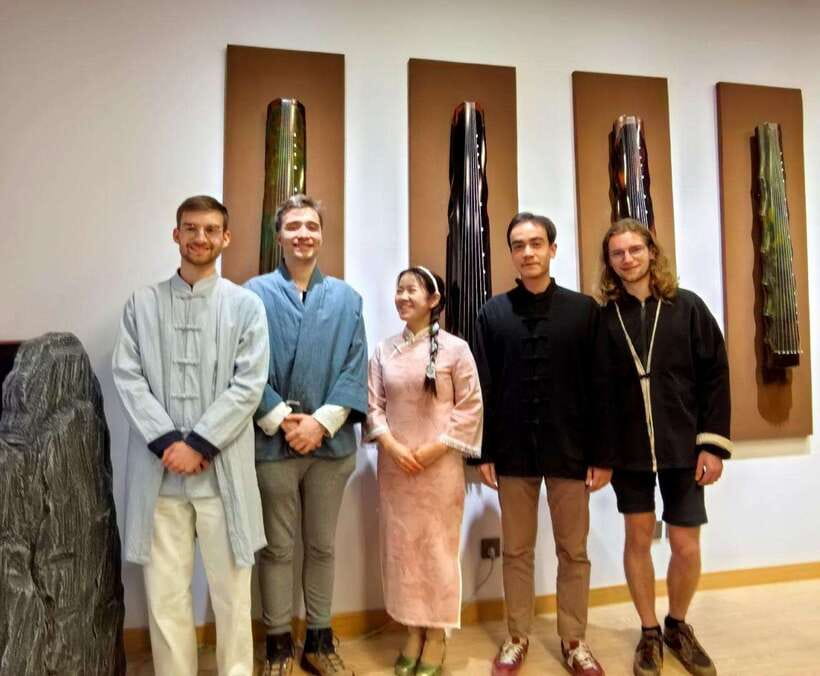
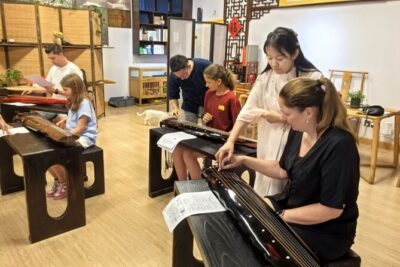
The Guqin is China’s most revered instrument, known for its deep, mellow tones. A big strength of this tour is that it doesn’t treat Guqin as background music. It’s the centerpiece of a hands-on lesson.
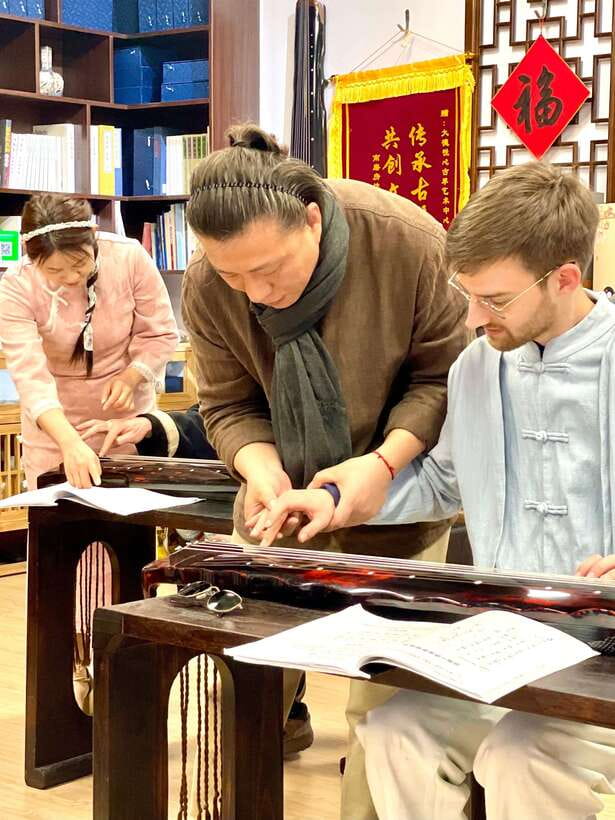
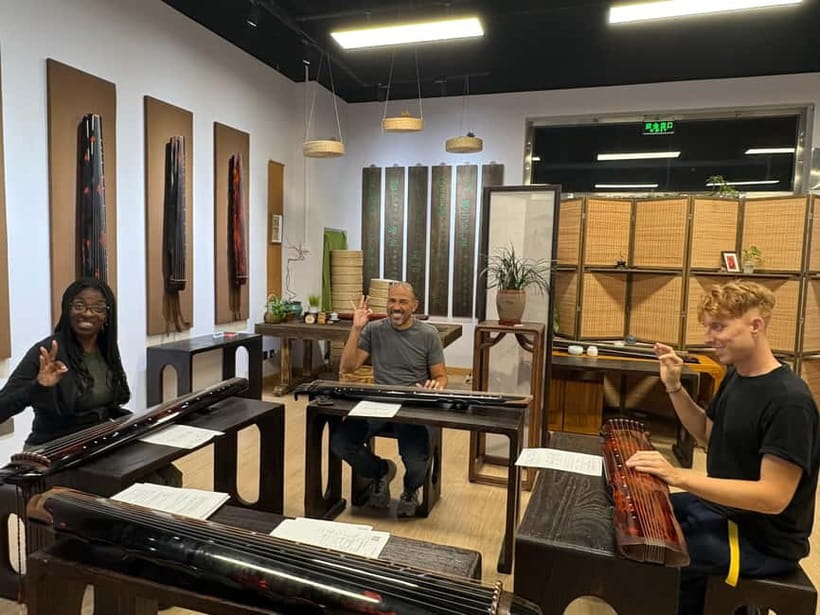
Instead of a short demonstration, you’ll be taught step by step how to play a full ancient melody on the Guqin. The guide is described as a master/instructor tied to Guqin performance, and the class includes you plucking the strings yourself.
What you should expect (and why it matters):
- You’ll learn gradually, not tossed into the deep end.
- Your fingers get guided until you find the rhythm of the melody.
- You leave understanding that Guqin playing is about control, timing, and touch.
Is it going to turn you into a professional musician? No, and you shouldn’t expect that in 2.5–3 hours. But it’s enough time to turn a symbol of Chinese culture into something you can physically do. That’s why this part often wins people over, even those who think they won’t be into music.
The payoff is also emotional. One simple reason the Guqin sticks with people is the sound quality. When you play it yourself, it’s not just beautiful. It feels meaningful.
Make a keepsake to take home
- Beijing: Dumpling Making Workshop with Meal and Tea★ 4.7 · 69 reviews
- Online Cooking Class Beijing Dumplings and Cuisine by Sunflowerli Renowned Chef★ 5.0 · 65 reviews
- Beijing Wangfujing Calligraphy Class Nearby Forbidden City★ 5.0 · 56 reviews
- Chinese Kungfu class in old temple beside Forbidden Ci★ 4.8 · 53 reviews
- Noon Calligraphy Class★ 5.0 · 47 reviews
Brush & ink calligraphy: writing your name and a word like peace
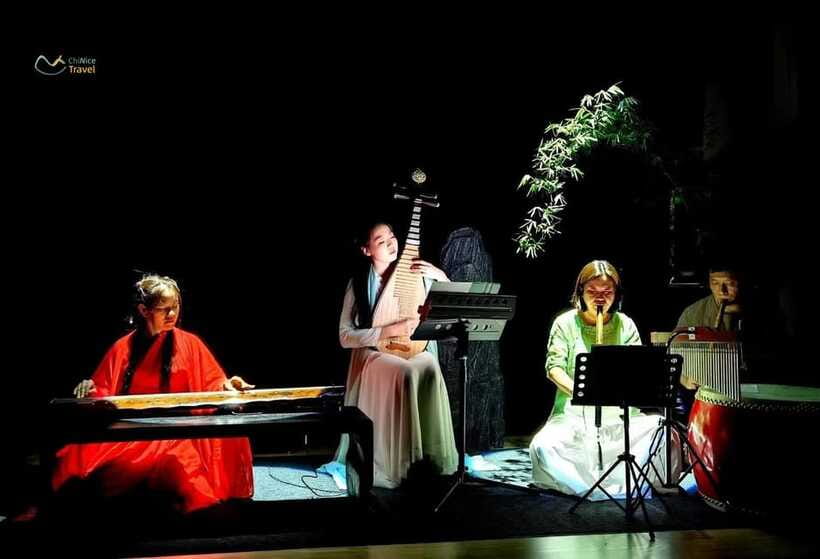
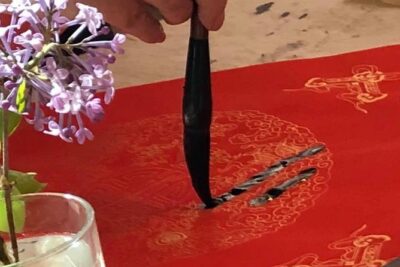
Calligraphy in the West sometimes looks like copywork. Here, it’s framed as a translation of meaning into movement—brush, ink, pressure, and intention.
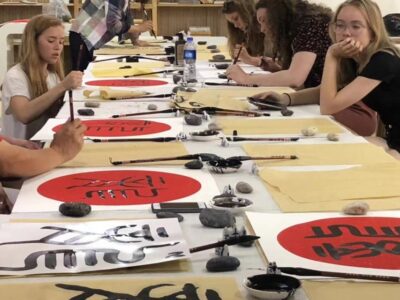
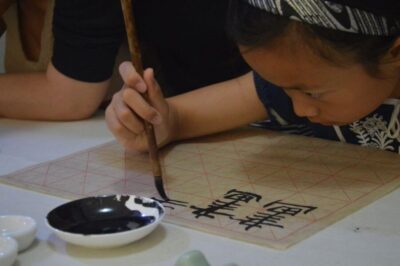
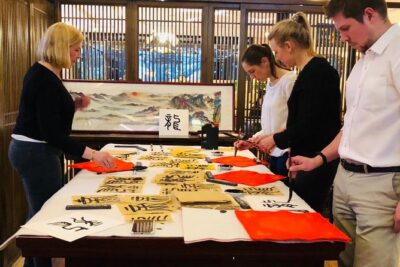
You’ll write with real brush & ink, and the guidance is aimed at more than tracing strokes. You’ll get an intro to how Chinese writing evolved, then you’ll write your own name or a meaningful word such as peace or blessing.
What makes this fun and useful is that it’s calming but still active. You’re producing something tangible within the session—something you can hold, show, and keep.
Practical tip: keep your expectations realistic. Your first attempt won’t look like a finished masterpiece. But you’ll understand what makes the strokes feel right, and you’ll walk away with a piece you can treat like a souvenir rather than a worksheet.
Also, photos are included, which helps a lot if you want visual documentation of your calligraphy and Hanfu look.
The timing that keeps everything from feeling rushed
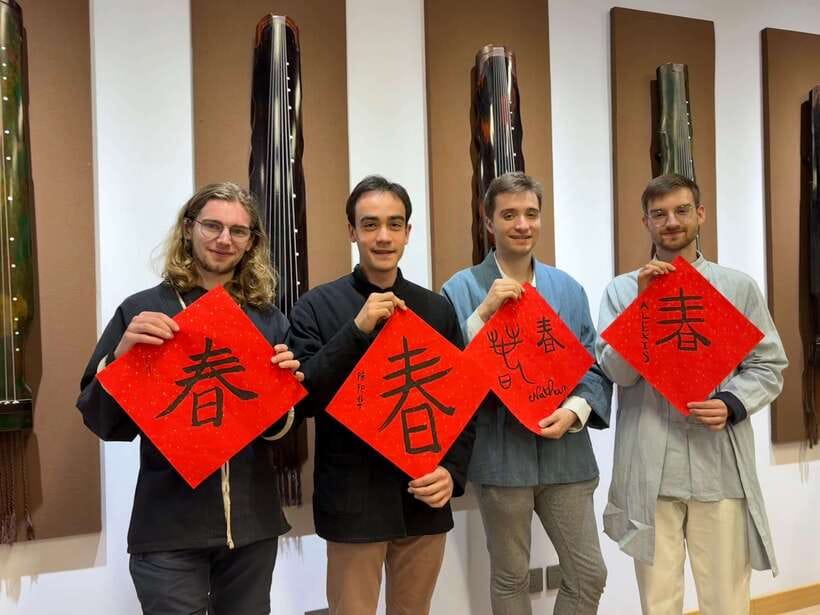
This experience is designed as a focused block in one certified private art center. Duration is listed as 3 hours, and the “full experience” is described as fitting into about 2.5 hours.
In practice, that kind of tight structure helps because:
- Each art form gets enough time to feel real.
- You don’t spend half your day waiting around.
- Families don’t get stretched too thin.
That said, consider this the trade-off. If you want hours and hours of practice, this isn’t built for that. It’s built for breadth and first-hand understanding. Think of it as a fast route to cultural literacy, not a multi-day masterclass.
The good news is the small group size (limited to 10) helps keep the pacing attentive, so you’re less likely to feel lost in a crowd.
Photoshooting, ticket, and souvenirs: what you actually take home
Included items matter because they remove friction. Here you get:
- photoshooting
- original souvenirs
- Hanfu rental
- ticket to the show
- water/tea
- Guqin class
- cultural guide/tutor (English guidance, and a Guqin master for the music part)
The photos are especially valuable because the experience is visual. Your Hanfu look, your Guqin setup, and your calligraphy piece all make strong images. And photos help you remember the details that can fade later—like the exact tea color differences or how the calligraphy looked when it dried.
The “ticket to the show” piece isn’t deeply described, but it signals that you’ll be part of a structured program inside the center. That matters because it reduces decision fatigue and keeps the day coherent.
Price and time value: why $15 can feel like a lot (and where you should think twice)
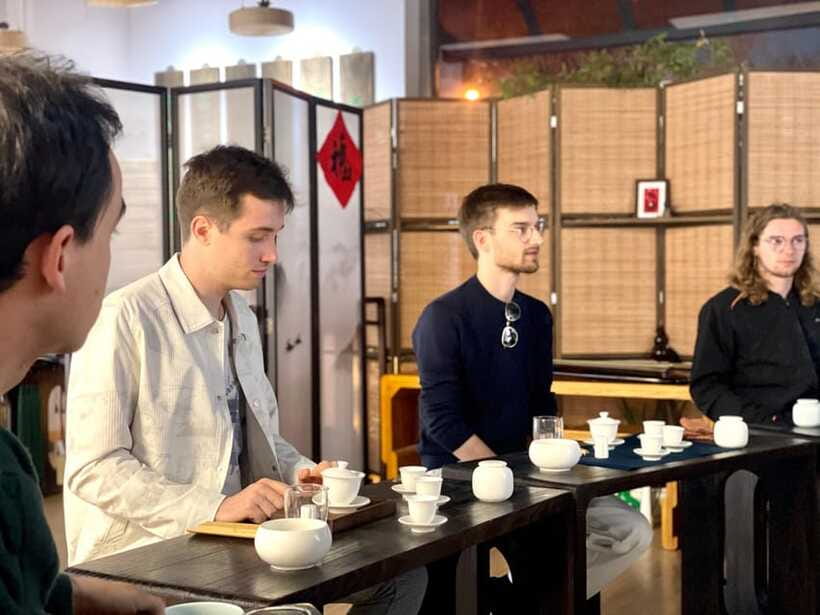
At $15 per person for about 3 hours, this is unusually good value for Beijing. You’re paying for:
- expert instruction across multiple disciplines
- instruments and materials used in the activities
- Hanfu rental
- photos
- souvenirs
- a guide who works in Chinese and English
In other cities, a single class at that length can cost more, and often it’s just one craft. Here you’re getting three full cultural modes in one session: taste, music, and writing.
Where you should think twice:
- If you want a big sightseeing day, this may feel too indoor.
- If your group is mostly looking for a performance only, you’ll still be asked to participate, especially in tea, Guqin, and calligraphy.
But if your goal is to experience the culture with your hands, your senses, and your attention, the price-to-time ratio is hard to beat.
Who this Beijing culture tour suits best
I think this is a great fit if you’re:
- visiting Beijing for the first time and want a grounded cultural activity fast
- traveling with kids who need hands-on learning
- bringing parents or relatives who might not enjoy long, physically demanding tours
- the type of traveler who likes making something (tea, music, a written character)
It’s also a good choice if you’re tired of crowded tourist scenes. The setup is described as no-crowd and stress-free in an air-conditioned environment, which makes a difference on a hot day.
Should you book this tour or skip it
Book it if you want a short, well-paced cultural day where you actively do the main things: brewing tea, playing the Guqin, and writing calligraphy. The included Hanfu, photos, and souvenirs make it feel like more than a class.
Skip it if you’re primarily chasing major landmarks and long outdoor views, because this is centered on one private art space and a structured program.
My practical call: if you’re even slightly curious about Chinese tea, music, or writing, this format gives you the fastest route from curiosity to understanding. You’ll leave with something you can show and explain, not just photos of buildings.
FAQ
How long is the Beijing Hands-On Culture Tour?
It runs for about 3 hours (with the full experience described as about 2.5 hours).
What activities are included in the tour?
You’ll do a tea ceremony, a Guqin class (including playing a full melody), and a calligraphy session with brush & ink. Hanfu rental and photoshooting are also included.
What does the tea experience cover?
You learn the Six-Step Tea Ritual and brew three classic teas: red, green, and floral.
Can I actually play the Guqin during the class?
Yes. The session includes step-by-step instruction so you can pluck strings and play a full melody, not just watch.
What can I write during the calligraphy part?
You can write your own name or a meaningful word such as peace or blessing.
Is this tour suitable for families and different ages?
The experience is described as welcoming for all ages, with a small group size that helps keep the pace comfortable.
Is there air-conditioning, or is it outdoors?
The space is described as air-conditioned, and the experience is set in a private art center.
What should I wear for the Hanfu dressing session?
Wear comfortable clothes so the Hanfu dressing part is easy.
Is it in English?
Guidance is provided in Chinese and English.
Is the group small?
Yes. The group is limited to 10 participants.
More Beijing Outings
- From Beijing: Mutianyu Great Wall Tours with Options
★ 4.9 · 9,216 reviews - Beijing: Forbidden City Tour(Group/Private)-Tickets Included
★ 4.8 · 7,974 reviews - Beijing: T-Square & Forbidden City Group or Private Tour
★ 4.8 · 4,446 reviews - All-Inclusive Tour: Tiananmen Square, Forbidden City, Great Wall
★ 5.0 · 2,873 reviews - MuBus: Mutianyu Great Wall ENG/ESP/RUS Guided Bus Tour
★ 5.0 · 2,361 reviews - 4-Hour Small Group Tour to Forbidden City with Entry Tickets
★ 5.0 · 1,863 reviews
More Tour Reviews in Beijing
- From Beijing: Mutianyu Great Wall Tours with Options
★ 4.9 · 9,216 reviews - Beijing: Forbidden City Tour(Group/Private)-Tickets Included
★ 4.8 · 7,974 reviews - Beijing: T-Square & Forbidden City Group or Private Tour
★ 4.8 · 4,446 reviews - All-Inclusive Tour: Tiananmen Square, Forbidden City, Great Wall
★ 5.0 · 2,873 reviews - MuBus: Mutianyu Great Wall ENG/ESP/RUS Guided Bus Tour
★ 5.0 · 2,361 reviews - 4-Hour Small Group Tour to Forbidden City with Entry Tickets
★ 5.0 · 1,863 reviews
The Brush and the Ink
- Beijing Calligraphy Class
★ 4.9 · 112 reviews - Chinese Calligraphy Class for Small Group
★ 5.0 · 104 reviews - Beijing Historic City Guided Walking Tour + Calligraphy Creation
★ 5.0 · 59 reviews - Beijing Wangfujing Calligraphy Class by Forbidden City
★ 5.0 · 58 reviews - Beijing Culture: Tea Ceremony, Heritage Instrument & Calligraphy
★ 5.0 · 57 reviews - Beijing Wangfujing Calligraphy Class Nearby Forbidden City
★ 5.0 · 56 reviews
Just In: More Beijing Tours to Browse



Chinese Calligraphy Classes, compared.
 ★ 4.9Beijing Calligraphy ClassFrom $20112 reviews
 ★ 5.0Chinese Calligraphy Class for Small GroupFrom $20104 reviews
 ★ 5.0Beijing Historic City Guided Walking Tour + Calligraphy CreationFrom $559 reviews
 ★ 5.0Beijing Wangfujing Calligraphy Class by Forbidden CityFrom $2058 reviews
 ★ 5.0Beijing Culture: Tea Ceremony, Heritage Instrument & CalligraphyFrom $7857 reviews
 ★ 5.0Beijing Wangfujing Calligraphy Class Nearby Forbidden CityFrom $3556 reviews
 ★ 5.0Noon Calligraphy ClassFrom $2047 reviews
 ★ 4.3Discover Old Beijing: Hutong Walking Tour & CalligraphyFrom $2524 reviews
Browse the lists this tour appears in